
Tag: Life lessons

  • Being Stuck In A Rut

    Being Stuck In A Rut

    Quirkbag Collection #29 – 30.01.26

    You can be in a rut or feel stuck in life regardless of age and lifestyle. I am in the stage of my life now where figuring things out is the only way to move my life forward – from curiosity to hobbies, side projects and freelance work with no formal schedule. There is no ‘school’ or ‘career’ structure. Despite the lack of external pressure, the internal pressure to find my way or make progress, is just as real. And we all know that we are our own harshest inner critics. 

    Simply making it through the day without clear markers of progress ‘upwards’ can place you in a rut over time. I am in an extremely blissful but possibly still anxiety-inducing phase as I wait to begin university, with free time ready to be spent.

    It’s blissful because I don’t HAVE to do anything. I can simply choose to accept the outcomes of doing NOTHING – which then is (usually) NOTHING. In that case, there is no progress towards anything tangible. Choosing to tolerate a lack of self-development, curiosity, learning and preparation for the future is not inherently wrong.

    But in those moments alone, you can feel yourself plagued with an indescribable sense of overall malaise. It’s not that bad, but it is not that great. And you can’t shake that feeling.

    That could be the start of a rut. 

    The Rut – What Is It?

    The rut, what exactly is it? I find it to be a feeling of malaise and ‘stuckness’ that accompany any general phase of life. Despite having all the freedom to do whatever I want, whenever I want, however I want, I was shocked to realise that freedom and flexibility do not immediately lead to happiness or newfound purpose. It leads to relief. Perhaps serenity and reduced stress, but not fulfillment. And that, I find to be the crux of being in a rut. 

    Remember, being in a rut is a HUMAN experience, ageless, genderless and timeless. The crux is receiving meaning and alignment from your work, relationships and lifestyle. More importantly, it is resonance between your lifestyle and your values that prevents you from falling into dry, discouraging ruts. The lack of it, over an extended period of time, easily leads you into a rut.

    In trying to ‘figure things out’ in my life, I learned about the Beta-Region Paradox, a phenomenon that describes how people jump out of dire-most situations more easily than mediocre ones because mediocrity is easily tolerated compared to extreme discomfort. This leads to stagnation across domain(s) in life.

    The Beta-Region is the region of tolerating mediocrity. That’s the general phase of life you might be in now where you realise that your past (routine) actions no longer fulfil you. You’re just tolerating the habits. 

    Knowing this paradox gives you a chance to label your current phase in life as a rut – where your current actions do not resonate emotionally with your values. And this empowers you to take action. 

    Avoiding Confrontation With The Rut

    As I navigate my liminal space, it is room for an infinite volume of possibilities. That can be intimidating.

    Afterall, how can you choose?

    I have been tempted to squeeze so much into what time I have but was stopped only by reasoning that a busy life is not equivalent to a meaningful life. It’s so easy to get caught up with filling our time with ‘things’ and ‘tasks’ to avoid confronting the deeper problem. Working more without purpose, for the sake of it, because we’re used to it, is denial – avoiding confrontation with the rut. 

    Why? 

    Well, lessons from the crux of the books ‘Four Thousand Weeks’, ‘The Five Types Of Wealth’ (not sponsored, purely my recommendation) and ‘Reasons Not To Worry’ tell us that life is short and time passes quickly as a human being, usually faster than you think. Knowing that our time is finite can push us to avoid confronting mortality. It becomes uncomfortable sitting with the fact that we willingly kill time, waste time, squander it loosely without reason.

    As such, I have warranted disdain for the use of ‘wait’ in the context of life events. And you should too. ‘Waiting’ implies a passive, restrained activity in the context of living your life. As if your life is ‘paused’, you ‘wait’ by simply letting time pass before you begin the next formal structure of life where life ‘starts’ again.

    That’s a lie.

    Working, or being busy, tricks us into thinking we’re creating value or meaning for our lives, even if they have stopped being either. We just want to think we are, because otherwise, we have to deal with change. By doing more and more of the same work, there is temporary relief…until there isn’t. 

    Ironically, understanding that lesson on mortality does not always compel enough change. Instead, it drives distraction for those who deny facing finitude. 

    Getting Into A Rut

    We never usually expect ourselves getting into a rut because we toy with fancy romanticised versions of our lives. But for those who may work dead-end shifts, routine shifts, with repetitive monotonous tasks, it becomes extremely easy to question your sense of being and purpose. 

    If we all felt overwhelming joy and meaning in the work we do, including those doing dreaded shift work, then the rut may not even exist.

    But it does…

    We get into a rut (usually unwittingly) when our emotions and values toward our lives have grown with time. We become different versions of ourselves as we grow, and if our work or lifestyles remain rooted in the past, it becomes easy to feel detached or ‘stuck’. 

    It could be an old job that no longer fulfils your life goals or values. It could be inspiration for something new and different. When you put off wanting to move towards curiosity and inspiration in the big picture, you slowly create a rut for yourself where you feel disengaged. 

    Getting Out Of A Rut

    Getting out of this malaise-like slump of a rut can be easier than you think. It comes in two parts. 

    Part One – Clarity of Mind

    First, regaining clarity of mind. For most of us, it can be a simple atelic task that is done long enough for us to clear our mind. I like starting by looking out of my room window across the highway and low-rise residential areas to create a sense of space. Visually seeing space helps bring me mental space. This step helps put you in a state of awareness, to look at your life rather than from it. 

    Here are some of my other favourites: 

    • Attend a course (anything that is curiosity-driven)
    • Take a walk (alone with no distraction like music or podcasts)
    • Journal freestyle with 1 starting prompt or your current dominant thought
    • Ask a friend about their thoughts on their phase of life (or ask ChatGPT)
    • Do something spontaneous (watch a film/make coffee/read a book)
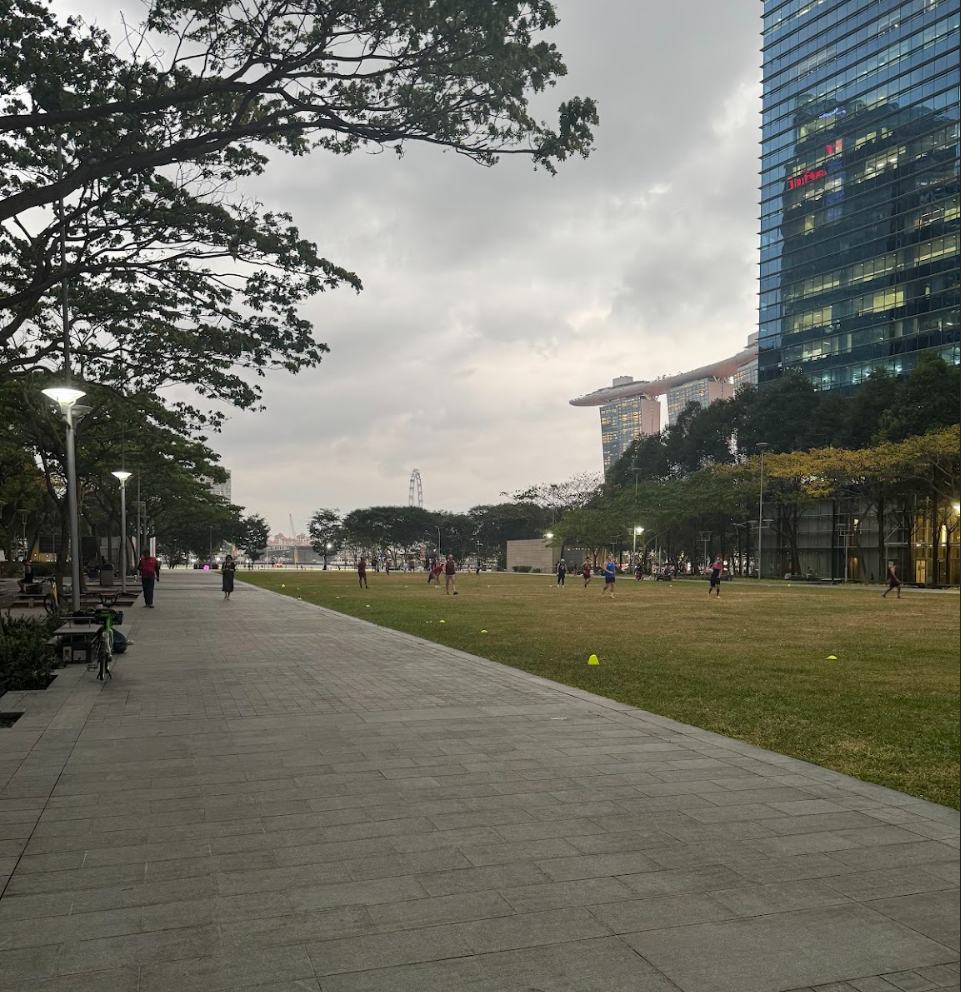
    Taking A Walk In Downtown Singapore; There Were Community Gatherings!

    The only restriction is that it must be done for a while without digital distraction or comparison with others. The reset is about you. Not you in relation to others.

    Just YOU

    What does your heart feel like doing now for sheer fun? 

    Part Two – Finding Resolution

    Surprisingly, there are times when a rut can be resolved by just reminding ourselves why we do what we do. In regaining clarity of mind, we can regain our initial sense of motivation from the reason we started. Finding resolutions can be as easy as finding reasons for your work and life. 

    But if not, we can take action. The clarity of mind allows you to reflect on what you need most – whether it’s self-love, self-development, creating community impact, deepening relationships, connecting with nature or others. This gives you a general direction(s) for how to begin modifying your life.

    Your aim becomes to find a way to connect your values to something in that domain of life. If you know your main job has no room at all to accommodate your newfound values or ideals in life, it’s probably time to look into working on a small hobby or build a new habit. Do something beyond your current routine.

    If you want deeper relationships, read up a bit on how social connection works and ask a friend out. Or if you want to broaden your skillsets or expand your knowledge, learn something new for the fun of it. It’s especially effective at dealing with ruts when you do it genuinely for yourself, with no intended economic returns. 

    For me, I write this blog as a way to document my life, share some stories and also to raise a mirror to myself whenever life throws a curveball. It’s my way of creating something different. It’s my resolution to my wandering mind and phase of life. 

    And I do hope you seek inspiration and strength to discover more about yourself and your life by getting out your rut and finding resolutions. 

    Cheers. 

    Thanks For Reading. Click Those Arrows!


    Teleport home below!


    Experience more serendipity below!

  • Lost In Life: My Lessons From Books

    Lost In Life: My Lessons From Books

    Quirkbag Collection #15 – 19.09.25

    I am officially lost in my life. It was my suspicion, now it’s confirmed. I don’t know what I want to do or where I want to go. But it’s not entirely a bad thing. At least that’s what Jerry Seinfeld assures me

    Our search for purpose and goals in life is just about as common as cars with wheels (even Doc’s flying DeLorean had wheels). This simply means that we desire something more than what we have, to become greater than we are now. Being lost in life sparked a curiosity that drove me down a rabbit hole. I got into business and self-development books over many months seeking wisdom, knowledge and philosophies of life. So this is like my culmination of it all. 

    This is not going to be like those ‘advice’ videos on YouTube, because I am just like you, stumbling my way through time. And also because there’s so many of those. 

    Here’s a quick chart of what I have read about: 

    My Life Today (for interested people) 

    After Junior College, I enlisted in the military. Today, my time in service is coming to an end, a slow and bitter end. But, nonetheless, an end I have anticipated for as long as I remember. Ironically, it’s not the end that I think about now, but the start of literally everything else after that. 

    It’s so easy to hide yourself in the excuse of ‘I am getting through (phase of life). I’ll start doing (project) after this.’ as though life is currently on pause. 

    Surprise: it’s not! As much as we delude ourselves into thinking something is just in the way of our real lives, it is our lives. But it’s the way we are taught, moving from primary school, to secondary school, to pre-university and then university itself. Everything is a means to an end. To the future ‘life’. 

    Introducing…the Arrival Fallacy. It’s something I learnt from Ali Abdaal (he’s such a mentor figure, check him out!)

    Credits: Ali Abdaal (https://www.youtube.com/@aliabdaal)

    So this search for purpose and clarity in life is like a can of worms because now I can’t un-know certain truths. And the more I read and learn, the more there is to know and learn.

    But at some point, I just have to start living. Everyone does. And that’s the trick, starting and doing it before you think you are truly ready because you never will be.

    Behind The Illusion of Wealth

    One of the best books I have read on creating wealth is ‘The Millionaire Fastlane’ by MJ DeMarco. And I don’t mean just hiding behind the illusion of wealth. There’s many types of wealth, yes, but for the most part, to create financial freedom, I have learnt the most from his book. 

    He described the reality of education systems and modern work culture so sharply that I cannot help but feel chills in my bones. It’s a bleak future. But he offers the perspective that many people search for, an escape. But there’s a price. 

    Knowing the price of the escape made me understand why it’s easy to follow the crowd and find the illusion of wealth instead. It takes willingness to fail indefinitely, to be mocked, to be afraid, to risk what we presently have and these go against everything we have been taught. 

    Success and greatness in financial wealth comes not from doing what everyone else does. And that’s the scary part. We rather extinguish the sparks of a dream than face the demons and monsters along that path. That’s the fundamental lesson from the books. And once I know it, I can’t unknow it.

    If you have a goal, a dream, then knowing what it takes to get there means that every choice is either one step toward slaying the monsters or running the other way. 

    I don’t doubt you can achieve that lofty financial goal, so long as you really want it and commit to find out just how far you can go. Otherwise, ‘wealth’ is just an ideal. 

    Alex Hormozi says it here with much more punch. 

    Productivity vs Busy 

    Productivity is yet another myth debunked by books like ‘Four Thousand Weeks’ by Oliver Burkeman and ‘Slow Productivity’ by Cal Newport. Honestly, you don’t need many other productivity books because these share all that is worth knowing. We often shy away from the ‘Productivity vs Busy’ comparison. Because it is uncomfortable and not very ‘mainstream’. 

    Being lost in life is easily attributed to busy schedules at work. Your boss pays you to work (physical action, physical output) and feels uneasy when you internalise or think for extended periods (mental action, no output). Everything needs to be fast. Who cares about being intentional and deliberate in creating quality work? 

    It takes boredom and quiet pockets of time to really let our minds work, to maximise our brainpower. Thanks to modern technology, extensive digital interruption disrupts that process. Get back to it, listening to the quiet inner voice. Don’t worry so much about replying emails after emails without really moving the needle where it matters. 

    My discovery of this concept affirms that great work is done with great effort, energy and time, and often after many repetitions and failures. It is impossible to fail if you have one goal and a relentless pursuit toward it, no matter what it costs in time, energy and effort. That’s true productivity: moving the needle where it matters. 

    Happiness Is Real?

    Happiness, like gratitude and success, is not a ‘to-do’. It also can’t really be one. What even is happiness? It’s not joy, not pleasure and certainly not an end. You don’t become ‘happy’ after doing something, at least that’s what the books find, but it sort of sneaks in when you least expect it. Just like you can’t force an emotion, you just feel it. You can be happy, you can’t do happy. 

    Those who constantly chase after success or happiness, being the elusive phenomena they are, don’t really get it.

    Well, life is quite funny sometimes. 

    I cannot say I am ‘happy’, because I am discovering my definition of it. If you can, that’s great. Because now, when it comes along, you would know it. Happiness is, and always has been, such a human desire. One day, through some experience or realisation, I hope to discover true happiness, not the many fake ideals that falsely promise ‘happiness’. 

    Being lost in life places a new lens on the way I judge emotions. In school, I felt little else but the need to study. The hectic days compress time from months to weeks and weeks to days, with most days being rather identical anyway.

    I am in a phase now, called ‘Liminal Space’, between periods of life where I get a ‘reset’ in perspective. It forces me to take stock of life, see life for what it is and not what the school or system taught it to be. Happiness was not found in this awkward gap in time, but it’s where I began to learn about it.

    Happiness is worth thinking about, take a break from emails. You keep looking into the future for what’s next and soon the answer is the grave. 

    The Messy Thing Called ‘Life’ 

    Life is messy. There’s too many things you cannot control. But there’s everything you can choose to do. Napoleon Hill’s ‘Think and Grow Rich’ is a book like blue cheese, it either divides or unites. Some say it’s the best book on success, some say it’s just scant philosophy. 

    Personally, it’s as ‘science-y’ as you can expect for a formula to be successful in life. Life is not perfect math, so why would the formula be perfect? The more digestible version of the book’s concepts is found in ‘Napoleon Hill’s Best Speeches’. Whether you find it practical, it is food for thought. Thank me later. 😬

    Being lost in life, searching for my ‘calling’ (as cringe-y as that is), means trying and testing new and random things. And that has been fruitful across the months as I have read the best advice and lessons from books. Life is an adventure that no one tells you to try and enjoy. They tell you to ‘get in the hole’ and carry on with life. 

    Oh don’t worry, life will carry on, no matter what you do. So if you are like me, meeting life at the first of many major crossroads, learn from others and look ahead at where you are going, then choose your next step, one at a time. It’s scary to face infinite possibilities. Especially when it can change your life. But there is no hero and story without an origin and monsters. 

    Despite being lost in life, I thank William Henley: 

    Invictus, William Ernest Henley

    But To Be Clear…

    But to be clear, this is not a recipe for a wonderful, smooth and incredible life. If anything, it’s a hint at a tough, bumpy road toward a good life. I always remember this quote, again, from a bulldozer of an entrepreneur: 

    ‘Just like we measure the quality of a blacksmith by the strength of his steel, I measure you by what you are at the end, not the fire and hammer it took to make you.’ 

    Credits: Alex Hormozi (https://www.youtube.com/@AlexHormozi)

    I have written what I have thought. You will find that there is no step-by-step guide. These are books I have read that I find valuable and inspiring to break free from the system which brings people to ‘live the same 6 months’ for 40 years of their career with unfulfilled souls. In fulfilling a soul, I know it is worth trying and failing every once in a while. 

    I have included a list of books I find worth reading. They are at the end, because knowing the titles first can be distracting. I know very few people would bother reading them because they are ‘boring’ or not for an exam. But after all, it’s just your future at hand here. 

    For good measure, why not have one more quote? This one, I find incredibly timeless. 

    Ralph Waldo Emerson

    And if I may say so, through these paragraphs, we have met. Being lost in life is not all bad. In fact, it’s pretty good. Because for once, you get to pick your direction ahead. 

    If you have made it this far, thanks for reading. 


    Random list of well-arranged words that made invaluable books, which I recommend: 

    • Four Thousand Weeks (Oliver Burkeman)
    • Deep Work (Cal Newport)
    • Slow Productivity (Cal Newport)
    • The Millionaire Fastlane (MJ DeMarco)
    • Napoleon Hill’s Greatest Speeches (Napoleon Hill) 
    • Think and Grow Rich (Napoleon Hill)
    • 100M Offers (Alex Hormozi)

    Enjoy more serendipitous Quirkbag thoughts by clicking the arrows!


    Click below to visit other adventures!


Adventurous updates every Friday!

X