Author: zacyeohs@gmail.com

  • The Forgotten But Valuable Trait Of Meticulousness Today

    The Forgotten But Valuable Trait Of Meticulousness Today

    Quirkbag Collection #37 – 27.03.26

    We exist in an excessively rapid modern society, where knowledge work is so obsessed about speedy results. Because if Artificial Intelligence (AI) can do it and you can’t, then you aren’t needed right? But there’s an underrated skill that enhances your human presence at work. That’s the skill of being meticulous.

    Speed kills meticulousness. Machines can’t be meticulous (yet) unless you force it with prompts. Why else do you think students who copy-paste AI responses get in trouble? 

    Speed in tasks manifests like the pinball in a machine, always knocking and crashing between sides of the wall. Sometimes employers like speed for trial and error, but likely not always.

    Prioritising speed often comes with low quality output. Meticulousness requires your deliberation, your pause to consider the nuances and maybe derive a better alternative. You can deliver better human results by being meticulous than by being fast. 

    What Is Meticulousness? 

    You can easily find the dictionary definition. But more than just a description of a person, meticulousness is the difference between a scrappily completed task and a well completed one. And sometimes that directly impacts your impression on others, superiors or not. 

    Meticulousness is a skill you can build, a habit you can cultivate and a mindset you can adopt. It’s just something you apply to elevate the work you do. You could start with additional thorough vetting of your work; ponder and refine the tiny details of a report; or perhaps take time to be precise and clear in the presentation as a form of meticulousness.

    Most importantly, meticulousness is a choice. You can choose to be meticulous by putting in extra effort or energy to check, improve, test and simplify your work. Or you can just churn low-quality passable results.

    How To Be Meticulous? 

    Pay attention to the work you do. You know that phrase ‘going through the motion’? It’s a description of apathetic compliance. To become more meticulous, try doing the opposite. A good guiding phrase would be to put your heart into it and to do it to the best it possibly can. It’s almost like you are creating art. 

    Tip: Read Seth Godin’s book ‘Linchpin’ which discusses this concept of creating your art by putting your human touch into your work. 

    Borrowed “Linchpin” From The Library A While Ago

    If you have worked in F&B business outlets, it’s incredibly easy to see how standards and quality can falter due to lack of meticulousness. If anything, the reputation and brand of the business depend on the level of meticulousness the staff has to maintain the quality standards. 

    When I work at Ya Kun, there’s plenty of things to do before closing up, and sometimes, forgetting to do them means burdening others with extra tasks. Here, meticulousness makes the difference between being responsible and careless or shoddy. Being meticulous also forces the quality of toast served to be the best it can be, rather than chase speed at the demise of quality. 

    Ultimate meticulousness comes from genuine passion and care for the impact the outcome creates on others. That’s the kind of meticulousness that has been elevated to a dedication to the craft.

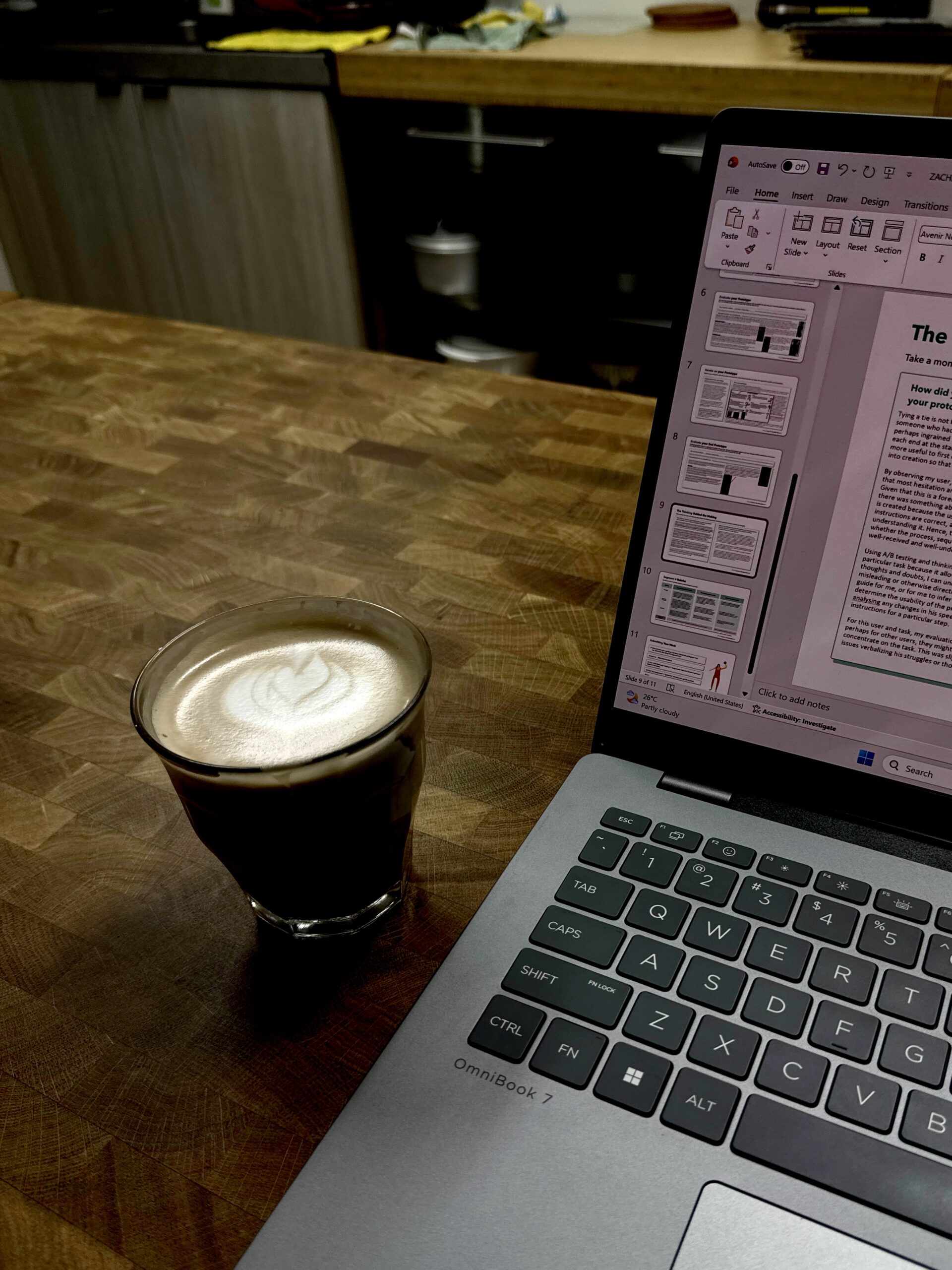
    I doubt you’ll get a fantastic cup of coffee if the barista paid zero attention to brew it. Same for food at any given stall. Same for any set of presentations, or any task you do. It takes intentional effort to do something well, effort that seeks to take care of even the smallest details to raise the overall quality. 

    Watch Where The Line Blurs With Meticulousness

    Being intentional, quality-driven and detail-oriented is not the process of chasing perfection. There’s a clear distinction between perfectionism and meticulousness. Perfectionism is an ideal, the vanishing point which cannot be reached. It’s a concept. 

    Meticulousness has an imperfect beauty to it. You can sense meticulousness, albeit its existence on a spectrum. It’s an homage to our human flaws because being meticulous in any task implies your desire to deliver high quality output and maintain high standards. On the contrary, being careless, haphazard and shoddy reflects apathy and indifference toward the task and outcome, which then highlights your character flaws. 

    While perfectionism is indeed the enemy in most cases, it’s not necessarily a bad springboard to develop meticulousness. Provided that you remember the goal is to be meticulous, rather than perfect, perfectionism can help you spot areas to improve, details to tweak and pushes you toward higher quality work or output. 

    Striving To Become (More) Meticulous 

    It’s incredibly hard to be meticulous under pressure, especially if everything needs to be fast. 

    Quality drops easily when there is a rush to complete tasks, especially if there are many of them. That could explain the off-standard coffee you get sometimes. 

    You’re likely to overlook details or neglect something. But meticulousness is key to excellence, even if you aren’t the smartest, finest or best at any given task. Cultivating or adopting meticulousness as a habit would benefit you over a lifetime. While you can’t be meticulous at every single task every single time, training the skill can breed proficiency at reducing errors and giving higher-quality output more often.

    Maybe it’s the dreary job, the stale office, the boring dynamics or the toxic culture that drives out the desire to be meticulous. But in an environment where most people aren’t meticulous, being meticulous makes you different. It makes you more valuable.

    So if you want to be more meticulous, pay more attention to the work you actually do, all the tiny details. Think about any mistakes or areas for improvement. You can elevate your work quality by doing it with all your heart. Meticulousness takes energy, effort, patience and is best nurtured out of care; genuine care for the outcome. The result is felt by those who see the work or output.

    It’s tedious and draining. And that’s why people don’t do it much anymore. 

    But you can.

    Thanks For Reading. Click The Arrows For More!


    Hi! I’m Zac, the guy behind this serendipitous, quirky blog. I’m currently on a quest to find out more about myself before Uni begins – who I am and what life has to offer. This blog is my little space where I step out of my comfort zone to share my thoughts and life experiences. I hope you enjoy reading the weekly posts. Share them if you like, or not.

    Teleport home below!


    Read more serendipity below!

  • 3 Lessons After Writing My Blog For 1 Year

    3 Lessons After Writing My Blog For 1 Year

    Quirkbag Collection #36 – 21.03.26

    Happy Birthday Quirkbag! Quirkbag is 1 year old now!

    I still cannot believe I committed myself to writing a blog for 1 year. That’s 52 weeks or 365 days of weekly (-ish) blog posts about my little random life in a bustling world (that almost no one reads).

    If for some reason, years from 2026, that future Zac is still writing Quirkbag and people revisit this post…say on 8 December 2032, welcome and thank you very much, sincerely.

    One year of writing comes with its fair share of ups and downs. There are weeks where I have been extremely motivated to write because I am excited to share my thoughts and ideas, and other times it has been a slump. 

    If you think a year of writing (in a rather informal, casual and borderline humorous tone) has made me far more proficient, think again. Imposter syndrome is still real and alive, but that’s for later. 

    As I look back on the year now, I realise that my endeavour to document, share and connect our lives with others through media is not new. Many teenagers, college students and 20+ year old youths started their own journey like me on YouTube. Some of the more popular youth lifestyle YouTubers started vlogging 5, 6 even 10 years ago before they grew into their current self. If you want examples: Ali Abdaal, Jesse James West. Even Casey Neistat started somewhere on YouTube.

    Everyone is afraid, shy and awkward at first. But eventually, some of us decide to take the first step. In that spirit, it seems apt to share some lessons to encourage more of you to do the thing that makes you a little afraid, from my experiences over 1 year of writing. 

    1: Do The Thing, No One Will Care

    When I published my first post on Quirkbag on 21 March 2025, nothing happened. It was just a blip on my screen. I (and most of you) always imagine something crazy would happen if you make something public. 

    (Consider how plenty of people post haphazardly on social media…zero hesitation there.)

    I had a quick spike of fear when I clicked “publish”, followed by a sense of satisfaction that I took a step out of my comfort zone. The fear of posting content like blogs and short articles will always be there. It’s precisely why it’s out of your comfort zone. And from that, you’ll grow.

    Even today, I still feel slightly anxious when I write something more personal or unconventional because of my societal conditioning. We’re so afraid some random stranger will think poorly of us when it shouldn’t affect you. We’re too afraid to deviate and try something different. 

    But I knew I wanted to try something else, something for fun, for myself. Starting a blog is just my way of aligning myself towards a more intentional and genuine lifestyle. 

    An image of my shadow on the ground as I walk along the street at night
    Walking Along The Street At Night After Work

    One of the reasons I finally stopped procrastinating trying to blog is a line I heard: “You can do it and not tell any friend or family about it.” I liked the “lower risk” it implied. No one has to know that you took a leap of faith to try something “cringey”. But starting something new is always “cringey” and nerve-wrecking because it’s new and foreign. There’s also the irrational fear of failure and embarrassment. But you can eliminate it by just doing it quietly. 

    So do that thing, and tell no one until you are comfortable with it. And when you do, shockingly and funnily, no one will care (yet). 

    2: Start A Project For Yourself

    Starting your small project forces self-growth and a discovery of who you can be. 

    I started writing Quirkbag because I thought it was a cool and unconventional way of articulating and sharing ideas. Without specific ideas, plans or goals, I started just wanting to see if I can go a year writing without quitting. I wanted to be “adventurous”. 

    Here we are. 

    With our lives overwhelmed by social media, we don’t need more fads, trends or dances. And that wasn’t me anyways. I am the introverted one who isn’t conventional or popular. The blog (I hope) reflects that.

    More specifically, starting your project for yourself means reflecting your true authentic self in it, in all aspects. 

    Standing along a cliff edge in Phuket with the background being an ocean
    Standing Along A Cliff’s Edge In Phuket

    Writing a blog was my way of trying to develop myself, to build courage in self-expression and grow beyond who I was. And that’s a liberating reason to start any self-growth project. You can do something for you, without needing to tell anyone. 

    Of course, maintaining the weekly schedule I committed myself to is challenging. There were weeks I skipped posting. Knowing that I wanted to write, that I wanted this project pushed me to get back on schedule. 

    That’s the single most powerful aspect of self-initiated projects: in wanting to do it, you’ll always find a way back to doing it. 

    Sure, motivation and inspiration ran low most weeks, but I always resolved to write because it’s a commitment to myself. Secretly committing yourself to your project without telling anyone relieves external pressure and gives you freedom to create. It’s your life, your experimental project. And so far, I discovered I can stay consistent, more than I expected. 

    That means you can too, if you truly care enough to commit to something for yourself.

    3. Writing Forces Reflection; Trying Forces Intention

    Behind any good blog post or article is a tedious and energy-intensive amount of research. That or the writer is some wizarding genius with words. Seriously, I can’t just make a post out of nothing. Sentences don’t just string themselves. Paragraphs don’t form in an instant. Writing requires thinking and forces original ideas that feel random and offbeat. 

    But that’s the art behind human-generated posts; the struggle to create something real and genuine based on human thoughts. 

    Writing for Quirkbag forces me to reflect on the content I have consumed, the videos, books, articles or events that have happened. There are hundreds of edits and re-writes that happen before the final piece is posted. You don’t see it. Just as I didn’t understand until I started writing. But if you find Quirkbag chunky, messy and unpolished…well, only the last one is intentional. 

    I find myself asking: 

    “Why is this sentence awkward?” 

    “What is this saying?” 

    “Am I even making sense here?” 

    “What am I writing?” 

    Questioning myself is 90% of my editing process. The rest is spotting grammar mistakes, paragraphing and reducing sentence lengths. 

    In some ways, writing-induced reflection here is similar to the effects of journalling. Putting words to vague ideas and emotions can create room for self-exploration of why and how you feel or think the way you do. Forcing yourself to phrase it makes you think deeper and more intentionally rather than settling for verbal nonsense. 

    And yes, imposter syndrome is very real. Being a novice blogger and writer, feeling weird is a routine. Yet, a tip I learnt is simply describing and reflecting on your genuine thoughts, ideas and experiences. That alleviates the sense of pretentiousness. Anything you reflect on is original and sometimes there’s value to be gained. 

    Other Miscellaneous Discoveries From Writing

    There are other experiences from writing, but not all of them are as important. For the curious ones, here are some others. 

    • It’s harder than I thought to find suitable stock images that fit some posts. It used to be one of the hardest things to do before I hit “publish”. Nowadays, I just try to take more photos personally and save it for future posts. 
    • Finding ideas can be tough amid boring weeks. Sometimes nothing interesting happens. That’s just life. But there’s the crux of serendipity. Nothing is planned and everything is natural. Having no ideas can mean the most unexpected topic, or literally the one where I said I am lost. Because I am. 
    • “Document rather than create” is something else I remind myself of whenever I face writer’s block. Remembering even the smallest details in experiences can sometimes trigger more serendipity. 
    An Archway In A Fortress In Oslo

    Writing this blog has been a secret project of mine for the last year. It has been a personal thrill. I really didn’t think I would make it this far, and now that I have, maybe I’ll keep writing for another year. 

    I hope you, as the reader, will find some value and meaning in my posts.

    And go start your own project.

    Thanks For Reading. Click The Arrows For More!


    Hi! I’m Zac, the guy behind this slightly off-beat, quirky blog. I’m currently on a quest to find out more about myself, who I am and what life has to offer before Uni starts. This blog is my little secret space where I step out of my comfort zone to share my thoughts and life experiences. I hope you enjoy reading. I do weekly posts. Share them if you like, or not.

    Teleport home below!


    Read more serendipity below!

  • The Process Of Becoming

    The Process Of Becoming

    Quirkbag Collection #35 – 13.03.26

    It’s been 51 weeks since I launched my website and started writing my blog, Quirkbag, this very thing you are reading now. 51 weeks. There’s plenty that has happened in this time, but most of all, it has given me a chance at seeing who I am. My thoughts, my reflection, my influences, my experiences and my lessons written into words here.

    Throughout the weeks, I think I have grown (albeit slightly) from just a soldier, or former student into someone who has tried to think deeply and experience more of life. So I thought it’s a great time to reflect on the process of becoming, becoming me.  

    The Goal In Mind

    We live in a very goal-centric world today. That’s a good place to deposit your focus, but cautiously, because it might end up being a black hole for your focus. Whether it’s personal to-dos, that desired exam score, that next cool thing to try or the dreary project task at work, external goals govern our daily lives. We live to complete checklists, often without believing in them. Yet, without completing them, we feel empty, as though the day was merely wasted. 

    I have experienced plenty of this feeling. From my schooling years to my army days and even now, when far detached from both, the residual effects of a goal-driven, outcome-driven life continue to linger. Keeping the goal in mind can be very frustrating because it forces us to regard any non-related injections or events as distractions. But that’s precisely when life happens. 

    If going to the gym 3 times a week is a goal that falls under the North Star of becoming healthier, does going to the gym twice a week make you an outright lazy failure? Objectively, no (but your mind screams ‘yes’ if you’re like me, blaming yourself to hit a higher standard). I should emphasize, the North Star is becoming healthier, not gym 3x a week or you lose a limb. Our obsession with sticking to goals, ironically, seems to work against the process of becoming better. 

    It’s not that skipping gym sessions every so often is encouraged, (you should avoid that, obviously), but that doing so sometimes does not diminish your North Star. The process of becoming (healthier, or otherwise) takes time, and no one is perfect. Blame won’t bring back that third gym session. 

    Goal-Driven Guilt vs Process-Driven Empathy

    Yes, we love to blame ourselves for not sticking to the to-dos or the arbitrary goals. And for a valid reason. We have to do the work to become better or different. The dopamine hit associated with completing ‘goals’ is strongly tied to our self-worth. It feels ‘productive’ when we check things off a list, but who are we truly becoming? 

    To build a new habit, or train discipline, there’s every reason to stick to a plan or regime and possibly move heaven and earth to complete the tasks. But if there is a North Star, being aligned to it matters more than forcing every task to completion. 

    Goal-driven guilt is our own reminder to ‘be better’ and ‘do more’ in future. But in the last 51 weeks, missing a few Quirkbag posts has not steered me away from the North Star of documenting and sharing my thoughts and experiences. 

    I offer the idea of process-driven empathy. We are all in our timelines where we grow and learn in our lives at our own pace. Fundamentally, we’re different people. So why should we all use the same boring goal metrics to judge ourselves? Empathising with my own schedule constraints allowed me to understand why I skipped Quirkbag posts. Knowing that my North Star shined brightly nonetheless helps keep me grounded, even if I occasionally broke from the routine or the goal

    Clearly, we are in our process of growing and becoming ourselves. We have to embrace this process, our own progress, because a purely goal-driven life is a binary life.

    It’s yes OR no. There’s no in-between. It’s absolute and dull. And that’s not life because we know life is a journey. Part of that journey is our process of becoming; our finding who we are. 

    Embracing The Process Of Becoming

    We live also in a success-driven world, regardless of age, gender, race or background. We are taught to grow up and be ‘successful’, we are told that we should strive for ‘success’. 

    What does that mean? 

    It’s easy to be clouded by conventional markers of success. Money, fame, the vague ‘happiness’, health and whatever is trending on popular social media. 

    We forget that we are all on a journey, albeit a very slow one when judged from a day-to-day basis. String the years together and I think it becomes scary. You see if you really lived, if you really tried, if you really kept going despite hardship toward your North Star. 

    Embracing the process of becoming means accepting that it takes time to grow, to learn, to cope with the struggle and to step into the shoes of your better self. It might be years, even decades, but it’s your journey from one era of life to the next. And hopefully that’s someone you want to be, aligned with the North Star you chose to follow. 

    My Process Of Becoming? 

    I never considered myself a writer or blogger. But I thought it would be fun to try and see how far I can take it. Quirkbag has allowed me to imprint my steps of becoming over 51 weeks. Of course, not every new endeavour has been included. But for the most part, from books read, to vacations and random thoughts, I feel my own growth has been a slow burn. The process of becoming is slow, but it is shaping this chapter of my life. And I can see it has been marked by plenty of introspection and thoughts I share with you. 

    Here’s some of the unexpected reels: 

    At The Airport Ready For Departure

    I had the chance to travel with friends overseas for the first time.

    Practicing My Latte Art Is Now A Routine For My Morning Coffees

    I never thought I would dabble in latte art as an interest.

    The People Who Play Here Truly Need No Rest But I Do

    Never thought I would join random frisbee games for the fun of it either.

    Sitting With The Sunset Along A Busy Street; People Really Love To Run

    Sitting alone in the busy streets with the sunset really forces you to think about where your life is headed. It brings tranquility and a yearning for clarity.

    Regardless of where Quirkbag goes, I am excited to see where my process of becoming will take me. And I hope you’ll enjoy the journey with me. 

    The one-year milestone post shall come next week…:)

    Thanks For Reading. Click The Arrows For More!


    Hi! I’m Zac, the guy behind this slightly off-beat, quirky blog. I’m currently on a quest to find out more about myself, who I am and what life has to offer before Uni starts. This blog is my little secret space where I step out of my comfort zone to share my thoughts and life experiences. I hope you enjoy reading. I do weekly posts. Share them if you like, or not.

    Teleport home below!


    Read more serendipity below!

  • Struggling to Become A Better Person

    Struggling to Become A Better Person

    Quirkbag Collection #34 – 06.03.26

    There’s a line which Jim Rohn shared in his lectures – ‘set a goal to be a millionaire for what it’ll make of you to achieve it.’ You don’t need to be wise to know that he wants you to develop yourself, to become better. In that process, maybe you’ll become a millionaire. I mean, it’s really hard for the average person to simply make a million dollars. It could take decades, if at all. But that struggle to become a better person is not any easier. 

    As an individual, becoming someone better means turning yourself into a different version of yourself. Someone you currently are not. That’s incredibly hard, notwithstanding all the self-help advice. It takes fundamentally changing your behaviours and mindsets to shift your actions toward that of a better person. 

    That means a lot of hard work and discomfort. It’s plenty of forcing yourself to do things you would not normally do.

    As I navigate this phase of my life, a lot of attention has fallen to the self-development sphere – from exercising to reading and learning skills for my own betterment. It remains extremely hard to tell where you’re headed in terms of self-growth because there’s this cloud of fog that impairs your clarity when you’re in the midst of it all. 

    Much like that line from Steve Jobs, you cannot connect the dots looking forward, you can only connect them looking backward. You just have to trust your own growth. 

    What Is A Better Person? 

    The struggle to become a better person is a multi-causal problem, but nonetheless (I think) a benign problem to have as far as problems go. (Debt, for instance, seems way worse as a problem.) It implies a willingness to improve both intrinsically (yourself) and extrinsically (for others). Don’t worry, you’re probably a good person already for wanting to be better. 

    One likely reason is the lack of a clear definition for ‘better person’. I don’t even know what that means. So how do I achieve that? 

    ‘Better’ is such a vague term that you have to define it more tangibly – be fluent in Mandarin, freelance as graphic design from scratch or volunteer twice a week. There are various tools for goal-setting online. Defining your own ‘better’, as simply as possible, helps push yourself towards that end goal – aka that next version of yourself.  

    So if my ‘better’ means going to the gym twice a week, why does it suck so much to stick to it? There’s still resistance when it comes to doing the thing to make you better. You find it hard to wake up early, you feel too tired to exercise or the weather feels too cold. 

    There’s infinite excuses to avoid ‘becoming that better person’. 

    How does that make sense? We should technically want to do the thing, because we want to be that ‘better’ person. Or do we?

    The Pursuit of ‘Better’ 

    Chasing self-improvement is not a bug but a feature of simply wanting to grow and explore. Every time we learn something new, see something different and explore something else, we are better because our horizons are broadened. We gain knowledge, experience and even skills from the encounters. 

    But contrary to passive cumulations, our active pursuit of betterment can prove arduous. Therein lies the struggle. 

    We struggle – procrastinate, delay, postpone, dread, abhor – to do different things because that is just not who we are. Passive cumulation from general life or formal schooling is beyond our control, we just live through it. But active pursuit requires the voluntary action of taking on extra work, tasks and worries instead of the bare minimum. 

    So to answer that question on why we find it so hard to do something we should technically want to do, it’s probably because we know we don’t have to do it, we can skip it and continue lingering in our comfort zone until life forces change. If that sounds familiar, it’s what I described as passive cumulation of experience. 

    You don’t have to exercise.

    You don’t have to volunteer.

    You don’t have to change…yet

    But we would like to. 

    That’s why those goals loiter in our heads.

    I should go to the gym this week” or “I’ll try meal prepping this weekend”. 

    The only way to be ‘better’ is to put in the work, actions and behaviours of your desirable self. So how do we bring ourselves to do all the things we need to do to be ‘better’? 

    Fortunately for us, there’s a whole industry of self-help ready to dish out advice from habits to productivity to memory and more. You just have to pick one method to help you work towards that ‘better’ self. 

    Am I A Better Self Today? 

    If becoming a better self were that simple, won’t we all be saints? Considering the news still reports all kinds of debauchery, we’re not all ‘better’ versions of ourselves. And maybe not all of us want to be. We could just embrace the person we currently are. Would that be so bad?

    Maybe not. Not until life forces change upon us. 

    We are, or at least I think we can be, better people today than we used to be simply by virtue of choice. In choosing to learn from our experiences, our struggles and our old problems, we can be better by being kinder to our present self and others who may be going through something similar. (Being kinder to ourselves might be the hardest problem yet.

    There’s something reassuring about becoming better: the tasks don’t get easier, the goal of a ‘better’ self is not changing, but you are getting stronger and closer to being that ‘better’ self. Going to the gym is not easier, you’ve become stronger. 

    When the struggle starts easing, that’s because you likely shifted part of your identity to embrace the habits or tasks done by that ‘better’ self. 

    But the journey is rough. These tasks compete with our current lifestyle for our finite time and energy. Amid the self-doubt and lack of consistency in our efforts to be better, we face the fact that maybe we just don’t want that “better self” as badly or urgently. 

    It’s not as important as whatever is the worry of the day. 

    And that’s normal. That’s why there is the struggle to become better, we fundamentally have to squeeze changes into our lives. 

    Living With The Struggle 

    As we grow older, we inevitably grow into ourselves as individuals. We have a firmer identity of who we are. It is also true that as we grow, we continue to struggle because we face new situations, problems and people in life. Perhaps the struggle of becoming a better person never ends because the person we are today is insufficient for our lives in future. 

    In other words, life forces us to grow, or we’ll never adapt. 

    Choosing to become a better self is hard because consistency in doing the tasks required to become that version of yourself is immensely difficult. The struggle is to be expected. That’s the process. And sometimes I do wish it were easier to become a better person. 

    I’ve committed myself to going to the gym at least 4 times a week and the only reason it has become less dreary is the change in my mindset. 

    I used to see it as an obstacle in my day. It was not part of my life back then; going to the gym was not part of my identity. So I struggled to bring myself there. It always felt weird being that newbie. But now, I enjoy the process of becoming. Not the end goal of having some physique or muscle mass. But the act of going to the gym; the act of completing part of my life’s routine. 

    Embrace the Mindset

    Becoming better feels partly enjoyable once you begin to embrace the process of becoming a better self, the process of growth. Building the new routine is easier with a mindset that does not see tasks as “obstacles”. Embracing this change in your identity and self is what would propel you to sit through the tasks and minimise your struggle. 

    With Jim Rohn’s advice, the million dollars merely motivates you. To be a millionaire, you have to become a person who earns a million dollars.

    You first become the person, then you get the outcome. We struggle from one point to the next, but we make it anyway. Mostly.

    Thanks For Reading. Click The Arrows For More!


    Hi! I’m Zac, the guy behind this slightly off-beat, quirky blog. I’m currently on a quest to find out more about myself, who I am and what life has to offer before Uni starts. This blog is my little secret space where I step out of my comfort zone to share my thoughts and life experiences. I hope you enjoy reading. I do weekly posts. Share them if you like, or not.

    Teleport home below!


    Read more serendipity below!

  • Letter To My 18-Year-Old Self In JC

    Letter To My 18-Year-Old Self In JC

    Quirkbag Collection #33 – 27.02.26

    The 2025 A-Level results are released today. Literally every single JC student can feel the anxiety overflowing from the school hall. I remember exactly how it felt when I collected my own results 2 years ago, so nervous that I chose to arrive late intentionally to avoid the crowd and the unnerving probes from classmates. 

    I stood outside the hall while the crowd dissipated, entering only when there was no queue left. There was no mental capacity for conversation as I could only think about the results in my hand once I had collected it. I had this palpable anxiety and fear that rivalled my inner composure. 

    But that’s all history now, and you can easily find my academic background on LinkedIn. 

    A Reflection Inspired By Pete Sampras

    It felt an apt time to reflect on my own JC journey now that there is some distance between me and my old self. And yes, it does seem true that growing older and finishing NS have granted some clarity. 

    I read the letter Pete Sampras wrote to his younger self and felt encouraged to be kinder to my past self. So what better way to reflect than through a letter to my old self; a younger Zac who had more naivety, endurance and stress than the current one. 

    The Letter

    Hey dude, 

    I’m you, but older. 

    In 2023 your life is going to pivot greatly, but the impact is felt afterwards.

    As you celebrate your 18th birthday, when the skies are still clear and your mind less cluttered by school, you should take more time to enjoy that day. It’s a day you won’t get back. 

    You will enjoy Mediterranean cuisine for lunch, but the exact food and taste you won’t remember very clearly in the coming years. But it was the experience you remember and hold dear, just like many others. 

    A classmate will wish you well, but that friendship will end abruptly in several months. You will not know why, and you’ll keep wondering until you enlist in the army. Eventually, you’ll move on; so will they (at least that’s what I think). 

    This will teach you to hold your closest friends tightly and choose carefully the ones you wish to keep investing in. Your singular focus on individual excellence, consistency and commitment to yourself will be isolating. You will have meals alone, walk alone, study alone, but that’s because you know what you need to do.

    Deep down, you know what it takes. Don’t let people confuse you. 

    More and More Of The Same – Mundane

    From April to June, your life will be incredibly mundane and repetitive. The days blur into one. But even you can foresee it now. 

    You will conclude your time in the school’s Air Rifle/Pistol Shooting Club with an unremarkable and arguably tragic performance in the final competition in which you will ever partake. The night before, you and 2 other team mates will each give a parting speech. 

    It’s important you don’t hide what you feel and tell them the truth, because the next day, you will not make the cut to the Shooting Finals and as you struggle to accept it, the parting speeches remind you of the journey you’ve been on. 

    Eventually, you’ll learn to accept it. Trust me, even though it’s a very bitter pill to take. 

    Farewell Scribbles on the Whiteboard Before We Left

    Your volunteering project will end in April, with a rather well-received Easter Egg Hunt which you will plan and organise. In May, more juniors than you expected will apply to take over this project from you, from whom you will select 5 that you will be proud of. They all want the same thing – to run the project.

    It’s critical that you stick to your intuition for which junior suits the project best when making your choice of successors, because that’s as good as you’ll do. That’s as good as your senior did when he chose you. The rest will take care of itself. 

    It will not be the last time you cross paths with your senior, though you’ll never see him again until Nov 2024. 

    Studying And More…Studying

    In June, you will have a first taste of what grinding for the A Level exams feels like. You will make a revision plan for your 5 subjects that seems wholly impossible to complete, and your instinct is correct. You don’t end up finishing the plan. 

    Instead, you adapt it based on your progress and areas for improvements. It ends fairly well. But it won’t be important because you won’t remember the results. 

    In August, you will study for the prelims of 5 subjects without many breaks. When you feel out of gas, you must remember to hang in there. It’s only the prelims.  

    After the prelims, you will serendipitously reconnect with an old friend and find yourself enjoying lunch with him after revision classes. It’s a rare chance for you to feel at ease again as you genuinely bond over the shared struggles of the exams, the difficulty of the papers, the unrelenting stress and the mutual answers to “so what are you going to do later when you go home?”

    Like mirror images, your answers are usually mutual – study, albeit for a different topic. 

    As October comes, you will be the most stressed and mentally torn you have ever been. And you will not feel ready to take on the pressure. It’s the most mentally gruelling and exhausting experience you will have, where every single day is a fight for productivity and revision. You will never have felt more alone. 

    There will be so many mornings spent sitting at the same table outside the offices studying for General Paper (GP) while waiting for revision classes, sometimes in the company of another classmate. It will be extremely slow and boring. You won’t even feel like you are progressing.

    Nonetheless, never quit, remind yourself often. 

    The End Draws Closer

    Before the end, you will be asked to attend your graduation ceremony. You will be very tempted to skip it because you find it a waste of time. You would rather spend it at home studying. 

    That would be a mistake. 

    Promise me that you will still go for it, even to just sit and walk across the stage for your 20 seconds of fame. It is closure for you, and you deserve to walk that stage after everything that you went through. 

    Enjoy that last moment before you leave, holding that bouquet of flowers in the warm afternoon sun. You will do well to take that photo with your family, even if you feel reluctant at the moment thinking about the upcoming exams. You have now graduated. 

    Graduating From School;
    Sweeter Than Bitter, At Long Last

    Once A-Levels begin, time will fly by faster than you think. The first week is the worst. You will be stunned and shocked. But you roll with it. You just have to remember to take it one paper at a time. The weeks begin to pass faster and it gets far easier towards the end because all your toughest papers are at the start. 

    When it does end, please indulge in that moment a little more. You will remember taking one last walk along the overhead corridor above the canteen toward the gate, as you tell yourself that at long last, it is over and you never have to go through it again. 

    At home, you finally relish in disposing of all the newly irrelevant papers, notes and practices. You’re free from school. 

    This Is Your Life Now

    At the end of it all, your future is changed because you will have chosen to devote an enormous amount of time and life into studying. You will keep asking yourself whether all that sacrifice was worth it.

    Sometimes I’ll say “yes”, and other times, “no”. But you will do well. 

    Your life is now yours again, briefly, and you will benefit from cherishing the time spent with your family. There is no next exam to shift your focus to anymore. This is literally your life now. 

    I only wish that you found more joy and enjoyment in your JC journey, because it was one that very few get to go through. Oh and, say thank you to your closest friend who went through it all with you, day by day, because he did not have it any easier.

    He’ll continue to be your best friend. 

    He still is. 

    Yours truly, 

    Zac


    No number of words will ever come close to describing the brutal and tumultuous studying that some JC students do. There are very few people who can relate and empathise with this unique kind of struggle and pain. And sometimes we forget that we’re only 18. 

    The hard work can go unrecognised.

    It’s true that the world does not reward effort. Universities don’t do charity under the disguise of someone’s “effort”. But we should never forget about “effort”, especially the relentless kind by those around us. 

    Thanks For Reading. Click The Arrows For More!


    Hi! I’m Zac, the guy behind this slightly off-beat, quirky blog. I’m currently on a quest to find out more about myself, who I am and what life has to offer before Uni starts. This blog is my little secret space where I step out of my comfort zone to share my thoughts and life experiences. I hope you enjoy reading. I do weekly posts. Share them if you like, or not.

    Teleport home below!


    Read more serendipity below

  • Why Seeking Novelty Becomes Frustrating

    Why Seeking Novelty Becomes Frustrating

    Quirkbag Collection #32 – 20.02.26

    There are few things like seeking novelty that make you feel refreshed and energised. Besides a cold shower and skydiving, seeking novelty is the easiest way to thrill yourself in your days. So that seems like a decent place to move towards adventure.  

    Seeking novelty has been my motto for the past few months as I navigate my “gap year”. But recently, this idea of seeking novelty has brought some frustration.

    But it’s probably a “user problem” rather than a flaw in the idea of seeking novelty. 

    “Seeking Novelty” As A Motto So Far

    To pump more novelty into my otherwise boring life, I started (then closed) a tiramisu business for fun, worked freelance in F&B, applied and got 2 part-time jobs and attended an enrichment course out of curiosity. And I also write the weekly blog posts. 

    It’s a fairly hectic schedule, with a decent chunk of novelty.

    So has novelty really lived up to the hype? 

    Yes…initially. 

    And that’s expected, if you understand “novelty” literally. Whatever I do stops being new once I do it for the first time. It becomes familiar as I learn to adapt. 

    But doing anything for the first time makes you feel that adrenaline and anxiety, which is a tell-tale sign of novelty. It’s the fear that comes with unfamiliarity and discomfort. Perhaps even the fear of embarrassment or failure. 

    Seeking novelty goes hand-in-hand with forcing yourself to sit with mild (or moderate) discomfort. Novelty forced me to work in a new environment filled with strangers to gain the experience. It also led me to independently choose to attend a (wine) course in which I was the youngest and least experienced. 

    Committing to novelty brought me to sit with more discomfort and anxiety than I was used to, and that I find is a skill on its own. Pushing yourself into discomfort and anxiety but doing the thing anyways. 

    Novelty Evolves…And You Can’t Control It 

    Novelty likely either ends in a new routine, or fades into a one-off distant memory. 

    When I first started at one of the part-time jobs, I had no skill in the position. It was painful to suck. But there was grace in embracing the “suck”, in accepting the feeling of being a beginner again. Voluntarily. 

    This is novelty at its prime – something so new and foreign that you could not do. In this case of novelty, there was thrill from learning and doing. But there was also anxiety and discomfort in whatever I tried to do. 

    Now, I am slightly better at the job. The novelty has mostly worn off, and going to work now feels more like a routine than an adventure. That’s the result of time and intentional exposure. And therein lies an underlying frustration – the routinisation of our endeavours. 

    The more you do a task or experience something, the less novelty you feel. It leads to frustration because novelty was your goal, so now you need to find something else. 

    I guess the question I ask myself is, “without novelty, is this something still worth pursuing in the near future?” (Who knows?? We’ll see…)

    You could choose to control this “novelty” by pursuing a ridiculous number of things. But eventually, seeking novelty is just a tool to jolt you. I really doubt it brings life-long satisfaction. You could also choose never to engage in that activity again, because maybe it sucked, but novelty evolves either ways and it never stays the same for that particular thing.  

    Novelty is a one-time punch card for most experiences – it’s the “first time” that hits the hardest, then wanes with subsequent tries. 

    Of course, skydiving is probably still a novelty after 10 jumps for the average person. 

    Will You Stop Seeking Novelty? 

    I doubt so, at least in general. Life is full of novelty. Seeking it just makes life more interesting sometimes.

    Novelty is just a word to describe change, albeit with a more positive tone. From a new apartment to an unexpected health diagnosis, novelty springs from time to time. What you call it depends on whether you like it or not. But the issue, or experience, is nonetheless new. 

    Seeking novelty hints at a more optimistic approach towards life – one that you are steering and actively navigating. Conversely, novelty that strikes you off guard and leaves you hanging turns out to be curveballs – like a cancer diagnosis. 

    We seek novelty as a means of shaking up the routine. But seeking novelty stops being fun and exciting when we are no longer in control. When we experience novelty in a way that shakes our boat a bit too hard, we retreat into anxiety and frustration. 

    Regardless of whether anxiety and frustration arise, novelty is just life exerting itself. How we perceive it dictates whether you call it “novelty” or “life sucks”. And so seeking novelty, in the conventional thrill-seeking sense, is really a search for meaningful experiences to enjoy.   

    Solution: Should I Seek Novelty?

    Honestly, the answer depends on your present phase in life. But novelty will never substitute fulfilment.

    If you think about novelty like the gas pedal in a car, flooring the pedal as you are nearing the speed limit is foolish. If your life is already zooming up and down with your emotions oozing out the window, my humble suggestion is to tone down the novelty and excitement. You could use a slower pace and some tranquility. 

    Yet, if you’re like me, and you could use a jolt regularly to explore your world, seeking novelty is a practical way to open new doors. I never started a business until I sold tiramisu. I’ve never voluntarily attended a course before, until recently. 

    Wine Course

    It takes effort to force yourself into doing something new, especially if you’re an introvert that prefers comfort and no limelight. This blog was my novelty in Mar 2025.

    Seek novelty knowing that life has its own bucket of it. You never know when you will be splashed. In a dilemma, I often ask myself, if the worst-case scenario here occurred, is this still an experience worth embracing and having 50 years from now? 

    Or…if you prefer a more drastic, cinematic version: Get in the car.

    Thanks For Reading. Click The Arrows For More!


    Hi! I’m Zac, the guy behind this slightly off-beat, quirky blog. I’m currently on a quest to find out more about myself, who I am and what life has to offer before Uni starts. This blog is my little secret space where I step out of my comfort zone to share my thoughts and life experiences. I hope you enjoy reading. I do weekly posts. Share them if you like, or not.

    Teleport home below!


    Read more serendipitous posts below!

  • Lost In Life In My 20s

    Lost In Life In My 20s

    Quirkbag Collection #31 – 13.02.26

    We’re too afraid to admit that we are lost in life sometimes. That’s understandable. I know I am. But I’ll say it first: I feel lost in my 20s, and increasingly so. And I am not alone.

    We’re so used to being on ‘the right path’, or any path for that matter, that when we see no clear path ahead, we instantly feel lost. School does not prepare you for this sense of uncertainty about who you are, neither does the military. That leaves me at life’s crossroads, stuck and lost. 

    Recently I have begun trying to embrace this sense of ‘lostness’, to be momentarily present and intentional about what to do next. To navigate the unknown and uncharted phase of life.

    I question what if it is not so bad to feel this ‘lostness’? Maybe it gives you the chance to find yourself again, in this phase of life. But more about this later

    What Do You Do? 

    The most common question I get these days from peers and relatives or family is ‘So what do you do now?’ My response, well…boring. 

    ‘I work part-time.’ 

    That means ‘I don’t really know’ in my mind. 

    But it’s true. Most of us out there (you who might be reading this) don’t always really know exactly what to do. We just…do. 

    So what do you do

    Something I have intentionally tried to prioritise is to find out who I am again, without school, without the military, without the external formal influences. And it’s both scary and exciting to explore and risk getting lost in this period to find out who I really am. 

    Then, how do we really know who we are? How can you describe your entire identity?

    Deliberately exploring life is not that easy to do, or explain. 

    I am lost in life mostly because I don’t really know who I am nor what to pursue. Yet, it is this lack of direction that brings the best opportunity for self-discovery. There is nothing holding you back from doing random things just for experiences. 

    A certain anxiety also comes with the lack of confidence in your own identity, in not fully being able to “be you” because you don’t really know who you are. But that’s to be expected. 

    That said, we don’t always like the idea of our free time being spent roaming and wandering instead of ‘productively’ (busily) doing things. Intentionally exploring beyond the traditional perimeters and comfort zones can feel tedious, nerve-wrecking and almost futile because not everything or every experience feels beneficial.

    I feel that urge to stop pursuing the unknown and revert to the comfort zone. Despite having free time, we revert to the default. We revert to the most familiar, most socially conventional thing. 

    Our Default Response

    Work. 

    We seem to have become hardwired to work and default to work whenever we have time. It’s unhealthy for me because I realised that even as I try to spend time doing new things, atelic things, to re-discover myself, the productivity switch in my brain never turns off. 

    That acts like a subconscious magnet that pulls me towards work. Towards the socially accepted answer – work – because it’s seemingly productive. 

    Working In A Uniform (That Looks Like Some Star Trek Costume)

    We too often lump the things we do with the person we are. It’s easily observable in school where students (myself included) find the lines between self-worth, identity and academic work to be blurred. It takes effort to remind myself now that who I am is not directly or even indirectly tied to the things I do or the outcomes. 

    Working draws you away from the fear or disappointment you may feel if you really went on a quest to explore yourself and your life. 

    But a human being is not a human doing. 

    So perhaps, we should judge others by their being; the intrinsic qualities, and understand their flaws. Seneca writes, ‘we must agree to go easy on one another’. There is kindness and clarity in seeing and valuing others independent of their work.

    I hope to still be of worth even when I fail at something many times over. 

    The default to work should be re-examined, at least individually. I find work, no matter how compelling as an activity, to still be a means of distraction from the real daunting task you might have – looking deeply at yourself and finding out who you actually are now. It is merely a distraction from that greater, scary quest. 

    Work, as the default response, is the easier alternative to being lost. 

    Finding Nemo Yourself

    Yet, it is only in being lost that you can find yourself again.

    Yet Another Work Uniform Change
    (I promise it’s not random clothes I have)

    The book ‘Tiny Experiments’ taught me that it’s not inherently bad to be between formal phases or caught in limbo. It’s a space that allows you to try plenty of different changes and tasks with little consequence.

    The opportunity to discover or reinvent yourself comes as soon as you embrace this sense of ‘lostness’, as I am trying to in this phase of life. 

    Another Version Of Myself In Another Work Uniform

    Being lost is conventionally frowned upon, and it’s hard dealing with that supposed societal pressure to find a path or DO something. But (and this is perhaps a reminder to myself) it is your life and yours to shape and discover. It’s daunting to imagine having or living in a way beyond that which we are used to in our lives. 

    Yet it is precisely this fear, alongside ‘lostness’, that tells you (and me) that you are starting to live for yourself. And that change can happen for you rather than to you. 

    Finding yourself and shaping a newer identity comes eventually, when you move on from the limbo phase and take with you a newfound piece of life – whether a hobby, a friend, an attitude, a skill etc.

    But I feel the takeaway adds to your identity; embracing it solidifies your new self. But until then, I (and you) have to embrace the bumpy thrill in between chapters where life is unplanned, serendipitous and combat the urge to “work”. 

    Picture of myself in in the mirror changing out of work clothes at a restaurant
    Change Out of Work Uniform at A Restaurant

    Indeed, my path is unclear. I am lost and certainly wandering (wondering too) in curiosity. I try to remember this line I came across: “Everything is a win when your goal is to experience.” 

    To better places, more adventurous stories and finding yourself. 

    Thanks For Reading. Click The Arrows For More!


    Teleport home below!


    Read more serendipitous posts below!

  • Leaving the High School Phase of Life

    Leaving the High School Phase of Life

    Quirkbag Collection #30 – 06.02.26

    “High school is just a phase, it’ll be over quickly.”

    That’s what your parents, high school graduates, distant relatives and that one kid from school says. And it’s true. But leaving the high school phase behind is one of those things that takes time to sink in. You don’t really “get it” until it’s over. 

    While I have left my high school phase behind for several years now, some parts of it occasionally fill my mind. Sure, there are moments of nostalgia. But more than that, I find that some wisdom emerges in due time from old experiences. 

    The Running Event

    When I was 14, Hwa Chong Institution brought almost the whole high school out to Singapore Stadium (now known as The Kallang) to cheer for the National School Games’ Track and Field Finals. 

    As that task-oriented and priority-driven kid who hated deviating from work unnecessarily, I dreaded the mandatory attendance. It was eating up the free time of many reluctant 14 year olds. Of course, few of these kids thought about the opportunity costs (studying) like I did. While I had zero interest in the sport, the atmosphere was admittedly palpable when I saw history being made. 

    Some of these kids spent their lives training for just several minutes on the track.
    Image shot by a 14-year-old me with a phone

    I did not understand the sport, nor why running was so popular. I had no idea why my classmates cheered enthusiastically for a random senior they have never met (nor will likely ever meet). 

    But I do distinctly remember seeing those 16 and 17 year old boys and girls run the fastest they could in the Finals. They were fully dedicated to the sport in the moment, running literally like their lives depended on it. Everyone was going for gold. Now thinking back, there’s something enigmatic about it. 

    Maybe there is no greater intrinsic purpose to their running apart from winning. Afterall, it’s just a 400m track. 

    An empty track between events

    But as I have come to realise, in time, the results rarely matter. We forget most scores and timings. But we do remember the feeling of being present in that moment, the spirit of being in competition and the emotional connection between the sport and athlete. It almost seems to make life vibrant for them. And more than anything, that is the crux of the high school phase. The spirit of just being. Though obviously, it’s harder than it sounds. 

    The High School Phase

    My perspective on being an audience to the 2019 Finals has changed over the last 6 years. It was never about the individual. It was never about your life, specifically. And it’s not even about Track and Field.

    But it has always been about the phase itself, of being in high school and having that teenage spirit. Watching the Finals was just a trigger for me, albeit a delayed one. 

    No athlete lives forever. No student stays an athlete forever. The Track and Field Finals happen annually, and if you’re really good, maybe you’ll compete 2 or 3 times for the school. But eventually, we graduate, leave this phase of life, and life goes on.

    Your junior takes your place, just as you took your senior’s place. And if you cared to reflect about it, it’s like seeing your younger self in them. There is the cycle that you start and finish, where you’re neither the first nor the last. 

    Looking back at my 14 year old self, and those brave 16 and 17 year olds who gave their best and left it all on the field, that is perhaps the epitome of teenage spirit. For the athletes, it was ceaselessly competing purely for the sport to take pride in being in that phase. 

    Not everybody wins in sports. There is an apt and rather poetic line from one of my peer’s essays which I have always found to be etched in my mind. She wrote that (paraphrase mine) while there is honour in winning a gold medal, there is nobility in the boys and girls who are trying too

    Poignant Phase of Teen Spirit

    If you were or are an athlete, the poignant part is knowing that of all the 16 and 17 year olds who compete every year, you were once one of them. Just as your seniors were and your juniors will. It’s about living that phase of your life for you because no one will remember those moments in the exact way that you will remember it. 

    Your life in that phase is as poignant as you make it to be, intentionally or not.

    But the high school phase is not only about sports. Everyone has a different high school experience, and no two individuals feel the exact same way. In knowing that this is a phase that happens FOR you, as with other parts of life, you are free to live it and be in it for the purpose of living. 

    When The Phase Ends

    But all things come to an end. You graduate, and the high school phase ends. You begin another phase in college, or at work. But something about that high school phase, that teenage spirit, never fades. 

    I imagine that’s one of the things grandparents or older seniors are describing when they say ‘it’s good to be young’ – a feeling of wistfulness that comes after closure and acceptance that your time in that phase is over. That or they’re thinking about how they have trouble climbing stairs now. 

    As someone who never competed in such intense finals before, my outside perspective of this phase is rather clear. It’s never really about the sport. It’s about living in the high school phase. Your phase of life, that you won’t get back. 

    Leaving this strange, emotionally riddled and unique phase of life can be difficult. Sometimes all our self-worth is tied to it because that environment is where we grew up as teenagers. But it’s truly the case that no matter how awesome or undesirable the phase, we ALL leave it one day. 

    Ironically, when I was a high school student, I did not see how this was a phase that happened for us. I did not realise how those boys and girls were just living in their phase of life while I lived in mine. But that’s okay.

    Perhaps that is part of life, to truly see the phase with clarity (and wisdom) only after it ends. And for some reason, it leads me to better appreciate the spirit of youth and embrace the future phases in life that await.

    Before leaving the phase, high school or not, we owe it to ourselves to live in it. 

    Thanks For Reading. Click Those Arrows!


    Teleport home below!


    Experience more serendipity below!

  • Being Stuck In A Rut

    Being Stuck In A Rut

    Quirkbag Collection #29 – 30.01.26

    You can be in a rut or feel stuck in life regardless of age and lifestyle. I am in the stage of my life now where figuring things out is the only way to move my life forward – from curiosity to hobbies, side projects and freelance work with no formal schedule. There is no ‘school’ or ‘career’ structure. Despite the lack of external pressure, the internal pressure to find my way or make progress, is just as real. And we all know that we are our own harshest inner critics. 

    Simply making it through the day without clear markers of progress ‘upwards’ can place you in a rut over time. I am in an extremely blissful but possibly still anxiety-inducing phase as I wait to begin university, with free time ready to be spent.

    It’s blissful because I don’t HAVE to do anything. I can simply choose to accept the outcomes of doing NOTHING – which then is (usually) NOTHING. In that case, there is no progress towards anything tangible. Choosing to tolerate a lack of self-development, curiosity, learning and preparation for the future is not inherently wrong.

    But in those moments alone, you can feel yourself plagued with an indescribable sense of overall malaise. It’s not that bad, but it is not that great. And you can’t shake that feeling.

    That could be the start of a rut. 

    The Rut – What Is It?

    The rut, what exactly is it? I find it to be a feeling of malaise and ‘stuckness’ that accompany any general phase of life. Despite having all the freedom to do whatever I want, whenever I want, however I want, I was shocked to realise that freedom and flexibility do not immediately lead to happiness or newfound purpose. It leads to relief. Perhaps serenity and reduced stress, but not fulfillment. And that, I find to be the crux of being in a rut. 

    Remember, being in a rut is a HUMAN experience, ageless, genderless and timeless. The crux is receiving meaning and alignment from your work, relationships and lifestyle. More importantly, it is resonance between your lifestyle and your values that prevents you from falling into dry, discouraging ruts. The lack of it, over an extended period of time, easily leads you into a rut.

    In trying to ‘figure things out’ in my life, I learned about the Beta-Region Paradox, a phenomenon that describes how people jump out of dire-most situations more easily than mediocre ones because mediocrity is easily tolerated compared to extreme discomfort. This leads to stagnation across domain(s) in life.

    The Beta-Region is the region of tolerating mediocrity. That’s the general phase of life you might be in now where you realise that your past (routine) actions no longer fulfil you. You’re just tolerating the habits. 

    Knowing this paradox gives you a chance to label your current phase in life as a rut – where your current actions do not resonate emotionally with your values. And this empowers you to take action. 

    Avoiding Confrontation With The Rut

    As I navigate my liminal space, it is room for an infinite volume of possibilities. That can be intimidating.

    Afterall, how can you choose?

    I have been tempted to squeeze so much into what time I have but was stopped only by reasoning that a busy life is not equivalent to a meaningful life. It’s so easy to get caught up with filling our time with ‘things’ and ‘tasks’ to avoid confronting the deeper problem. Working more without purpose, for the sake of it, because we’re used to it, is denial – avoiding confrontation with the rut. 

    Why? 

    Well, lessons from the crux of the books ‘Four Thousand Weeks’, ‘The Five Types Of Wealth’ (not sponsored, purely my recommendation) and ‘Reasons Not To Worry’ tell us that life is short and time passes quickly as a human being, usually faster than you think. Knowing that our time is finite can push us to avoid confronting mortality. It becomes uncomfortable sitting with the fact that we willingly kill time, waste time, squander it loosely without reason.

    As such, I have warranted disdain for the use of ‘wait’ in the context of life events. And you should too. ‘Waiting’ implies a passive, restrained activity in the context of living your life. As if your life is ‘paused’, you ‘wait’ by simply letting time pass before you begin the next formal structure of life where life ‘starts’ again.

    That’s a lie.

    Working, or being busy, tricks us into thinking we’re creating value or meaning for our lives, even if they have stopped being either. We just want to think we are, because otherwise, we have to deal with change. By doing more and more of the same work, there is temporary relief…until there isn’t. 

    Ironically, understanding that lesson on mortality does not always compel enough change. Instead, it drives distraction for those who deny facing finitude. 

    Getting Into A Rut

    We never usually expect ourselves getting into a rut because we toy with fancy romanticised versions of our lives. But for those who may work dead-end shifts, routine shifts, with repetitive monotonous tasks, it becomes extremely easy to question your sense of being and purpose. 

    If we all felt overwhelming joy and meaning in the work we do, including those doing dreaded shift work, then the rut may not even exist.

    But it does…

    We get into a rut (usually unwittingly) when our emotions and values toward our lives have grown with time. We become different versions of ourselves as we grow, and if our work or lifestyles remain rooted in the past, it becomes easy to feel detached or ‘stuck’. 

    It could be an old job that no longer fulfils your life goals or values. It could be inspiration for something new and different. When you put off wanting to move towards curiosity and inspiration in the big picture, you slowly create a rut for yourself where you feel disengaged. 

    Getting Out Of A Rut

    Getting out of this malaise-like slump of a rut can be easier than you think. It comes in two parts. 

    Part One – Clarity of Mind

    First, regaining clarity of mind. For most of us, it can be a simple atelic task that is done long enough for us to clear our mind. I like starting by looking out of my room window across the highway and low-rise residential areas to create a sense of space. Visually seeing space helps bring me mental space. This step helps put you in a state of awareness, to look at your life rather than from it. 

    Here are some of my other favourites: 

    • Attend a course (anything that is curiosity-driven)
    • Take a walk (alone with no distraction like music or podcasts)
    • Journal freestyle with 1 starting prompt or your current dominant thought
    • Ask a friend about their thoughts on their phase of life (or ask ChatGPT)
    • Do something spontaneous (watch a film/make coffee/read a book)
    Taking A Walk In Downtown Singapore; There Were Community Gatherings!

    The only restriction is that it must be done for a while without digital distraction or comparison with others. The reset is about you. Not you in relation to others.

    Just YOU

    What does your heart feel like doing now for sheer fun? 

    Part Two – Finding Resolution

    Surprisingly, there are times when a rut can be resolved by just reminding ourselves why we do what we do. In regaining clarity of mind, we can regain our initial sense of motivation from the reason we started. Finding resolutions can be as easy as finding reasons for your work and life. 

    But if not, we can take action. The clarity of mind allows you to reflect on what you need most – whether it’s self-love, self-development, creating community impact, deepening relationships, connecting with nature or others. This gives you a general direction(s) for how to begin modifying your life.

    Your aim becomes to find a way to connect your values to something in that domain of life. If you know your main job has no room at all to accommodate your newfound values or ideals in life, it’s probably time to look into working on a small hobby or build a new habit. Do something beyond your current routine.

    If you want deeper relationships, read up a bit on how social connection works and ask a friend out. Or if you want to broaden your skillsets or expand your knowledge, learn something new for the fun of it. It’s especially effective at dealing with ruts when you do it genuinely for yourself, with no intended economic returns. 

    For me, I write this blog as a way to document my life, share some stories and also to raise a mirror to myself whenever life throws a curveball. It’s my way of creating something different. It’s my resolution to my wandering mind and phase of life. 

    And I do hope you seek inspiration and strength to discover more about yourself and your life by getting out your rut and finding resolutions. 

    Cheers. 

    Thanks For Reading. Click Those Arrows!


    Teleport home below!


    Experience more serendipity below!

  • The Invisible Costs of Working Harder

    The Invisible Costs of Working Harder

    Quirkbag Collection #28 – 23.01.26

    Working harder is sound advice. It’s practically sage advice if you want to achieve success in any domain. Doing more repetition over a longer timeline than anyone else grants you unrivalled experience and hones your skill. Run more ads, design more graphics, play more chess, you name it. But sometimes you feel that you’re still missing something in the end. Working harder solves problems but can create new ones too. So, there are invisible costs to working harder. 

    Sadly, you can’t have your cake and eat it too.

    The Obvious Opportunity Cost – Time

    Time is our single most precious resource. Dedicating significant amounts of time at any stage in life to further your career, pursue an education or start a business means less time for other domains of life. That is the outright opportunity cost. All the things you could have done, but did not do, in exchange for what you did.

    Those are at the tip of the iceberg of invisible costs. 

    Societal norms nudge towards working harder because in exchange for time, you earn more money. Of course, there are those who might put in extra hours beyond working hours just to finish “their job” for the same pay. Voluntary industriousness like such is valued, but not rewarded. Those OT hours may earn you brownie points, but nothing is set in stone. 

    So is working harder here still worth it? Maybe. For those whose identities are tied to sheer professionalism at work, trying to measure their value in hours, it would be. But if your purpose of work or benchmark of success lies elsewhere, then probably not. 

    We all know the one person who clocks in earlier and clocks out later. I think there are two extremes in the spectrum in which this person belongs. First, the genuinely hard-working and deeply empathetic worker who cares about every task’s standards and quality that warrants the self-imposed extra effort. The other, a show-off merely trying to impress and gain external validation. The real question is, where along the spectrum do you belong?

    And honestly, are you satisfied with that choice and the time it costs?

    A Fool’s Errand – Time Creation

    In trying to reduce the “time loss” for these projects, we use fancy methods to track our time – Notion templates, spreadsheets, complex calendar annotations. All in a vain attempt to slow or stop the passing of time so that maybe we can squeeze a bit more time for something else. Something…more. Worst still, we delude ourselves to think managing our time strictly can somehow allow time creation. 

    No. We can’t do that.

    With 24 hours in a day, having the average 8 hour-workday means no amount of time tracking will change the remaining 16 hours into 17. We want to convince ourselves that we can do it all – spend time working harder without compromising the remaining parts of life. That’s just not possible. Obviously. 

    But maybe the problem is not in needing to finish more, but in wanting to control the uncontrollable. Oliver Burkeman’s book “Four Thousand Weeks” explains this as the avoidance of our own mortality and finitude. That is, the fear that exists as we know our lives are passing with time.

    Knowing we are finite makes dedicating huge amounts of time loosely to work can become a subconsciously disturbing thought. Afterall, how can you justify sinking so much time (or life) into that Project X?

    As life progresses, we find ourselves asking “where did the time go?” more frequently. I hate to say but while some of it was simply wasted, another big time sink is the work-related tasks. But, it’s not always a bad thing. More on that later.  

    The Emotional Cost 

    Throwing yourself into work out of societal pressure is a surefire way to bury emotions and stifle emotional growth. If you find yourself replying to emails at 12am, sleep-deprived, food-deprived, all to “fit in” with some ridiculous culture and work pace, LEAVE. It’s an emotional blackhole. 

    Yes, a 20 year-old just recognised how toxic that is for you. 

    I know there are plenty of legitimate reasons why toxicity is tolerated. From paying the bills, buying food to feeding children. But it should not be. You might be absolutely convinced, with zero doubt, that continuing is the ONLY way forward right now. But I hardly believe there are absolutely no alternatives. I hardly believe that with a resolute spirit, you cannot change for the better. 

    If you do have better circumstances, working harder in a toxic environment is throwing your life towards bleakness and even regret. 

    “But I need the money.” 

    Yes, and working harder for outstanding work performance and results to maintain your current lifestyle is but ONE way. And at what cost?

    Working harder without being honest about your emotions about the work is denial. Refusing to admit that you have been pushed into a detrimental stress-inducing environment is setting yourself up for an emotional breakdown. Being honest with emotions, and choosing to continue, is a conscious choice made while understanding the cost.

    That boosts commitment and strength, while the act of working itself already holds value and meaning to you, on top of your desired end goal. That becomes empowering. 

    Denying emotions would make you live increasingly like someone else. It’s fake, and you no longer live for you. And you will soon get that out-of-body sensation where you barely recognise yourself. Before you know it, all that pent up emotion breaks loose. 

    The Identity Cost

    There are few things like a burnout that teach you the lesson of working too hard. When you dedicate so much time and energy into working harder, doing more to achieve more, it feels like your whole life revolves around that pursuit. Your goal to hit 100K, 500K, 1M or more becomes your excuse to continue working. Before you know it, work becomes you.

    Or worse, as a student, grades subconsciously define your view of self-worth. 

    Hours become days, which become weeks and years go by in a second. 

    We drift so far from our former selves that we no longer recognise our present self. We fall into the trap of seeking perfectionism, that we forget to look around and enjoy the life we still have; to appreciate the purpose of our work. Being too engrossed in the trenches of work, we even forget what we ate for breakfast. 

    You Can’t Really Navigate Anything In The Fog…

    I like to name it the “Fog of Work”. 

    It’s working so much you forget why you are working. It’s working for the sake of it. Over time, without conscious reflection or redirection, you end up working relentlessly for something vague and forgettable, like fog. 

    Working harder does not make your life’s highlight reel. The invisible costs do. The dinners you skipped, the trips you never went, the books you never read, the stories you never had and the people you see but never truly met. 

    They could have been your highlight reel. These could have been you

    To be clear, working harder is not the problem. It’s working harder for the sake of it with no intrinsic purpose that could rob you of a lifetime. And so, perhaps having a clear intrinsic purpose acts as the bulwark against mindless work productivity.

    Solution To An Overworked Life? 

    The solution to an overworked life without a dedicated purpose or meaning to that work is perhaps consciousness. It is to be conscious of why any work you do is done. This applies to tasks ranging from chores to big life decisions.

    The solution begins with being honest with your inner self. It’s deliberately asking questions you want to avoid. 

    Have you been considering quitting a project or a long-standing side commitment but at the last minute thought “nah, I’ll just continue for a bit more”.  

    “A bit more” becomes weeks, months or even years. 

    Being conscious, and hence honest, with yourself allows you to see your circumstances more clearly. To admit that your life now is a deviation from your ideal life or desired life direction takes loads of inner courage. I still struggle to course-correct when I realise I could have made a better choice if I waited a little more, or tried something else or a million different “if”s.

    We are bound to deviate because life throws curve balls. But we are also the only ones who can course-correct our life direction. 

    We don’t have to keep changing or un-doing our last decision. We just have to decide if the current opportunity is one we will regret forgoing. And that takes consciousness. Forget the decisions already made, because they are irreversible. 

    Working Harder or Harder Working

    With consciousness, working harder becomes easy because there is a clear driving force – a clear reason for it. It’s why telling yourself to hang on a little more with a definite end in sight works. But not as a means of self-delusion. The cost is evaluated and you know the endeavour is worth it.

    Conversely, living on auto-pilot and following the ebbs of life’s current can bring you wonders occasionally, but over the years, it usually ends with you asking, “how did my life end up like this?”

    Worse still, it usually happens only after a major life disruption like death or unemployment. 

    Working harder makes you extremely good at whatever domain you pursue. Working harder puts you ahead of others. It can even bring you to the top. But for how long and at what cost?

    What invisible costs are you paying, consciously or otherwise, for the extra work? And now that you know the reason why you work is the most critical aspect to find meaning, will you be working harder?

    Or will you find it harder working at your job? 

    Thanks For Reading, Click Those Arrows!


    Teleport home below!


    Experience more serendipity below!

Adventurous updates every Friday!

X