Author: zacyeohs@gmail.com

  • Quest for Coffee (12) | 3 Life Lessons I Learned From Making Coffee

    Quest for Coffee (12) | 3 Life Lessons I Learned From Making Coffee

    This quirky endeavour of mine to learn to brew coffee and learn latte art has taught me some unexpected lessons and nudged me into having a slightly different perspective on life. Here are 3 life lessons I learned from making coffee, lest we get too lost in life.

    Lesson 1: It’s here!

    Lesson 2: Read now!

    Lesson 3 – See now!

    Making coffee is a process, one that many treat as a means to an end. The process is an art, a hobby, a morning routine, but also an atelic activity. In my teenage years (not too long ago) when life revolved heavily around school, academics and studying, coffee is a must. And I mean, a must.

    But I rarely had time to sit and enjoy the coffee, let alone with a friend. I never “had the time”. 

    We never do, do we? Until it’s too late. 

    Grateful For The Coffee (Somewhat)

    I drank my coffee but didn’t savour it. I was grateful for the coffee, but not for the chance to enjoy it. And really, what is coffee if not for enjoyment?

    The beverage stall in my secondary school canteen used to sell iced coffee (kopi peng) at $1. Yes, those were the days. I distinctly remember being quite the regular customer because I liked it.

    But as the months went by and my schedule became busier, it just became coffee which I drank. 

    It’s so easy to overlook the small but meaningful things we put in our lives, especially when we have “work”. If we drank coffee either way, why not enjoy coffee instead of chugging it like it’s bitter herbal medicine? 

    My free time spent learning to pull espressos and making coffee showed me that the process itself is worth enjoying as much as the final drink. A hectic student life can easily lead to neglect in the little things and moments, like the simple coffee-making and coffee-drinking joy.

    The process is far longer than the outcome. Making the coffee is longer, more tedious and more difficult than drinking it. But it does not make it any less worth doing, at least for those who appreciate coffee. The start and end of our coffee matter far less than the process of making and drinking it. Because the process is where we live. 

    Enjoy the process. That’s the real gold. The outcome is only a mere moment that reflects the process. Back then, (2 years ago) on my last day of school, I knew I would come to miss the coffee in that canteen. Now, it is wistfully true. 

    When it comes to making coffee, the higher quality beans used would give a corresponding quality of coffee made. But a trashy barista can do a great disservice even to the best coffee beans around. Our world is a fast-paced one, speed is of the essence because everyone has something to do and somewhere to be. Yet, we can barely explain what it is we are doing and how it adds value. This is called “pseudo-productivty”. 

    This is where a quality barista stands out from the seemingly mundane and homogenous background. The barista, to me, not just brews great coffee but elevates the experience. It is also a corollary tenet of founding Starbucks.

    With quality effort behind the scenes, from handling the beans to making the final drink, joy and pleasure in the coffee-making process is passed onto each cup, whether it is for yourself at home or in a cafe.

    From carefully weighing the beans to grinding, tamping, then pulling the shot and seeing the honey-like espresso flow smoothly, it is oddly satisfying in each step.

    Quality effort in brewing espressos at home becomes an artful form of joy. This is joy derived from being engaged in a meaningful activity. Good coffee is worth all the effort and wait, isn’t it? 

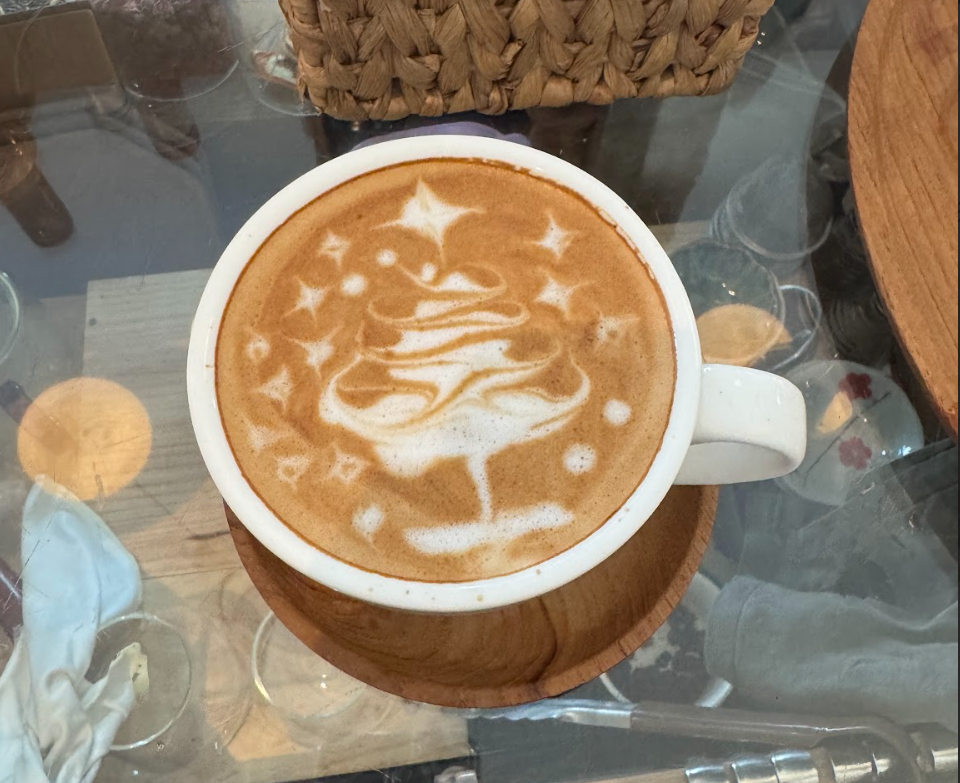
    A cup of latte with a tulip latte art design
    A Valiant Attempt At Pulling A Tulip

    But I find this principle applies universally to life. In relation to the idea above that “the process is where you live”, an intentional and joyous process seems to inevitably lead to a similar type of outcome. Think of it as “going through the motion” versus “understanding and being present in each motion”.

    There’s more than a subtle difference. 

    In life, this principle applies to the simplest of things, from making coffee to choosing a career. How is the quality of effort behind each action and decision? Just like hastily made coffee for the sake of chugging, rash and low-quality decision-making and actions reflect little to no effort. I shall leave you to imagine what type of outcome this would bring. 

    Making coffee at home taught me to put great effort into each action. This brings out the joy in the brewing process. More importantly, it shows just how great effort given can yield wonderful outcomes. 

    There are so many coffee-lovers in this world. There are slightly fewer coffee blogs around. And then, even less coffee content being related to life lessons. The coffee world is bigger than I thought when I had started this journey. From espresso to drip coffee and more, it seems endless. 

    I started this coffee blog because I wanted to be adventurous and document something new which I am learning. No matter how terribly bad and inexperienced I am. “Difficult” would be putting it mildly if I had to discuss the technical and professional aspects of coffee. But “easy” would be an understatement if I had to relish in a cup of well-brewed coffee. 

    This blog and knowledge of coffee I have gleaned taught me that the world has much to offer from all those that tried and came before me. Before us.

    But even if the world is so big, it doesn’t always mean there isn’t a place for us. For me and you. 

    In the coffee world, everyone is entitled to the choice of making and enjoying coffee. This is true regardless of whether your neighbour prefers tea over coffee. Joining this coffee world is like seeing a new part of the world, a part that would not have been accessible without first wanting to explore coffee. 

    Keep chugging coffee for the sake of it and live to never enjoy it. The world is bigger than I thought because it has more knowledge on anything than I had. Embrace it the immensity of it all, or at least try. Because I know I am. Or I’ll live to be overwhelmed by the immensity of the world in everything. 

    Coffee is a staple of life. A joy, a relief, a habit and many more to so many people. It is also an instrument through which you can perceive life and learn life lessons.

    Enjoy it.


    Click below for more in my Quest for Coffee

  • How Can “Hero-Worship” Make You Better?

    How Can “Hero-Worship” Make You Better?

    Quirkbag Collection #14 – 05.09.25

    ’Heroes. It’s an old-fashioned notion.’ If you are a hardcore Marvel movie fan, you would recognise this quote from the trailer of ‘Avengers: Endgame’ (2019) way back then. It feels like ‘way back then’ even though it’s been 6 years. I recently thought about the influences in my life and how I became me, as I know it, and I found a lot of it was tied to the people I looked up to as heroes. The mature and more cynical ones would dismiss this as just the inevitable phase of ‘hero-worship’ in most young people’s lives. Maybe it is, but it sure is not all that trivial, not to me. 

    I look up to my heroes, real and fictional, but they don’t get chosen easily. It’s just like making friends I guess, picking those who really make you feel like you can be better. The very purpose of a hero for me is to be the quiet voice in my mind that pushes me in the correct direction when times are hard, or when I face problems in school or work. 

    Particularly when times are hard, the voice grows louder and I know I can live through it. A moral voice perhaps, to guide my choices. My heroes have always shown me hope and light when times are dark and tough, as any worthy hero should. Because they hold the virtues and values I admire, their silent and imaginary guidance in my mind nudges me ever so slightly to be more like them. To live up to them, in a small and personal way. 

    My Heroes

    As a kid growing up watching movies and television, many of the fictional characters became heroes who strongly influenced my life. (The jury is still out on whether this is for the better; I hope it is) 

    Some of my heroes, who are included here, continue to inspire me to slowly become someone I am more comfortable being and liking as a whole.

    No, there is no perfectionism included.

    Jerry Seinfeld, the master of small things in life and the star and writer of the epic sitcom ’show about nothing’. ‘Seinfeld’ as a show really shifted my perspective on life. I mean, all the stress and the thought about preoccupations over work as though it might be the end of the world were flipped upside down. Their biggest problem was once about being to the airport on time for pick-up. Not a bad change of scenery from endless meetings?

    I find Jerry puts a lot of the human in ‘humanity’; the silliness, the mistakes, the jokes, the relationships and the endeavour to try and master something in life. 

    I watched an interview once where he said he writes jokes everyday, not to create good ones but to maintain and hone the skill of writing it. There is much I take away with me in terms of perseverance and patience from him, and he inspires me to keep going and going one joke and one day at a time. 

    I first watched ‘Suits’ in 2021 as entertainment during the pandemic. Little did I know what inspirational value it would give me. When I struggled to keep studying hard, the idea that one could bend reality by being intelligent and relying on oneself to master skills again shifted my perspective. It was elegantly and beautifully manipulative, and always for the right reason in the end. 

    Suits television poster with 2 main characters
    Suits (2011 – 2019), Season 1 Poster

    Like many teenagers, I made rather few good friends from school since I just didn’t like the same things. When I tried to go at new things and problems, coping with school work and all, having the idea of Harvey Specter really boosted whatever strength I had. 

    I’ve always found the steel and toughness in Harvey’s character to be charismatic. He makes ends meet in any situation, although with some hefty price tags and sacrifices. But it also highlighted to me the need to be tough when times call for it. Afterall, I doubt I would fare well in school if I didn’t spend large amounts of time preparing and studying; a case in point of price tags. 

    Legendary investor aside, Warren Buffett is someone who held onto virtues that lasted him a lifetime. I admire his great patience. He knows exactly what he wants from a business he analyses and simply waits for the conditions to be right before taking swift action. Patience, again, that saw him through years of waiting. No words can do justice to his patience, but his investments and Berkshire Hathaway can. 

    Patience is something that requires little more than inactivity. Yet, most of us honestly pale in comparison to him. Sometimes I feel I can barely wait for trains to arrive, or for the internet to load (oh so many of us are guilty of this). This burning desire for instantaneous results has taken over. 

    The moral courage that he also has to do what he knows and believes in, despite all the noise and chatter around him, continues to be valuable to me. Increasingly so for that matter. It’s so easy to just follow the trend, be ‘part of it’ than not and fall prey to ‘FOMO’. I honestly can say I have always been secretly part of ‘JOMO’ (Joy of Missing Out), because it means I can truly spend time and focus on those things that matter. In Buffett’s case, keeping his investments and coming out ahead of the ‘popular crowd’. In my case, it’s doing this blog. It’s making the unpopular decision to keep going and trying to discover the depths of my being. And maybe a better person emerges. 

    To stand your ground and stay true to your own belief is a trait of a hero who goes against all odds, again, for the right reason. We could use more of them in a far more volatile world today. 

    You would think Tony Stark is another popular choice, and maybe for the wrong reason. Iron man as a superhero is marvellous, indeed, but it’s the person I admire more. 

    When I think of Tony, I think of Pepper and Peter. From that arrogant and selfish weapons dealer to a universal hero, he grew into someone who placed others before himself. I always remember the line from Iron Man 3 (2013) that a ‘threat is imminent, and I have to protect the one thing I can’t live without. That’s you.’ A far cry from who he was. A sign that for the right reason we can become better. A push towards becoming the Tony he was when he chose to try a long shot at saving Peter. 

    Of course, he shouldered a burden that probably no one in real life does – the fate of the universe. But we all have responsibilities, one way or another. Tony never stopped doing what it took to protect and save his people and the universe. And we could learn a thing or two about tenacity and humility. 

    A little sense of duty would see us through some tides of challenges in life or work. You might call it ‘doing your job’. Sometimes it’s really hard, trying to figure out what to do and how to do it, but this is where the quiet voice comes in.

    And I keep going a little more for my goal. 

    Heroism and Leadership, Altogether Now?

    Heroes can be leaders. In some way, the very recognition of them being a ‘hero’ to others, inspiring emulation of their behaviour from others is already leadership. 

    Yes, fictional heroes are fictional, but as a hopeful child of movies, I find that more of us should try and live up to them. While we may fail, I doubt it should do me much harm in trying to embody the values they do. To one day be an amalgamation of those who inspired and influenced us positively is to then repay the favour forward by embodying those same values. It would be a worthy endeavour. 

    As always, I love ending with a quote. The one that comes to mind is a line from Theodore Roosevelt, a former President of the United States, in his famous ‘Man in the Arena’ passage.  

    More of us today could learn to embrace the slightly forgotten benefits of modelling after our heroes. Building courage, patience and tenacity, all that good stuff we talk about and have little of. And the world would be that bit better. 

    I know I would want to be more like my heroes. Would you?


    Click below to visit other adventures!


    Enjoy more serendipitous Quirkbag thoughts by clicking below or the arrows.

  • How I Learned Time Management

    How I Learned Time Management

    Quirkbag Collection #13 – 29.08.25

    How I Learned Time Management

    I recently read the book “Four Thousand Weeks” by Oliver Burkeman and it transformed my original idea of time management and productivity. Several of the concepts raised in the book forced me to confront the limitations we, as humans, have. And I realised that it is only after facing these underlying assumptions and truths that I get a more accurate picture of life and time. 

    The book itself is a mirror and a spotlight. It reflected to me the habits I (and most of us) have when it comes to poorly spending time under the illusion of ‘efficiency’. 

    Reading the book made me think a lot about the meaning of it all – our jobs, lives, choices.

    What do we really define as important? What is deserving of our time? 

    It’s easy to write down everything we want to do and then fail to do it, thinking we simply ‘need more time’ or be ‘more efficient’. But unless you really can justify those tasks in life, you might find in your heart that most of them are pointless and trivial anyway.

    My Time In The Past

    As the stereotypical Singaporean student, my time was spent studying and little was spent on much else, because this concept of ‘time management’ was unheard of. Rather than saying that studying is unimportant, it should not be life-consuming. (Perhaps learning is a better alternative.)

    It might start sounding like an existential crisis. But in fact, it’s the opposite. The mindset shift in how we spend our time begins with questioning how our time is spent. We do not have forever. 

    As Emily Dickinson phrased it, ‘Forever is composed of Nows’, and indeed, all we have is the moment now.

    Right now. 

    Well, I start university soon. And I sure hope this lesson travels with me (and you) forward in time. Rather than being busy, I will try to be productive. It’s easy to be busy, but all too hard to be productive. When I studied for A levels, perhaps a decent chunk of time was spent being busy rather than really being productive. 

    Regardless of age, this idea of time management is one that applies to all of us, humans, because we are all finite. 

    How Do We Spend Time? 

    Maybe ‘what is the meaning of life?’ is the wrong question. More specifically, ‘how do we spend time?’ illuminates our lives better.  

    Once the latter question has been asked, it leads to the perennial paralysis-inducing problem of choice. 

    No line better sums up life as a whole better than one of my favouriteime from Mission Impossible. It holds a special place with me. 

    The centrality of this idea in life has more credit than we give it. Denying and avoiding the truth that we will never accomplish everything nor experience everything creates a false sense of control over our own lives, distracting us from facing the finitude of our time.

    Delaying the choice makes us feel like we never have to make it, as though our time never runs out.

    But it does. 

    So what then if we have limited time? Ironically, it simply means we need to have better time management: choose to spend time on what you really consider important and eliminate all other tasks. This includes those tasks, particularly these ones, which are not worth pursuing yet seductive enough to distract you from your top priority. 

    Yes, easier said than done. But once done, it is far easier and more relieving than you might think. 

    Time management is not cutting up the hours to fit an insane number of tasks from the never-ending to-do list.

    It’s the exact opposite. It’s cutting the number of things from that list and putting them nicely into the time we do have – four thousand weeks, on average. 

    It’s time to let go. (I keep thinking of this great scene when I see this sentence.) 

    Let go of what banal, trivial matter you used to meddle with. Start living for yourself.

    Living Meaningfully 

    Embrace your temporary existence. Start choosing what to do. And the only way to start living meaningfully is to accept the opportunity cost in every choice you make.

    It is inevitable.

    The deliberate choice and intentional use of time give meaning to our lives spent.

    Fear not that time has not been used doing other things, because there are an infinite number of things you can do! Just take heart in the things you have chosen to do because they are meaningful to you, in the moment.

    This is not a protest against planning for the future, but a relief towards constantly being paralysed with “not knowing what to best do with time”.

    Choose.

    To conclude, I couldn’t think of a better way than this:

    Your mission, should you choose to accept it, is to decide what is worth your time and dedicate time to it for a meaningful life spent doing things you care about. (Most of us will self-destruct in four thousand weeks😏)

    Good luck.


    Click below to see other kinds of stories!


    Enjoy more serendipitous thoughts below! Don’t be shy.

  • Quest for Coffee (11) | How to Pour Latte Art: Failures

    Quest for Coffee (11) | How to Pour Latte Art: Failures

    This week’s update is dedicated to my effort that has gone unrecognised in magical designs but nonetheless contributed to my improvement. My journey in learning how to pour latte art has led me along a whole string of failures.

    A. Whole. String. 

    There have been far more failures in this Quest for Coffee than there have been successful latte art magic designs. If you have been following this Quest, you’d know just how tricky this latte art magic can be. 

    But it made me believe some truths. Truths that I never really thought were real but just things people said:

    Success is not linear. 

    Progress is not linear. 

    I lived through the failures and the successes. Each latte art design was poured by my own hand and each one was every bit as magical and wild. Many of them were not “latte art magic” and more like a lab experiment gone wrong. 

    But all of them, failures or not, were great coffees. 

    Sometimes my hand would deliberately create something halfway wonderful. Other times I get a brainfart and some thick blob-like, magical mess happens. I have realised that it is all part of the process of learning and mastery. 

    Like I mentioned last time, the whole latte art design is a composite of different pours. The whole design may look like spilled paint, but a small part of it could have been great. Maybe it was the base of the flower, or the fully-filled body of the heart, or that last pour to finish off the bottom tip of the heart.

    Some part of it could be better than last time. 

    Check out my previous Quest update!

    I write this not just to document my journey in this quirky Quest for Coffee, but also to prove that trying in itself is the only step toward success in any endeavour, magical or not. 

    There have been many many times when I have been discouraged because of one cup’s ugliness. Sometimes it’s 3 cups in a row. Progress was dismal and slow. I didn’t know if I would ever get anywhere. Ever. 

    As past me would soon realise, the one cup of failure means nothing. No latte art magic this time, eh, no biggie. I’ll try again tomorrow. And again the next day. And again, and again.

    To you, my past self some 4 months ago, using a junky coffee machine that couldn’t steam milk, and to you, my future self who may be learning and struggling in some other Quest, I want to humbly remind you that progress and success comes slow and will never be linear. 

    So take heart (no pun intended). 

    You have achieved growth and progress in this journey to create some latte art magic. It’s far from over, but you have proven that you can do it.

    And this is proof. At my expense.

    Slide
    All The Magic Gone Wrong Part 1

    None of these cups of coffee was wasted in the practice of latte art magic

    previous arrow
    next arrow

    To the many ugly cups of latte art magic gone horribly wrong, I thank you for your teachings. 

    There will be more failures to come in this Quest for Coffee. Many more cups of failure await. But many other cups with wonderful magical latte art designs await too. 

    How to pour latte art?

    Well… keep pouring your heart and soul into it and never stop. 


    Click below for more adventurous updates in my Quest for Coffee

  • Quest for Coffee (10) | 5 Ways to Improve Latte Art Magic

    Quest for Coffee (10) | 5 Ways to Improve Latte Art Magic

    Latte art magic is aesthetically potent and incredibly mesmerising, and I most certainly want to improve my latte art magic skills. I thought about how my magic strengthened over the last few months. Here are my 5 recommended ways to improve your latte art magic.

    If you are new to my Quest for Coffee, welcome! But where have you been?? 

    Quick, get your full dose of my Quest for Coffee here! 

    I know you probably haven’t tried doing this, but practicing latte art magic is hard. Once you’ve nailed the espresso shot and the milk steaming part, you’re in for the final boss of the game.

    It’s the ‘make it or break it’ part – the pouring.

    Without silky steamed milk and luxuriously dark espresso shots waiting, there’s little chance of pulling off some crazy latte art magic. 

    Check out just how important your espresso and steamed milk are here, as I discovered in my Quest for Coffee

    Anyways, if you are ready, here are my 5 best ways to practice latte art magic in my journey so far: 

    Break down the whole design into various parts. It’s counter-intuitive to break apart the well-crafted and enchanting design, but to learn, you have to see them as individual ‘strokes’ of your ‘paintbrush’. 

    Confused? Every pour you make is one stroke of a brush. These strokes add up quickly to form your magical design. 

    For a basic leaf or a flower design (they can be quite misleading sometimes), there are 3 main parts: the ‘base’, the ‘wiggle’ and the final ‘stem’. 

    The base is your foundation when you create the bottom part of the leaf/flower with solid white milk foam. Your spout of the pitcher must be close to the surface. Pour a controlled volume of milk quickly before then narrowing the flow of milk. 

    In the second part, the ‘wiggle’, is where the cool brown and white wave-like pattern occurs. Pour a smaller amount of milk than for the ‘base’ while swaying your pitcher from left to right in a stable manner.

    I panicked once and my hand shook, which led to uneven patterns on the left and right sides of the design. Uncontrolled magic! This pour should be several seconds long to really drag out the pattern.

    Of course, you can choose to pour a fully-filled white heart shape too and skip the swaying. 

    The ‘stem’ binds the whole lead/flower design together. Pour a narrow but continuous stream of milk from the top of the leaf down the middle and to the edge of the cup. Do not hesitate. I hesitated before and it led to wobbly and curvy stems. Uncontrolled magic again!

    As you move from top to bottom of your design, the pitcher should move upwards, with its final position higher above your cup than the position at which it started. 

    Stay restrained. Work with restraint. Do not give in to the internal pressure to pour quickly like those pro-looking magical baristas.

    Speed of pouring comes naturally. My pours in each phase of the design required different strengths and finesse over the pitcher, which you can only learn through experience by feeling and doing. 

    This takes control, not speed. I had to restrain myself from pouring all my milk quickly to create absolutely nothing. 

    If you need a pause between the phase of the design, take it. 

    Usually, I would pour the base first, make sure I got the white base formed first and lift up the pitcher. After that, I would begin the next pour to create the wave-like pattern. I usually remind myself to leave enough room in the cup and enough milk to pour that final thin stream for the “stem”. 

    Nothing beats intentional practice.

    To try and try again in spite of all the failures to master that one “stroke”, be it the “base”, the “stem” or the “wiggle”.

    Sometimes, in each practice cup of coffee, there may be a really solid “base”, or a cool and stable wave-like pattern, or both!

    It takes many tries to perfect all 3 “strokes”. My results were and still are lacklustre when it comes to the “stem” (just see below) but there are improvements in the “wiggle” and the “base”. 

    It may not all come together at once. It has not for me. But that’s normal because every latte art magic design has several parts and “strokes” to it that requires great finesse. 

    Stay resilient and keep pouring with intention. Keep reminding your mind and hand to act intentionally with each pour and not pour under psychological pressure 🙂 

    You ever see those pro baristas with their magic latte art design while looking cool and calm, with no spills in that nearly-overflowing cup of coffee? 

    I am the guy with all the spills, errors and shaky hands. I literally dragged the side of my milk pitcher along the surface of my design because the pitcher was that close to it that they were in fact in contact! Just see this wing-shaped distortion of a design: 

    A wing-shaped latte art design

    Suffice to say, that was not very magical. 

    But it’s ok to be messy and spill some milk and coffee over the counter when pouring and learning. I realised I was not tilting my espresso cup enough as I wanted to avoid spilling.

    This meant I had a smaller surface area of coffee to practice my magic, and it made it much harder for the spout of the pitcher to be close to the surface of the coffee. 

    Just go for the tilt and the pour despite being inexperienced.

    Don’t be afraid to drip some milk on the counter when trying that long final pour for the “stem”. It’s fun to just try.  

    How would you know which part of the pouring to work on? With the different “strokes” and breakdown of the whole design, you can start nitpicking and decide which “stroke” or part you want to focus on. 

    To do so, you have to start examining the weaker spots in your own latte art design.

    I started trying to work on the “wiggle” and the “stem” more because I always panic once the cup is near fully filled.

    Through taking pictures and intentionally practicing each “stroke” in each cup of coffee made, I saw how my hands shake and how I usually panic toward the end. It is far more important to know what to practice pouring than simply pouring. 

    Try taking a bunch of photos like me and track your own progress. You might see the improvement trend and you would have documented the whole journey of mastering latte art magic. Wonderful!

    I said there were 5, but here is a bonus way to improve: just read coffee blogs and learn from other people. Sneaky but smart, no?

    Now, I have read several coffee articles and many of James Hoffman’s videos. It takes knowledge and practice to attain mastery, especially for something as tricky as latte art magic.

    Not only do you need a slow and delicate hand movement to control both the cup and pitcher, it also takes courage and patience to keep trying despite poor results.

    Seeing how other people have done it and mimicking their movements to fit my comfort has helped with creating my own style and rhythm of drawing and creating my magical latte art design. 

    I hope that sharing my progress and providing 5 ways to improve your latte art skills can help you in your mastery. The road ahead in my Quest for Coffee is still long.

    But for now, here’s the latest leaf/flower: 

    The latest latte art magic design – a curved flower

    Click below for more adventurous updates in my Quest for Coffee


  • The Celebration of International Friendship Day

    The Celebration of International Friendship Day

    Quirkbag Collection #12 – 08.08.25

    Happy Belated International Friendship Day! The actual date is 30 Jul. The celebration of International Friendship Day is less dramatic than one might expect since it celebrates almost every single individual. That’s around 7 billion people.

    To all the people who are friends of other people, this day celebrates your importance. You matter. 

    International Friendship Day was assigned a value by the United Nations on July 27, 2011, as a symbol of friendship. More importantly, it promotes peace, understanding and unity across peoples and nations. 

    Yes, unity, a concept whose tangible benefits the world could greatly use. 

    A fragmented modern world stems from pent-up tensions left unaddressed due to differing ideologies and a lack of mutual understanding. Humanity as a common denominator has been erased from our minds. Unity, understanding and peace even seem like afterthoughts. 

    It is precisely why a common denominator – friendship within humanity – is ever so important. We tend to forget who we are, what we represent, and who we can be because of the drivel of modern society.

    Take a moment. Absorb the reality of being human – fundamentally fragile and yet unusually tough – as we keep going through life. Some people call this mindfulness. Others call it gratitude. It could be both. 

    This seemingly gimmicky, cult-like activity of taking a moment to practice gratitude or mindfulness shifts my frame of mind. My mind opens up to embrace the present moment and all of my friendships. It’s probably impossible for most of us to be where we are without the friendships we have made along the way. 

    Having friends to see you through it all makes it more bearable. And just maybe, it makes the world a better place. 

    Symbols of Friendship

    Do you remember friendship bands? I never made one of these in my life. It always felt like such a “cringey” and “childish” activity as I was growing up.

    The friendship band is merely a token of something greater than itself. Just like a crown’s value is far greater than the weight of the gold from which it is forged, the value of the friendship band is the bond itself. 

    Do you need a friendship band to validate a friendship? Hardly. On second thought, maybe you do if you are 7 years old. For the rest of us, friendship ties people who meet and live through common experiences; in some odd cases, the difference in experience might be the gravity that pulls people together.

    I think of the many pairs of pen pals around the world who may have never met in real life but trade life experiences through regular correspondence.

    Friendships come and go, and some last a lifetime, but all of them are valid for their very existence proves a genuine bond between people.

    The bond was real.

    Not because of the friendship band, but because of the shared experiences. The friendship band is merely a token of that bond. 

    For some, the shared memories become the proverbial friendship band, unforgotten so long as these memories continue to be relevant and relived in our minds. 

    My “Friendship Band” 

    Duolingo’s Spanish lessons consist of a section on food, one of the examples is orange juice, or “Jugo de Naranja”. As I learned and practiced the pronunciation, I kept repeating it to a dear friend. Quickly, it became the fad. 

    It dominated our conversations for weeks. ‘Jugo de naranja’ was a pet phrase, constantly repeated. We found it hilarious to react and respond with the same random phrase like it was some greeting. It was simple. It was our ‘thing’.

    Currently, I struggle to remember why something as random as “Jugo de Naranja” was a running joke. Still, we look back, almost with a third-person perspective, and smile with a sense of appreciation for that period in our friendship. Nostalgia comes close to describing it. 

    It was never about Spanish lessons, orange juice, or Duolingo. It was about us – two people laughing over a small, inconspicuous phrase. That was our way of bonding.

    This silly phrase was one of many tokens in this friendship, evidence of a bond well-forged, pieces of a phase in our lives. “Jugo de Naranja” is not what made the friendship. Quite the opposite, it is the friendship that oddly gave comedic value to a mundane phrase. 

    What Is Friendship, Really?

    Friendships are strange connections sometimes. I’ll be the first to admit that not all friendships are equal. They can be “long-distance” friends you meet once in a while in a different city, or they could be people you see at school or work every day. They could even be former rivals or competitors, someone you hated but developed a relationship with.

    Sounds like something from the movies, doesn’t it?

    But if you really thought about it, every friend was once a stranger you decided to reach out to. Sometimes, we find a stranger that we decide is worth keeping in our lives, despite (or maybe because of) their quirky habits or funky fashion sense.

    Before you know it, they win your heart over and you start accumulating random silly moments. Yet, these fleeting moments, which may now be cringe-worthy, have value. Gradually, the little moments form a string of memories supporting the friendship. 

    How do you define a friendship? 

    If you figure that out, let me know. Let the world know because I’m quite sure countless people ponder the definition. The worldly metrics that measure what is quantifiable fail when it comes to emotions and matters of the heart.

    How could you quantify a “best friend”? Gut feeling?

    Sort of, maybe. 

    The solution is vague and hard to describe, but yet oddly accurate and universal. Historical context aside, I present the words of Supreme Court Justice Potter Stewart as a personal friendship metric:

    Conclusion

    I like to think every friendship has its own ‘jugo de naranja’ moments in time. These moments could have been so subtle that friends overlooked their presence. Rare but vital, these moments tweak and shape the course of the friendship over time. Today, they are better friends because of it. 

    I want you to take a moment and think of your own friend. It could be your best friend, old friend or childhood friend. 

    What was your ‘jugo de naranja’ moment? Celebrate the very bond between you by reminding each other of it and having a good laugh.


    Click below to see other stories!

    Enjoy my serendipitous thoughts in words below.

  • Quest for Coffee (9) | Pouring A Latte Art Flower

    Quest for Coffee (9) | Pouring A Latte Art Flower

    I remember the first time I searched ‘How to Pour Latte Art Flower’ on YouTube. It sure feels like a long time ago, but really it’s only around 3 months ago. Well, I am relieved and excited to say that progress has been made in those 3 months. Oh, the progress and pains.

    In the last few Quest for Coffee updates, you would have seen my struggles and realised that pouring latte art is a magic easier said than done. If not, check it out here! I promise it’s not a complete gallery of excellent latte flowers and spectacular designs – it’s me stumbling through the failures in pouring magical latte art. 

    So, I stopped the pattern of watching YouTube videos on pouring latte art. I just slowly found that it’s not all that useful now that I know practice is the key ingredient instead of knowledge.

    Practicing and pouring those pitchers of steamed milk have done me more good than seeing the same guy on YouTube pour a magical flower or heart. I want to master the magic of pouring latte art, not watch someone else show off his magical skills. 

    We’re all fans of consuming edu-tainment (educational entertainment). I know, it’s easy to see those baristas pour mesmerising magical flowers. But it’s not you. It’s not me. 

    Anyways, the bar has been elevated. From a heart-like shape to a leaf-like design, here’s the proverbial bar. 

    But now, the pains – the successful pouring of magical latte art designs don’t happen linearly. It isn’t a straight line of progress. (Believe me, it’s a nasty, volatile roller-coaster curve that ideally trends upwards.) 

    An interesting observation is that a part of the design may have been good even if the whole design was ugly.

    The wave-like patterns were obvious in the center picture despite the distorted shape. The contrast and texture of the left image is beautiful despite the lack of detail and poor structure of the heart.

    My time spent practicing latte art magic has been rather fruitful, though sometimes frustrating. That said, all things worth trying and failing would always be frustrating at times right? 

    As a quest-like hobby, it’s been an exciting endeavour to try and create that flower and heart. It’s not for the impatient, this latte art magic, but for those seeking some therapy in creating a delightful and beautiful cup of coffee. 

    Don’t expect some easy wins. 

    I can’t imagine how many tries pro baristas have had just to nail one design to the tee. And certainly, they didn’t get there by being addicted to those baristas pouring latte art on YouTube. 

    Recently, I have also begun weighing my beans! I know, it’s like a ‘pro’ barista or connoisseur thing to do.

    But honestly, it’s quite helpful as a measure for beginners to judge whether the input and output ratio for your espresso is right. 

    The rule of thumb is a 1:2 ratio for coffee beans to liquid espresso. 18g of beans should give 36g of espresso liquid. If your machine doesn’t automatically calibrate to produce this ratio, it’s time to play espresso-engineer. 

    In very layman steps, take a scale and weigh 18g (for a double shot). Grind it and tamp it in the portafilter. If you need some help with that, check out this quest update from me! 

    Now, let the machine do the rest and pull the shot. If the grind size (how fine the grounds are) and dosage (the weight/amount of grounds) are well-calculated and paired, the whole shot should be pulled in 25 – 30 seconds. 

    Just looking at the liquid flow out would give you that internal gut satisfaction which tells you ‘yes it’s correct’. (At least I felt it)

    It’s a rewarding result to see happen because you nailed all the steps before the machine did the work and produced the desired output ratio. 

    Too much liquid – this means insufficient coffee beans (dosage) or too coarse a grind size of beans (grind size). In general, James Hoffman recommends the dosage be altered before the grind size as the latter takes longer to refine and effectively change the outcome.

    I have always played around with the dosage when my espresso spurted out without that ‘silky honey-like’ texture. It’s far easier to weigh the beans differently than fix the grinder. 

    Too little liquid – this means too much coffee grounds (dosage) or too fine a grind size of beans (grind size). Again, let’s play espresso-enginner and alter the dosage before the grind size. I reduced the weight of beans (to 16g/17g) and clocked the shot under 30s. All good! 

    Having a great espresso shot waiting for you to practice your magic and pour latte art flowers and hearts over it is half the battle won. Of course, the volume of milk and the ratio to espresso determine your final drink, but it has little bearing over your ability to pour latte art like magic.

    You can play with the size of your cup and the milk needed to fill it.

    Practice and practice. Pour and pour. Latte art magic doesn’t come instantly or magically, ironically. 

    I look forward to one day mastering the volume of milk and mastering various magical latte art designs for different drinks. Hopefully, it’ll be a far cry from my novice days of coffee catastrophe. 

    Ok, so there’s the latest update in my quest. It isn’t rainbows and sunshine. You and I know quite well that the work ahead has been cut out for me. Progress and pains indeed. 

    Click below for further adventurous updates in my Quest for Coffee


  • What Movie Should I Watch?

    What Movie Should I Watch?

    Quirkbag Collection #11 – 25.07.25

    What movie should I watch? Sound familiar?

    For most, it’s a question as difficult to answer as it is to understand quantum mechanics.

    It’s simple: there is no right answer to it. And yet, at the same time, your answer is also right no matter what you say. 

    See, any movie you suggest is probably one that you previously enjoyed, and would want its story shared with others. So in the end, you should just recommend it anyway. 

    I hate to break it to you, but chances are, unless you are seen as someone with great taste and experience with movies, they aren’t going to see it.

    What Movie Should I Watch?

    Personally, ‘what movie should I watch?’ is a question I have asked myself countless times. Ironically, I actually keep a list of movies I would like to watch, like a to-watch list instead of a to-do list. 

    That list stands at around 100…and counting. (There are indeed about 100 years worth of movies made, come on)  

    Seriously, there’s like thousands and thousands of movies today. English, Mandarin, Japanese, Italian, Russian, Spanish, Korean and you name it.

    For the more average, less ‘connoisseur-like’ movie-goers, you’d probably watch a movie in your own native language. 

    There’s nothing wrong with that. It’s natural and convenient, we’d understand the story better too. 

    So unless you’re a movie connoisseur at a blue-cheese-loving-Cannes-Festival-going level (yes someone like that probably exists), most mainstream movies worth its salt would suffice in entertainment, maybe even education. 

    What Are Movies…Exactly?

    Now to be clear, ‘movies’ is a broad and generic term, which may encompass biographies, documentaries and featurettes for some.

    But for simplicity, I generally refer to movies as fictional/real-life inspired stories captured as motion pictures for cinema. In other words, the big screen stuff advertised to you. 

    Yes, you could argue all the semantics around definitions and all but that’s not really a priority when we ask ‘what movie should I watch?’

    That Strange but Secretly Logical Phenomenon

    Then there’s the phenomenon of ‘I don’t really feel it’ when a movie title is blurted out randomly. It’s almost a knee-jerk reaction. 

    I mean, it’s basically the same thing as ‘what do you want to eat?’ – for which the universally agreed-upon reply is ‘I don’t know’. 

    In examination however, ‘I don’t know’ is a logical answer to the question ‘what movie should I watch?’ because if you did know, then you’d have an answer to your own question. If you do know, that’s great! 

    For most of us, we actually don’t know. 

    Do you want to see a movie you already watched? Do you want to see a classic favourite? Do you want to see something new? ‘I don’t know.’ 

    See? It comes out naturally. 

    If I may explore this slightly further, how could you ever decide what movie to see if you simply ‘don’t really feel it’ for every movie suggestion? It’ll be 0 for 10 if 10 titles were raised. 

    This brings me back to the point when I said people usually won’t bother seeing the movie you suggested. It’s simply too inconvenient unless you really hold some influence over them or expertise in movies (albeit possibly self-proclaimed). 

    The Solution

    There’s an easy solution: you don’t get a say. Decision paralysis is real. Most of us don’t want to make the decision because it’s hard, or in this case, it’s ambiguous. 

    We’d rather delay and procrastinate this decision of what movie to catch than actually choosing one out of fear of the movie being bad. (And extremely ironically, we’d sit through a movie that’s bad in hope it becomes better although we have lost interest in the storyline.) 

    Considering how the act of watching a movie consists of sitting and staring at a screen (a relatively simple task I might add), it is quite baffling how people can’t quite commit to that. 

    Movies have always been storytelling at its peak to me. A good movie anchored by a strong narrative portrayed by a great cast breathes emotions and values into what might otherwise have been mere entertainment. That makes a great movie- one that makes me feel; makes me think; makes me invested in the characters. 

    Solution: My Curated Movie Picks

    If you have decided to commit to watching a movie this weekend, here’s my curated picks by genres in no order. They are movies that have left a lasting memory for me. 

    Comedy/Rom-Com

    Action/Adventure

    Fast and Furious Car Image
    “One last ride”

    Rousing/Classic

    Honourable Features

    Let me guess: you still can’t make up your mind. I have taken the liberty to choose one for you, at the expense of your disagreement with my taste and choice. 

    Now, you did have a choice. Go ahead with your choice if you have picked one from above. If not, try Notting Hill. 

    And if you have seen it, see it again. 

    Whatever your choice, enjoy the movie. It is ultimately one of the reasons the movie was made. And if nothing else, in the words of John Lennon:  

    Time you enjoy wasting, was not wasted.

    John Lennon

    Click below to see other stories!

    Click below for more serendipitous thoughts.

  • Why Do Movies Matter?

    Why Do Movies Matter?

    Quirkbag Collection #10 – 18.07.25

    Why do movies matter?

    It’s 2025. The world has only become more technologically obsessed with AI and easily entertained by political drama. It’s like everyone’s so easily distracted now. 

    Gone are the days of old-fashioned storytelling as a past-time. Even rarer are those who enjoy a good film, an original film, that relates to everyday life and then some. 

    Modern Influence of Movies

    Movies can be mainstream and can be acquired tastes. They know no boundaries in their storytelling capabilities. Limited only by its audience, even with all its influence, movies are becoming less charming and accepted by new generations.

    This generation prefers 10-second videos of people dancing to some snippet of questionable audio and music. 

    It’s strange, really, when you take this perspective: people would rather be distracted by strangers dancing for 10 seconds to some odd music and scrolling 50 consecutive times than sit and enjoy 100 or so minutes of a movie which has a start, middle and end. 

    If you’re still reading at this point, where your attention has not yet been drained, you are welcome to read on. You are one of few individuals who can withstand long-form content. 

    What Else Can Movies Be?

    Movies have always been an avenue for a fraction of the human experience to be shared with the world. It lets audiences recognise the themes and values of the story.

    Sometimes it served to teach, remind, warn, share and perhaps simply entertain. But any movie worth its salt serves to connect emotionally. 

    Richard Curtis, the celebrated screenwriter and director of well-loved movies like Four Weddings and a Funeral (1994), Notting Hill (1999), and one of my personal favourites, About Time (2013), was described by others in an interview as having injected good-natured themes into his films.

    They even attributed his successful creation of movies to this style of storytelling: portraying what really matters in life in his own raw and witty manner.

    His stories resonated with people because the characters’ experiences and little moments sprinkled throughout the story mattered. They mirrored the real struggles and conflicts and heartbreak that exist all too commonly. 

    Arnold Schwarzenegger grew up with idols of bodybuilders and eventually looked up to movie stars – the ‘male lead’ as some would say. He made it his mission to become a movie star after being a world champion bodybuilder.

    He aspired to be on those awesome posters he saw in his everyday life. And we all know what happened after that in Terminator (1984) – a film I personally look back on with fond memories.

    To think that one of the most famous action-movie stars in history was once inspired by movies is a refreshing thought. He would then make the very same movies, which went on to inspire and entertain the kids of the 1980s, just as he had been previously.

    A certain fulfillment with a tinge of wistfulness seems to accompany this observation.  

    What Of The Characters That We See?

    I have always found inspiration in movies from a young age. Motion pictures in general. It started with local television series, then slowly included mainstream action movies, before Netflix introduced a whole other world of storytelling to me. 

    I drew much inspiration from the heroes in the dominating film franchises of my time – Tony Stark, Ethan Hunt, and Harry Potter. To a young kid and (ageing) teenager, these people were practically superhuman.

    They represented everything that was ‘good’, something to strive for, someone to look up to. 

    These were role models whom you could aspire to become because they were vulnerable, but courageous; afraid, but persistent; constrained, but resourceful; alone, but never lonely. 

    Almost like a North Star, if you would, they guided children and adolescents who dared to learn and take inspiration from them. They helped those who let the storytelling move them and change them for the better. They inspired those who needed hope through the characters’ experience. 

    If the impressionable audiences really studied and embodied the values and virtues shown throughout these movies, and were taught to appreciate storytelling in the world of movies in general, tremendous merit would be granted to them.

    Undoubtedly so. I’d chalk it up to what Charlie Munger called ‘Worldly Wisdom’. 

    Would Movies Remain Relevant? 

    Some call movies escapism. Some call them entertainment. Then again, some people choose to play golf. We all make our choices, and we all have to make peace with them.

    It matters little what movies mean to others as compared to what they mean to you or maybe to some past version of yourself. 

    I used to be obsessed with Cars (2006) and the sequel when I was 6. When I watched the latest one in 2017, it felt like no time had passed since my childhood. Ironically, it also felt as if so much of life had happened.

    Movies have this strange capability where you can learn and see different perspectives of the story when you watch it at different points in life. Some movies are historical icons – enshrined and protected by their fandom. 

    Movies mean something to people who relate to them. They did and would always continue to do so as long as audiences hold them dear.

    Just imagine how many people crave old storytelling like Jerry Maguire (1996), Happy Gilmore (1996), Casablanca (1942), and Rocky (1976) (the original Rocky was indeed an original film). 

    Millions more grew up with The Terminator (1984), Ghostbusters (1984) and Star Wars Episode IV: A New Hope (1977). Theme parks were even built around them. 

    Ghostbusters logo

    Modern culture squeezes these iconic stories and movies out of the way because they might have ‘outgrown their time’.

    But have they? 

    Movies are as timeless as the stories they tell. ‘Sleepless In Seattle’, ‘About Time’, ‘Notting Hill’ and the like portray the same emotions between strangers today as they did all those years ago.

    In other words, the emotion of ‘love’ has not yet faded – maybe just the way we prefer to express it (hopefully not in the form of a 10-second dance to some random music track). 

    Are Movies Timeless? 

    All this to say, I was raised on movies and stories. So did millions of others. Watching them helped make us who we are, and for the most part, left us better than before we watched them. This change is fundamentally timeless.

    Surely these movies, regardless of age, should be shared so long as they remain and relevant. If they helped us through the timeless awkward teenage phase and the stumbling twenties, why won’t they help those who are in that era of life now? 

    This is not a case for watching films. This is a case for those who believe and once believed in movies. Don’t give up hope on movies and storytelling because of modern culture. Movies that withstood the test of time have taught us better than to give in to the fad. 

    If you love movies and appreciate storytelling, scenes that are watershed moments in the story, then I think you have gotten your answer to my first question. 

    And to acknowledge that, here are some of my favourite flashback moments, guilt-free: 

    Top Gun: Maverick

    About Time

    Good Will Hunting 

    Click

    Shawshank Redemption


    Click below to see other stories!

    Click below for more serendipitous thoughts.

  • Quest for Coffee (8) | 7 Mistakes Killing Latte Art Magic

    Quest for Coffee (8) | 7 Mistakes Killing Latte Art Magic

    In my few months learning to brew the ideal cup of Joe and master the magic of latte art, believe me when I say I’ve made plenty of mistakes. Here are 7 mistakes killing latte art magic, all of which have been made by yours truly. In fact, some of them more than once (oops).

    These mistakes are common and practically universal. It’s part of learning, so don’t get flustered just because you see bubbles all over your coffee. 

    So why can’t you avoid these mistakes? Well there’s knowing the mistake and knowing the technique to prevent it, then there’s actually nailing the execution. 

    Execution comes with practice: the price of mastery. 

    Failing to get it on the first try is normal. Whoever said you must get it right the first time is nuts (I mean, seriously, not even Doctor Strange mastered his magic the first go). 

    So if you’re failing at brewing coffee and wondering what on earth is wrong, let me share some of my failures. Embrace the mistakes; they teach you more than you know.  

    As the wise green Jedi reminded us:

    Disclaimer: No, you will not become a master after learning from my mistakes. Luke Skywalker did not become a Jedi just because he saw Yoda lift the X-Wing

    He still had to learn, practice and believe. 

    You must believe you can do it, even if you don’t see any progress. I’ll explain in a while. 

    The Hulk will not be able to make good coffee. 

    Tamping ensures that the coffee grounds are packed tightly, neatly and ready for pressurised hot water to flush through.

    However, tamping is a delicate step where finesse supersedes strength. 

    Finesse is key: it can’t be done too lightly, or water simply washes through. It can’t be too hard, or insufficient water gets through. Using too much strength causes the puck to be really tight and gives much greater resistance to the water than is ideal. 

    There’s just not enough space between coffee grounds for water to seep through. 

    The outcome is under-extraction – basically ‘wasting’ the essence of coffee. 

    Your espresso is bland, acidic and incomplete in flavour. Honestly, it’s just a cup of insecurity. 

    I’ve made this mistake several times because my strength was different each time I tamped. I have since moved to using a machine to tamp, creating equal pressure every tamp. 

    When I first experimented with steaming milk, I immediately placed cold milk under the tip of the steam wand before turning it on. You get that awkward 10s pause while pressure builds up before some steam gets spat out in bursts. 

    When you have bursts of air and fluctuating pressure, the milk cannot be steamed consistently. 

    The more even the pressure that is injected into the milk, the more evenly the milk will incorporate air. This prevents the rising temperature of milk with insufficient air being whipped in. 

    The trick: let the pressure in the steam wand build up and run for a few seconds before placing the milk under the tip of the wand.  

    Pouring the milk too quickly stems mostly from anxiety or ignorance – both of which are to be expected for beginners.

    My many attempts at controlling milk streams mostly ended with strange blotches of white foam on my coffee. 

    I was anxious that the milk would not flow out fast enough to create the pattern, so I neglected finesse and went for volume. 

    The thicker the stream of the milk, the more foam stays on the surface. The faster you pour the milk, the faster the foam will spread and the less control you have over it. 

    I was also ignorant. I never learnt how the thickness of milk streams can affect the design. 

    After all, whoever told you that pouring slower (and lifting the pitcher higher) can narrow the stream of milk foam on the coffee surface? Well, I just did (you’re welcome). 

    If you nailed every other step in the journey of mastering latte art magic, controlling your pour and handling the milk with intention would be the toughest.

    To truly pull off any magical latte art design, the speed at which milk is poured has to be controlled.

    Depending on the size of your pitcher, volume of milk and the size of your cup, the speed and volume of milk used would vary. To err with caution, pour slowly first to test how much finesse you have over the pitcher. 

    It doesn’t matter if it looks ugly at first. It’s just an experiment. 

    Eventually, once you are ready to create your design, start with bold, thick streams of milk to form the basic “pool” of white foam before slowly transitioning into a thinner stream.

    Yes, we all do that. We think watching some YouTube video repeatedly is going to change the way we execute the particular action or improve our skill. 

    Well, I can say with certainty that the only way you pull off that magical heart-shaped latte art is by actually practicing the pouring techniques. This means repeatedly making coffee and failing.

    Again, and again, and again. 

    Watching YouTube videos gave me the knowledge and the ability to course-correct and refine the techniques. But it did not give me the ability. 

    I watched the same video thrice but to no avail because I had not done the practice. I tried several times since to create some heart-shaped magic on my coffee (it didn’t go so well) but when I rewatched the video again for the fourth time, I saw how my technique could be improved. 

    Knowledge helps you with correcting the practice, and deliberate, continuous practice awards you the ability to create magic with milk in a cup. 

    Something a YouTube video can easily help with is showing you exactly where to put the steam wand. 

    I thought that I could just put it somewhere in the middle and randomly tilt the pitcher. 

    Again, it didn’t go so well. 

    It turns out that the positioning of the steam wand varies slightly with the amount of pressure being injected by the machine. 

    I used to put it in the centre and slide it slightly to the left while tilting the pitcher to the left as well. That gave sub-par results. 

    I have found that the best position for my machine is to have the steam wand somewhat in the centre, top left quadrant of the pitcher, while I tilt the pitcher slightly to the bottom right. 

    How do you know the steaming process is well underway?

    A tornado with a clear vortex and disappearing bubbles should be seen in the pitcher, all while the temperature gradually rises until it gets too hot to comfortably keep your hand on it. 

    If you have read the other chapters in this Quest for Coffee, my journey has taught me that tamping is a step that cannot be rushed. 

    Patience is the salient ingredient here. 

    Tamping evenly and delicately gives the right amount of resistance to the water flowing through the coffee puck. 

    Uneven tamping leads to uneven extraction. Uneven extraction causes blandness, tartness, sharpness and unsatisfactory flavour profiles. I don’t really want that. 

    It’s like how an even cut of meat will cook evenly in the pan (something I picked up from watching several seasons of Hell’s Kitchen last time).

    Similarly with tamping coffee grounds, the “even surface” theory applies. 

    The best way to achieve an even tamp is to use an even amount of strength to tamp every time. Tamp once and once only. 

    As I researched how the beans and weight in each puck affected the espresso, I kept seeing the “18g for 36g” and “I stretched a 16g to pull a 36g shot” comments. Basically, wrong amounts of coffee beans can kill the espresso.

    Fortunately, unless your ratio of coffee to water is wrong by a ridiculous margin, the difference between 1g or 1ml of water makes a negligible difference. 

    We are making coffee, not colonising Mars. 

    If you’re an expert, knock yourself out with the math here. 

    I did not bother measuring the weight of coffee beans. I placed explicit trust in the machine to grind the right amount of beans. Turns out, you could do with some situational awareness of the machine. 

    You can choose not to weigh the beans, but you must ensure the beans-to-water ratio is roughly right. To do so without weighing, an estimate can be determined via the portafilter. 

    The portafilter basket should come with a rough engraving or indication to show what the ideal amount of coffee grounds should be once it has been tamped.

    It’s like a ruler but with only one marking. 

    You can trial and error on the amount of beans you need to get the portafilter packed to the designed volume. Afterwards, the machine does the rest. 

    Alternatively, you can use time. The back-of-the-envelope guide is for espresso to be brewed in 30s from start to finish. Essentially, vary the amount of coffee beans to hit 30s of brew time.

    From there on, you are no longer an amateur and can begin exploring the nitty-gritty details of pulling an espresso shot with weight and grind size etc. 

    All interesting knowledge, but not for the faint-hearted. To learn what experts know, you must first learn what amateurs know. Practice and then practice again. 

    I believed I was special; different from others. It’s the same mild hubris everyone has occasionally, for a moment.

    To face the truth requires courage to track your progress and judge your work objectively. This means acknowledging that it takes time to learn something new and wild like the magic of latte art. 

    Something so artistic and refined like latte art magic takes time, patience, practice and discipline. Since the steps and tips mentioned above (and in my other chapters) come as close to the “formula” as anyone else might describe, your practice determines how fast you can pick up the magic ability of latte art. 

    You have to believe that you can achieve a decent magical outcome in the coffee cup some day.

    Even if it takes practice every weekend like myself, or a cup of Joe for practice every morning. 

    Knowing that you will keep trying and practicing and refining your ability pushes you onward in the field of all the failures, ugly designs, frustrated moments and any other challenges you might. 

    Remember, I had all these failures at some point and some more than once. It’s just part of learning. Keep on practicing the magic and one day you might just conjure an X-Wing in the cup of coffee. 

    Hold you back, does fear? Awaits you does my Quest for Coffee.

    Courage, you must have. Click below, I’ll see you there.


    Click to explore other quirky and cool stories.

Adventurous updates every Friday!

X