Tag: Life Advice

  • Must Everything Have Meaning?

    Must Everything Have Meaning?

    Quirkbag Collection #52 – 26.07.26

    As children, the system taught us to do everything that teachers and parents say. We played a game designed for us and graduated in the mold of their shaping. Our entire personality or profile is “captured” in no more than 600 words, with several key achievements. 

    That represents around 12 years of life. Where do we go next? 

    The system has run out of railroads. We’re left wondering what this all means. Where do we find the meaning in what we do? Is there even a point?

    ~ The Myth of Time Management ~

    Frequent readers may remember that I learned time management to be a myth. We do not control time. We merely have it trickling through our existence. As a scarce resource, or perhaps our only resource, do we optimise every moment and squeeze the very last bit of utility? 

    Theoretically, it sounds like the most “economic” way to live. Use every second to achieve every bit more output for some goal in the future. Yet, most goals in the future are just goals we set. Most of them are arbitrary and are not what we truly want. Worse still, they are goals we have been pressured to set by our environment. 

    Surprisingly, there is a unique pain that arises from needing to schedule every second of life. As a student, I used to optimise everything over my final few years. The mindset was to devote every second of time to some form of studying or revision. Every moment planned. Guilt and regret were all that hung in the balance. Any “wasted” time would cause an unspoken misery. Sometimes it still does. 

    What I thought was a switch that could be turned off was a habit that stuck around subconsciously. I felt compelled to have everything done with “a purpose”. It must count for something.  

    Of course, there’s nothing wrong with being unproductive; except my mind cannot stand it. Must there really be some reason or purpose for everything we do in life? 

    What if we did something just for the fun of it, with a rom-com-like spontaneity? As an end rather than a means to an end? In an Adam Sandler/Jim Carrey-kind of style?

    ~ Meaning Of Life ~

    What if we did things for no material reason?

    The easy answer for optimists is “adventure”. Yet on the flip side of this coin, it would be “wasteful”. An adventure is an exploration of the unknown with no guarantee of results. All partakers understand the risk of having no returns, with only the promise of what might be a thrilling and fun process. 

    Choosing adventure directly gives up the alternate path of certainty – a “waste” in the eyes of some. It is, unsurprisingly, what made me start this blog too. 

    The meaning of life has no real answer. It is what anyone subjectively decides it to be. And so is the way we spend our time.

    Everything need not have meaning. It can, but it does not need to. It becomes easy to get caught up in others’ judgement of our lives, when we are constantly asked to justify our decisions and life choices. We fear the shame of falling short in the eyes of others more than in our own. Perhaps we should remember to give ourselves permission to do things even if they lead to no real “end”. 

    The greatest shame for those who know, deeply, what they want, is never having tried to pursue that. 

    ~ The Eileen Gu Phenomenon ~

    A real conundrum reveals itself when you live with the acceptance of mortality and the need to maximise every moment for your goals. In other words, the conundrum of having everything when they seem mutually exclusive. 

    How do you peacefully accept that life is finite and that time should be enjoyed when simultaneously, you know that the greatest success only comes with intense effort and time spent?

    Enter Eileen Gu, a recent Internet sensation for the latest in human-inspiring achievements. She received attention for having the courage to and also being able to pull off never-before-seen skiing stunts, while also being the most decorated Olympic freestyle skier, fashion model and Ivy-League student.

    While the mindset of neuroplasticity is a main takeaway, perhaps we’re missing something else. Genuine intention to life. You cannot be Eileen Gu, much as you cannot be Steve Jobs, because you would be fake. Hard work can be duplicated. Obsession cannot. 

    To be obsessed is to gladly devote all your time and life to something you genuinely deem worthy. It’s not a trade, like what we do with most tasks. It’s a voluntary gift with no expectation of any returns from life. An exploration is voluntarily going on a journey for its sake, with no promise that any prize be won. 

    Eileen’s life has meaning to her. She loves skiing, despite the bad days. Swapping lives, you only want the glory without the work. Your lifestyle has become aligned with your “purpose” when you would rather do nothing else and live no other way. Obsession is your life. 

    ~ Drawing The Line In The Sand ~

    How do I know if I am lazy or if I just want to live a slow life? 

    Try this two-part question: “Would you rather do anything else now? Would you regret this trade later on?” 

    We crave the success depicted in modern media. We want to do great things, have great lives while holding onto our comfortable piece of mediocrity. The tension tears us apart. Our indecision to give up who we are for who we think we want to be, puts us in limbo.   

    Accepting who we are, where we want to go and the chance of failure is scary and vulnerable. You subtly tell yourself that you might leave potential on the table – you might not empty the tank.

    Doing everything in your power, relentlessly, for a goal you deem worthy, regardless of outcome, is immensely excruciating but the surest way to achieve greatness. We torture ourselves to greatness. That is true for all great individuals. A burning obsession to do everything and anything possible toward excellence never fails; with words from Eileen Gu herself

    But even then, that thing must mean something to you. 

    Greatness is hollow without your sense of fulfilment and personal alignment. 

    Not everything needs or has meaning. But everything has meaning with true personal alignment. 

    Click the arrows for other posts!


    Hi! I’m Zac, the guy behind this serendipitous, quirky blog. I’m currently on a quest to find out more about myself before Uni begins – who I am and what life has to offer. This blog is my little space where I step out of my comfort zone to share my thoughts and life experiences. I hope you enjoy reading the weekly posts. Share them if you like, or not.

    Teleport home below!


    Connect with me:


    Enjoy More Serendipity Below!

  • Are You Stuck In The Confidence Trap?

    Are You Stuck In The Confidence Trap?

    Quirkbag Collection #49 – 21.06.26

    Confidence is attractive. But it is also a trap. Like most people, I wish to have more confidence. It is one of those rare traits that exude charisma and trustworthiness. It’s a characteristic that resembles a pillar of strength, a sign of possible leadership. 

    But more than ever, studying confidence as a concept has left us waiting for it to happen. It’s as though examining confidence in modern society has led to a further lack of it. Sadly, confidence does not just appear. Waiting certainly does not create it. 

    Why Don’t We Have Confidence?

    We’re too afraid. With social media’s extensive coverage and how we have become more cynical, I think more of us are afraid to be vulnerable. We just want to be “right”, we want to feel “validated”, but most of us don’t want to truly stand for something ourselves, not when it might mean being alone. 

    We don’t have the confidence to be who we are in front of others, let alone the public, because we know there is a more than likely chance of criticism. Instead, we would rather the comfort of the herd than the confidence in solitude. 

    In other words, we care too much about how others perceive us that we would put up a facade for others. The wiser ones choose not to even portray themselves – they just live privately. 

    But confidence can still exist privately, right? 

    Perhaps. But do we have real confidence in our beliefs? Too much and you might be stubborn and conceited. Too little and you can be a pushover. So where does the line get drawn?

    Well, when in doubt, look to the philosophers right?

     Aristotle had a quote: 

    “It is the mark of an educated mind to be able to entertain a thought without accepting it.” 

    It seems a good enough guide that our confidence is towed by the ability to consider and play with other ideas without needing to change our stance. Conceited and close-minded people would never strike you as confident – you’ve probably met them. They are usually defensive. Being confident then comes from your deeper understanding of why something is true or relevant. 

    What Is True Confidence? Do I Have It?

    People follow and respect confidence. We all would choose it if given that choice. Mainstream self-help preaches the “fix your mindset”, “do daily affirmations” and the “fake it till you make it” stuff. 

    But what does it take? Can we really fake it until we make it? 

    I don’t think so. 

    Firstly, no one really wants a leader with “fake confidence”. Authenticity beats appearance. I think most people want a genuine person that will become truly confident rather than one who pretends. Real confidence inspires. Fake confidence is off-putting and irksome. Real confidence is assurance. Fake confidence is ignorance. 

    You can easily tell real from fake based on the tone and behaviour of a person. Real confidence is powerful on its own – there is a sense of humility and kindness behind it. The fake one is fragile – there is always a need to keep up the appearance, to ensure the image is maintained. Most likely, someone’s ego is tied to their fake confidence. 

    When you go about your day, run this mental exercise, ask: “Where am I going, to do what?” If you can answer with certainty, you are answering with confidence. And that is the first step to knowing how true confidence feels like. I think it’s just a matter of scaling from there to other skills, knowledge, presentations and more. 

    There is a peace of mind attached to quiet confidence – almost to the extent of nonchalance – which helps a person navigate situations. With experience, the confidence comes as second nature because the actions to be taken are clear. You are able to guide others based on your experience. Knowing what to do is a solid first step. 

    Where Does Confidence Come From?

    Confidence comes after trying and failing. After a ridiculous number of attempts, you know you have the abilities and skills to overcome hardship. But at the start, we have to do it scared, do it alone, do it wrongly. You don’t need confidence to start anything. The scariest part is doing all the things you have never done and failing all of them.

    With enough experience, your actions and responses become second nature. It feels smooth and instinctive. 

    In sales, the only thing that cannot be accelerated is experience. Putting in the repetitions is the biggest factor for consistent success. Top performers always knew what to say, how to say it and when to walk away. But not me. And yes, a long time ago, they were novices like me too. Over time, their experience has given them pattern recognition skills and refined their techniques. 

    Confidence can be spread temporarily. Being around confident people can subtly boost your own confidence. When you’re in a winning team, you feel strong and invincible even when you may not be the main contributor. When you’re around the people whom you trust, you have confidence in their abilities. 

    While others can imbue confidence in you, that feeling tends to fade quickly. Without your firm self-belief, confidence is ephemeral. Some confidence than none, but true confidence comes with time, from the internalised lessons of experience. 

    That is when confidence is yours to have.

    Click the arrows for other posts!


    Hi! I’m Zac, the guy behind this serendipitous, quirky blog. I’m currently on a quest to find out more about myself before Uni begins – who I am and what life has to offer. This blog is my little space where I step out of my comfort zone to share my thoughts and life experiences. I hope you enjoy reading the weekly posts. Share them if you like, or not.

    Teleport home below!


    Enjoy More Serendipity Below!
  • Why Your Life Has No Texture

    Why Your Life Has No Texture

    Quirkbag Collection #48 – 14.06.26

    Our lives used to be interesting. We used to enjoy the dull and exciting moments all the same, because it made life feel different. Taking the train did not feel like a chore, it felt like an experience. Walking felt like a natural part of the day, now it’s almost an anathema. God forbid the weather be extra humid and hot.  

    If you feel like life has fallen into a routine, that your life has a certain silent emptiness despite having all that you used to want, your texture of life has smoothened. The texture of life refers to how interesting or memorable life is or has been. When days seem to blend into one, when nothing special stands out in mind, that is a life with no texture. When you can’t remember the last time something felt truly interesting or exciting, that’s a smooth texture. 

    But why? 

    What could make life lose texture?

    Embracing Ephemerality 

    The texture of life is built through bursts of experiences of varying intensity. The greater the intensity or emotion of the task/experience, the stronger the memory and texture it has. Whether it’s a few months spent learning something new, or starting a new job, or going through a different ‘phase’ in life, meeting someone new, all of it counts. I used to think life has but one fixed rhythm and texture. That we are meant to graduate from school and work the same job for 40 years till retirement. Alas, there is almost no life texture in such a future without any career growth. 

    Our days are ephemeral, whether you think of them as good days or bad days. We don’t remember the days. We only remember the unique experiences – the firsts, the lasts, the unusual, the painful. These create the texture of our lives. Without them, we seem to fall to our level of comfort and routine, slowly putting our brain on auto-pilot. We drift through life without remembering what or why we did things. 

    That’s when time starts to fade. It passes so quickly that we don’t feel it until it’s over, much like Adam Sandler in “Click”. When we think back, we ask “Where did all the time go?” You lost it to autopilot, to the overly optimised life, to the extreme convenience and lack of serendipity. 

    Learning About The 2% 

    So why? Why can’t we live like we did 20 years ago? 

    Our brain is wired to release dopamine when we do something successfully. Modern lifestyle hijacks this system with instant gratification through social media and more. We’re so used to this ‘boring’ life because we don’t remember what life used to be like 20 years ago; when the resistance and inconvenience of today’s world were actually the norm.  

    Our highly optimised and convenient life has become a frustration because there is no longer a contrast. Finding resistance and sitting with the discomfort of difficulty is the point. That makes the easy part easy, the fun part fun and the quiet moments loud. Our brains are meant for thinking and solving. 

    Discomfort and difficulty make the ordinary special, the boring interesting, the usual exciting and the habits a relief. That’s the power of facing some resistance. It pushes your mind off autopilot and into the present. 

    A survey shows 2% of people would choose the stairs when the lift/escalator is easily available. Extending the statistical metaphor, it introduces the idea of intentionally choosing friction and inconvenience to break your brain’s default neural pathways for choosing the easy way out. 

    Honestly, I experienced this phenomenon even before knowing it existed. In the army, the only time I felt life slow down was over the weekends. Everything seemed more fun, more soothing, more meaningful, more vibrant – even a cup of tea was most satisfying. The constant tedium and non-stop discomfort in the army contrasted the slower, easier and calmer lifestyle outside. That was the point. Even the most mundane day felt interesting. 

    The Japanese Tea Ceremony

    The Japanese have a culture of holding tea ceremonies to celebrate the present moment in each other’s company. Focusing on simplicity and mindfulness, the practice hinges on the principle of “ichigo ichie” – one time, one meeting – a reminder to enjoy the present moment. 

    Every tea ceremony is different, even if every cup of tea is made of the same tea leaves, by the same person, in the same manner, at the same time each day, in the same place. It is believed that no cup of tea is the same because there is only one cup of tea at the moment – the one you are holding.

    It sounds almost philosophical (well, it kind of is), with tea being a metaphor for everything else in life. There is only one present moment at any point in time, and our job is to live the moment so that we create wonderful textures for our memories and lives. 

    Rather than living on auto-pilot waiting for the next thing, sometimes intentionally going out of your comfort zone and doing the less optimised, more inconvenient things is what you need to reset your mind. 

    It’s Okay To Change Your Life 

    For a long time, I struggled to accept changes to my evening routine. I followed the same schedule from 7.30pm to 11pm on weekdays when I was younger because that was my comfortable routine. When I started JC and entered the army, change was forced. There was no choice but to reinvent my routine. And from it, a newer, refined version of yourself emerges as you take on newer tasks, challenges and routines.

    Letting go of the old routines was hard because it felt like cutting away part of my identity. I did not want to lose that part of myself which I liked. But this is when texture grows and adds to our lives. It’s okay to change yourself for a new phase of life – to create new textures in life. Without change, nothing new happens.

    Sometimes the changes will be hard. When you start a new job, when you train for a milestone, when you experience bumpy relationships, when you feel lost, the list goes on. But everything adds to the narrative of your life story and the texture of your life.

    Every version of our old self is like a friend that we create. Some day when we look back, I hope we think of our lives as chapters of adventures with different versions of ourselves being proud of who we’ve become.

    To live a rich life filled with various textures is to embrace all the different versions of ourselves – and stay present with who we are now.

    Click the arrows for other posts!


    Hi! I’m Zac, the guy behind this serendipitous, quirky blog. I’m currently on a quest to find out more about myself before Uni begins – who I am and what life has to offer. This blog is my little space where I step out of my comfort zone to share my thoughts and life experiences. I hope you enjoy reading the weekly posts. Share them if you like, or not.

    Teleport home below!


    Enjoy More Serendipity Below!

  • Your Wisdom Through Experience

    Your Wisdom Through Experience

    Quirkbag Collection #47 – 07.06.26

    I still remember the days of being 17, 18 and 20. Thinking back, it feels like a mere moment. Time flies in retrospection. In retrospection, the memories came without the pain that I actually felt in the past. The sweat, heat, ache and fatigue in the wilderness when I was in the army. The meaningless daily grind that has blurred into mush leading up to A Levels. The memories are vague, undetailed and far from the true experience. So where does this leave me?

    Well, with a certain peace that comes with the irreplaceable wisdom of experience. 

    Understanding Finitude

    There is a quote that goes “this too shall pass”. Do not confuse this with a similar line from “The Lord Of The Rings”. 

    There is a subtle confidence and assurance that comes with knowing that all things will pass, regardless of whether it is easy or difficult. And in accepting that we don’t control a lot of events that happen, “this too shall pass” reframes the present obstacle as just another experience in our lives. 

    Sure, it probably feels impossible to be “peaceful” if you’re skydiving and falling freely before the parachute launches. Or if you are riding a rollercoaster upside down at what feels like an insane velocity. But eventually, the chute opens. The ride ends. “This too shall pass”. 

    Now this is not to encourage skydiving or rollercoasters rides. But this is to say that the most thrilling, scary, live-life-on-the-edge experiences force you to be in the moment. To fully feel the depths of the moment, before it passes. And once it has, the residue it leaves is more than just your faint memory and the underlying emotion you associate with it. It includes the broadening of your horizon; the “stronger character”; that intuitive scale in your mind that tells you a certain situation is not that severe in comparison to your experiences.

    With more experience, I keep coming back to this quote. Whenever a problem or a temporary challenge occurs, I think of it as an inconvenience to whatever goal or objective I am working towards. It acts almost as a razor that can frame the problem into its appropriate scale rather than letting emotions blow it out of proportion. 

    A Touch Of Wisdom

    Ryan Holiday’s book “Wisdom Takes Work” reminded me of a few familiar lessons from Stoicism. Most importantly, we must be humble to recognise how small, flawed and finite we are as humans. If wisdom is knowing what’s what, how and when to do something, then most of what we do everyday goes against it. Being far too busy putting out the fires 3 inches from our noses, we’re always just reacting to things. We fail to see things through the macro-perspective. 

    To truly be wise, it takes immense misery, pain and suffering for that is the price to distil the lessons of wisdom. That was the case with the revered Abraham Lincoln. Choosing wisdom in the modern world where instant gratification reigns supreme mandates a strength of will that most of us don’t possess. It takes effort to slow down, to challenge our beliefs without feeling like we are “switching sides”, to contemplate and conclude rather than simply take the default. 

    With wisdom, or at least some fraction of it, we inevitably gain peace and confidence in ourselves. In slowing down and considering how ridiculous our frustrations sometimes are, we can seek solace in knowing our problems are mostly self-inflicted and mostly insignificant.

    The Sun Still Sets No Matter How Beautiful It Looks While Setting; That Too Shall Pass
    What Else Matters In That Moment?

    Just how many things really truly matter at the end of our time? Framing problems within the period of our existence, it’s comedic to constantly sweat the little things. And that understanding contributes part of the peace and confidence in us – that indeed, this too shall pass.

    Suddenly, your problems aren’t as frustrating. 

    The Passing Of Time

    The Chinese proverb says that time dilutes all. How true. It’s probably why I don’t remember the excruciating pain, fatigue and stress from my past experiences. But simultaneously, these experiences enrich our lives. Not just in the moment, but long after the moment has passed, in ways that we don’t fully comprehend (except in therapy). These experiences culminate into our being. They become part of who we are, more than just vague memories. 

    The passing of time washes the intensity of our memories. At the end, it is said that we get a highlight reel of the most unique, life-changing and thrilling times in our lives. If that’s true, then we are far more capable of handling complex, arduous, painful and scary things than we believe.

    Most of our days blur and get forgotten; we remember only several events. Not the faces of the strangers on the train, not the classmates from school, maybe not your childhood best friend and not even every single birthday growing up. 

    That is the passing of time. So with our great capacity to forget, to smooth over the bumpy textures of life, we quietly grow confident in facing new things. We know we have done something of the same scale. Even if we have not, we know that “this too shall pass”. If that does not encourage you to do more life-changing, story-defining things, then very few other things can. 

    How’s that for self-affirmation?

    Your Peace And Confidence 

    For lack of an alternative phrase, the wisdom, and its resultant peace and confidence, from experience is not compressible. That means I can’t gain 2 decades of wisdom in 2 days, even if everything was written to painstaking detail. Maybe I’ll learn fractions of it, but certainly not the full experience of a lifetime.

    The defining characteristic of wisdom and experience is discretion and judgement, both of which cannot be taught through text. Only learnt through experience. The wisdom, confidence and peace are then innate. 

    Experience, however, can be compressed by reducing the intervals between each “encounter”. In choosing to take on 2 decades of experience (of anything) in 1 decade, the intensity and volume of pain and struggle will definitely be higher, but you’ll gain the lessons faster. That said, wisdom cannot be rushed. It will emerge in its own time. 

    With wisdom, confidence and peace, where does that leave you? 

    With a gut feeling that you are going to be okay. 

    Because this too shall pass.

    Click the arrows for other posts!


    Hi! I’m Zac, the guy behind this serendipitous, quirky blog. I’m currently on a quest to find out more about myself before Uni begins – who I am and what life has to offer. This blog is my little space where I step out of my comfort zone to share my thoughts and life experiences. I hope you enjoy reading the weekly posts. Share them if you like, or not.

    Teleport home below!


    Enjoy More Serendipity Below!
  • Why Is Discipline Extremely Boring?

    Why Is Discipline Extremely Boring?

    Quirkbag Collection #46 – 31.05.26

    In many self-help books, discipline is always crowned champion of the basics to change your life. Everything seems to include discipline, like it’s a magical ingredient to a pot of stew. But what does discipline really look like? Is it draining the thrill out of your life to do all the things you hate? Or is it about consistently doing something for a ridiculously long period of time? 

    Well, maybe a bit of both. 

    My Idea Of Discipline

    The way I like to think of discipline is as a filter. It strains everything that happens in your life, at least the ones you notice. Discipline makes the decisions for you, determining whether an action or behaviour is acceptable or not. Discipline gives you the clear answer as to whether you should go to that club the night before an important event. It tells you whether an impulsive temptation is the right thing to give into. It’s like an “action compass” for us. We know inherently if the choice is beneficial to us or not. 

    This “action compass” is more reliable than we think. Its presence is what makes you feel guilty after something is done. You saw the better choice, but you didn’t take it. But if you did, and made every choice the “correct” one based on discipline, would that give an extremely fruitful life? Probably so, but only in the long run. 

    What then of the short-term? 

    When we discuss delayed gratification, we don’t think to appease the short-term human cravings. By pushing all the rewards to the future, we risk never even enjoying it. Yet, that never seems to be the main problem for most people. We know how to get our daily dopamine fix. Taking some enjoyment in the present moment is easy. The trick is knowing where to draw the line so that we are not constantly chasing instant gratification. That is where discipline comes in. 

    How To Get Disciplined

    Discipline is the by-product of consistency. Consistency is built through habit. Habit is built through (James Clear’s book Atomic Habits”) repetition and reminders. Without regular practice, it’s very hard to become proficient at a skill. Besides, consistency to practice anything can itself be hard to achieve. Who wants to keep doing the same thing everyday for who knows how long?

    You do! You have to. 

    Consistency is what allows you to practice, build experience, gain knowledge and improve at literally anything. Constantly trying to do a task is what makes the task easier over time. But most people quit at the start. That’s when things can seem the hardest; when the path ahead looks the longest. It’s when you must fight the hardest against the urge to quit. 

    Consistency is playing the long game. Tell yourself that it will take time, that your growth will only be seen later, after all the boring, painful repetitions. Because it’s true. Knowing this makes being consistent easier. It makes doing the task again for one more day easier to accept. We must accept that the reward is not given today, but some day in future. And to redeem the reward, we must keep doing the task till that day comes. 

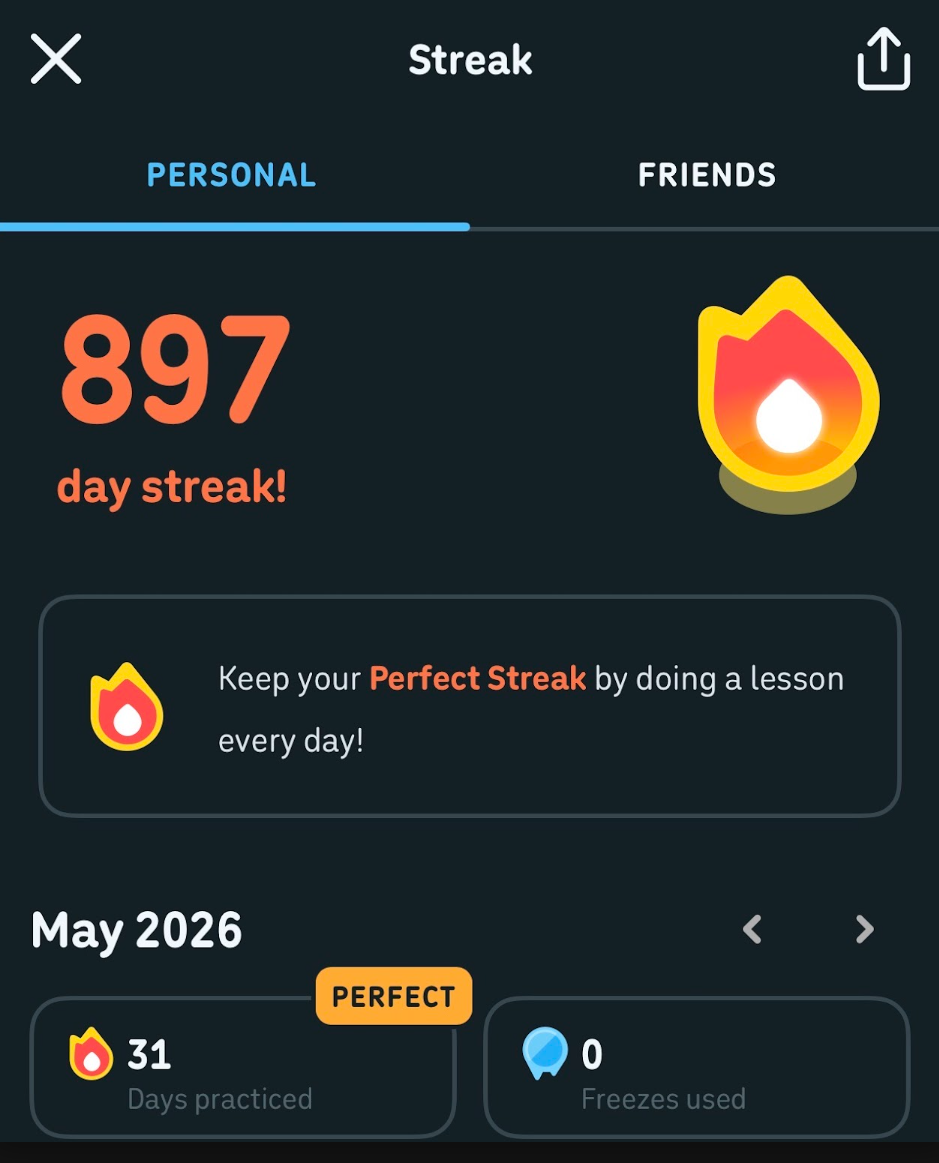
    If you measure consistency in terms of the number of days an action is done, the longer the streak, the more routine and normal it becomes, the easier it gets. 

    My Duolingo Streak Since 2024; Never Thought It Would Last

    The Auto-Pilot Discipline

    Discipline exists on a spectrum. Fixed routines, fixed tasks, fixed timing, fixed everything. Boring. Stale. Repetitive. But, effective. This is discipline elevated to auto-pilot – a lifestyle built around the systems meant to achieve certain goals. 

    Whether this discipline is good or bad depends on whether you can accept the resulting lifestyle. Not everyone likes the same lifestyle routines. 

    Auto-pilot deals with every possible choice with an outcome to derail the plan in advance – with discipline. No deciding what is for lunch because you have meal prepped. No choosing between new clothes because you take the train home immediately. Decisions are made ahead of time to avoid confrontation, temptation or autonomy. Life is without novelty, thrill or difference between days. Because everything is fixed, predictability and similarity cause boredom in day-to-day life.

    There is little to no room for ‘error’ because discipline has overridden autonomy. The default answer to anything is “no”. Autonomy is then the nemesis of discipline. Without autonomy, discipline reigns as default. Autonomy creates possibilities that cause distractions. Distractions that lure you toward undisciplined lifestyles. 

    A disciplined lifestyle is one that needs deliberate attention and decision-making. It can be done in advance (like in auto-pilot), or in the moment (avoiding possibilities). But it requires you to choose the harder, uncomfortable path. And this is why autonomy usually works against discipline. We avoid the choice that makes us different from others, that makes us stand out. 

    The Autonomous Discipline

    There is a point where discipline becomes easy. It’s autonomous. Your discipline filter works subconsciously, like a well-oiled machine, that you have so much trust in yourself to intentionally disregard what discipline tells you. 

    Saying yes intentionally to ice-cream while dieting. Skipping exercise amid regular training. Waking up later than usual without making your bed. 

    For some, breaking the routine, giving in to the easier, lazier option, may be normal. But disciplined people would feel discomfort the moment something is done in contrast with their identity. Someone who goes to the gym 5x a week feels weird if he only went 3x. Or someone who makes the bed daily finds it unacceptable to leave the bed messy for once. 

    Autonomous discipline is what I would say is the ‘license to deviate’. You have become so disciplined that you know the habit, routine and behaviour will remain intact even if you deviated from the default action. Skipping one day of exercise knowing full well you’ll hit the gym the following day is an example. This is likely the case when your actions, routines and habits have become part of your identity. 

    Having this ability to trust that you’ll choose the harder option again the next day is when autonomy is now acting in your favour. Autonomy no longer acts as the nemesis of discipline, but complements it to give a more textured lifestyle. You no longer need auto-pilot.  

    Are You Disciplined? 

    I’d love to say that I am extremely disciplined. To have the consistency in doing everything daily to achieve everything I want. But we’re humans. We’re flawed. We’re going to fail in some regard. And that’s okay. 

    Ironically, we only call it discipline when it comes to things we hate doing, rather avoid doing, but yet always beneficial to us in time. The things we love to constantly do are then called “guilty pleasures”. 

    Everyone can start with one task once a week. Whether it is a new hobby, a new goal, or anything at all, start there. Once you start, it gets easier to integrate the habit or task into a routine. Set low expectations but make the effort to complete the task. 

    It will be hard battling your discomfort, emotions and mental excuses to not do the task. But remember, to become different, to improve, you have to sit with it and let it happen. It may suck for a bit, but it won’t be forever. Start today, never stop.

    Click the arrows for other posts!


    Hi! I’m Zac, the guy behind this serendipitous, quirky blog. I’m currently on a quest to find out more about myself before Uni begins – who I am and what life has to offer. This blog is my little space where I step out of my comfort zone to share my thoughts and life experiences. I hope you enjoy reading the weekly posts. Share them if you like, or not.

    Teleport home below!


    Find more serendipity below!

  • You Don’t Know What You Don’t Know: Dunning-Kruger Effect

    You Don’t Know What You Don’t Know: Dunning-Kruger Effect

    Quirkbag Collection #45 – 24.05.26

    There are 4 stages of competence when we learn anything. They are known competence, unknown competence, known incompetence, unknown incompetence. You might know them simply as “strengths” and “weaknesses”. But you may be unaware you had particular strengths or weaknesses as you don’t know what you don’t know. That’s the Dunning-Kruger effect

    So…“What Are Your Strengths and Weaknesses?”

    The typical interview question aims to test someone’s self-awareness. Knowing your strengths and weaknesses is easy if you have done plenty of things or have hundreds of hobbies. But most times, the question yields boring answers like “persistent”, “disciplined”, “careful” and “perfectionism”. Most people aren’t even sure what these words mean. 

    These are usually what people feel about themselves based on what things they have done. 

    The true test of strengths and weaknesses come when we face new situations. From navigating completely new environments (like travelling alone) to learning something new (a skill or job). The complexity and uncertainty involved shows who we really are. Like waves that polish the beach, our character is only revealed when we face different waves of life. 

    Through these experiences, the hard-earned wisdom of how we react, behave and think comes to us. Clarity about our character and style surfaces. We now understand how “good” or “bad” we really are at learning or problem-solving. The best reference comes from benchmarking ourselves against others at a technical or professional level. 

    Sometimes, it forces you to admit that you aren’t as “awesome” or “competent” as you thought. Bruised ego, poor you. 

    Now, think again. What are your strengths and weaknesses? A story or experience should float into your mind. Not a buzzword adjective. 

    Another Question: ‘What are some AFIs?’ 

    Simple. It’s the “known incompetence”. We think to improve upon what we know and observe. These can be tangible outcomes like accidents, mishaps or events or intangible observations like confusion, inefficiency or lack of communication. If you can see it, identify it, label it, you can probably fix it. 

    The hardest part comes when you try to fix what you don’t know is “broken”. That’s unknown incompetence. It’s like trying to find your shadow in darkness. 

    But you know there’s something there to tackle. You feel it. There’s an invisible obstacle impeding your progress. Like a 5 year-old in bed at night, you think there’s an imaginary monster. Ever hear the silence that falls upon the room when someone asks for improvements, that’s probably one reason. There’s the “imaginary monster” without a name that lurks. 

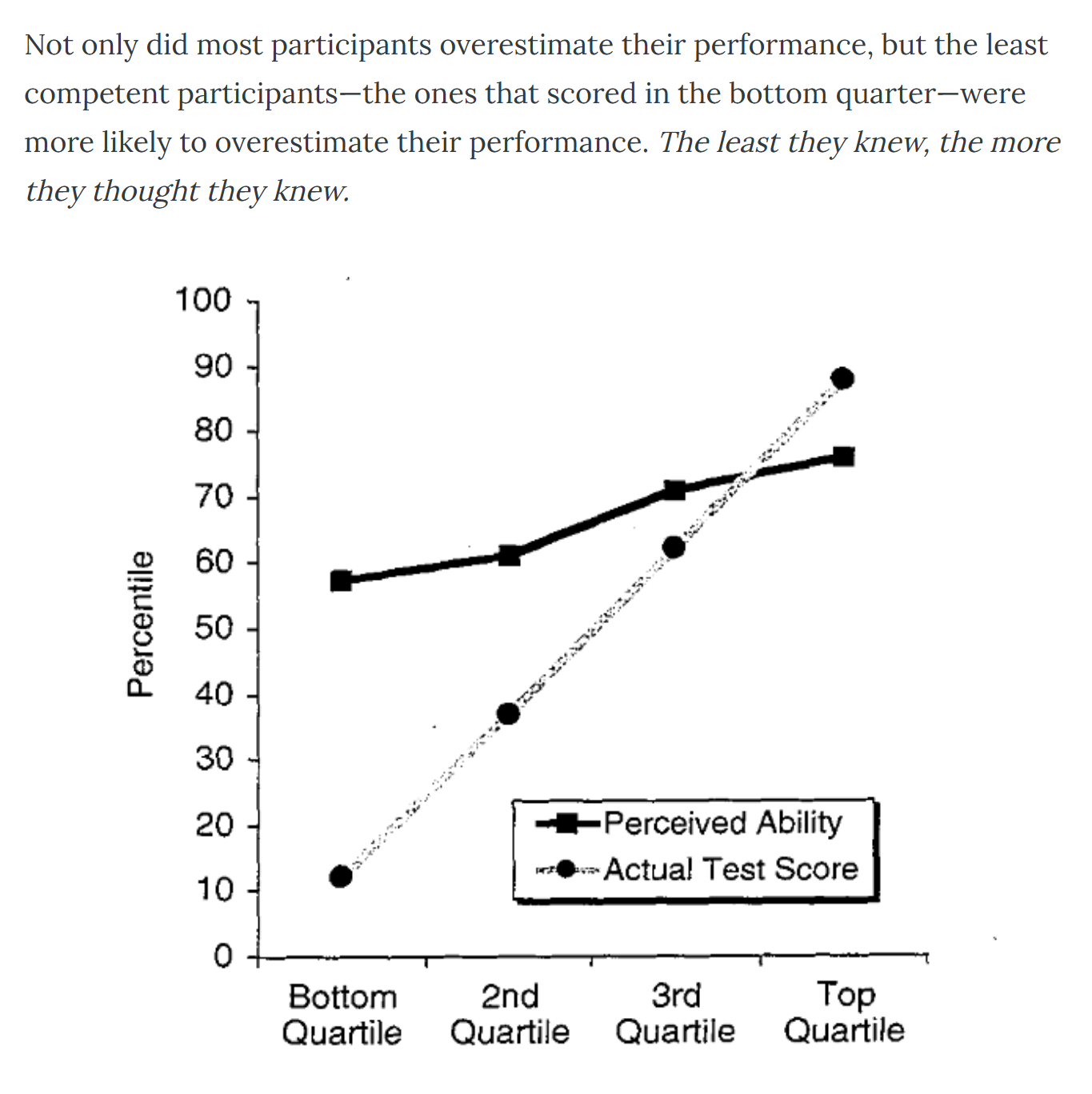
    That’s the Dunning-Kruger effect at work. You don’t know what is missing but there is something missing. How can you improve on something if you don’t know what you don’t know? If there is an invisible monster? 

    A Graph Of Perceived vs Actual Competence Showing Dunning-Kruger Effect
    Photo From Nesslabs.com/dunning-kruger-effect

    The Nesslabs article suggests meta-cognitive skills. That means enhanced self-awareness, more than what yields the boring answers to interview questions. Unknown incompetence needs you to “figure out what you don’t know”. But what if there’s nothing in mind to try? 

    The Pasta Method: Stumbling and Fumbling

    In learning about sales, I have received advice from others that trying absolutely anything and everything is what will help you gain knowledge. I call this the “pasta method”. This is not knowledge of sales, but of yourself. It’s to find out what works for you. 

    Learning how you come across to others and the way you speak help to increase your circle of known incompetence. Why? 

    Because you get instant feedback. A forgiving smile, a light chuckle, a confused look, an angry tone. Everything is the result of a certain trigger from you. You get to know what works. You get to know where you need to work on because of the observable signs of incompetence – their lack of interest, frustration, annoyance and more. 

    Facing the Dunning-Kruger effect requires more than just hard work or effort. It requires smart work. Hard work is easy when the task simply needs to be done, in repetition over time. Smart work adds a layer of thinking (a very difficult thing) which determines the direction of progress. In other words, smart work before hard work. Smart work brings changes, tests, experiments.

    Learning sales was easy initially because there were only so few sentences and words in the basic script. But the art of sales – holding conversations, breaking tensions and showing value – needs time and a lot of smart work. It’s easy to knock 1000 doors and say the same thing. It’s much harder to knock 1000 doors and use every door as a feedback loop to overcome the Dunning-Kruger effect. 

    You don’t know what you don’t know until you try something new and see yourself fail. Ask others for their feedback, actions or experiences with their learning progress.

    Now, smart work requires the “pasta method”. Throw everything and anything that you have heard or thought of and see what sticks. Then, assemble the pieces to see what you didn’t know works. That’s a stumbling and fumbling step towards killing the imaginary monster. Now, repeat it again. See why it’s tough?

    A Drop Of Wisdom

    Stoics believed that wisdom was the mother of virtues. From wisdom came courage, temperance and justice. It’s your ability to act and to not act. Wisdom comes from experience; knowledge comes from learning. We don’t know what we don’t know because we have no knowledge or wisdom yet. It’s space that has not been explored. 

    In Ryan Holiday’s “Wisdom Takes Work” about the stoic virtue, it is clear that wisdom needs time, just as compounding works with time. I always tried to fast-track and compress my learning curves in everything over the months. But sales taught me that hard-won wisdom and experience cannot be “optimised” or “expedited”. 

    You just have to take the time. Sometimes, the long route is the short route. I have met the Dunning-Kruger effect as I learn to do sales. Everyone will at some point when they try different things for the first time. But I hope that meta-cognitive skills (aka strong self-awareness) stay in abundance in people.

    That’s the only way we’ll ever slay the imaginary monster – by making it real. 

    Go ahead, read my other posts!


    Hi! I’m Zac, the guy behind this serendipitous, quirky blog. I’m currently on a quest to find out more about myself before Uni begins – who I am and what life has to offer. This blog is my little space where I step out of my comfort zone to share my thoughts and life experiences. I hope you enjoy reading the weekly posts. Share them if you like, or not.

    Teleport home below!


    Find more serendipity below!

  • Learning To Let Go

    Learning To Let Go

    Quirkbag Collection #44 – 17.05.26

    A few months ago, I set myself the goal to let go of things emotionally and mentally. I thought it was a useful skill to start learning early. Learning to let go is one of the hardest skills around because it is completely intangible. It’s far easier said than done. 

    You might have met people who let things slide easily. They have no retention of negative influences and they move on quickly. Great, right? Meanwhile, you are stuck thinking about that casual remark someone said about you 3 months ago. That tiniest thing someone said or did just annoys you. How could you let it go? 

    An Emotional Impression Like An Anchor

    The seeming attack on our identity leaves a deep emotional impression on us. Whether it’s a random joke or a casual remark with zero malicious intent, it still feels personal, doesn’t it? It is an anchor for our mind. We can’t stop thinking about it. The speaker meant no harm but we felt hurt anyways. It’s why the memory lingers in our mind. 

    People love to tell us to “just let it go” – or my personal favourite line: “just walk away”. But it’s not as simple as that. Anyone who has tried to calm someone down by saying “just calm down” probably aggravated the person more. 

    “Calm Down” Does Not Create The Calming Effect

    The emotional impression leaves us hanging because our self-worth and self-esteem also come into play. Yes, those things make us feel bad about ourselves and add to our frustration. A random event or remark might make you question your own self-worth, thereby hurting your self-esteem. If something makes you feel inferior, you feel small, annoyed, frustrated that you are not enough. If something offends you, you feel hurt, defensive and self-righteous. 

    “I am just not good enough for that.”

    “Of course I am not blah blah!” 

    “Wow, he doesn’t like me at all. I must have done something wrong.”

    The memory of what upset you would keep replaying in your mind. Over, and over, and over. Before you eat, before you sleep, when you are on the train, when you walk home. 

    You just can’t let go. 

    2 Keys For Letting Go 

    The first key to letting go is understanding the context of our emotions. We feel a certain way because we think our identity is attacked. We think deep down that it says something about us that is true. It’s usually something we don’t like or don’t want to associate ourselves with. Our ego is bruised because the comment pointed to the “ugly” bit of our personality. Now, it is “too close to home”. But it’s not because someone is really out to get us. 

    We can choose to change that flawed part of us or simply ignore it. In ignoring it, we inevitably accept that we are that thing/remark/joke. And that’s okay because owning that part of yourself makes you less susceptible to feeling hurt again. It helps you let go of other people’s opinions of you, because now, you know that’s part of who you are. 

    The other key to letting go is clarity of mind. Clarity shifts your perspective from subjective to something objective. It’s not necessarily about you. Reframe what you feel as something that is involuntary – an emotion you observe and then let subside. The emotion can be your reaction, but knowing it reflects the other person’s experience, feelings, behaviour and intention prevents you from thinking you are attacked. 

    Sometimes, they might just be angry, or upset, or having a bad day. It might be anything else in the world unrelated to you. The clarity gives you peace of mind that you are safe, and that it is irrelevant to you. You then make it easier to let go of the trivial matter yourself. 

    Rejection Builds Clarity

    When I knock on doors after doors any given day as a salesperson, around 50% don’t open. Of those that open, only about 10% are willing to have a conversation. That means 90% are resistant, defensive, negative or even agitated. My one-to-one interaction with people means the response I get comes purely from the things I say or do. It is a direct reflection of my presence. Of me. 

    Or is it? 

    If we experimented with another salesman knocking the same door, would they have faced the same reaction from behind the door? Maybe. What they think of “me” (the salesman knocking the door) is probably not the same as what they think of “me” (the person writing this blog). But I am still the same person. Just as you are wherever you go. 

    Someone’s mood, day, recent experiences and their perception of “salesman” in general dictates their reactions. It’s directed towards what you represent rather than who you are in reality. It’s the same for donation drives, for roadshows and more. No one knows you. 

    The rejection, insult, remark, or thing is only an instantaneous action directed at their imaginary mental version of you. It’s not modified to fit the real personal individual – you. 

    It Does Not Always Reflect Things About You

    But does one reaction from someone define who we are? Or do we choose to define who we are? 

    But What If It Still Hurts?

    That’s being human. Letting go is not as easy as that “Frozen” song. I would like to say that it gets better, but I can’t yet. Like most people, letting go is still my goal. Just like that scene with Tom Cruise, it’s pretty difficult. 

    Here’s 2 ways to think about our responses. The first is “death by the second arrow”. The first arrow is the things we cannot control in life. The second arrow is how negative we feel and react to it. We die from the second arrow. We have to let it hurt but stop creating additional pain for ourselves. Letting go of the subsequent emotional reactions is blocking the second arrow. 

    The other way is the empty boat analogy I learnt online. When a man’s boat crashes into another boat in a river filled with fog, he is enraged and reacts aggressively. As the fog around their boats clears, he sees more clearly and finds the other boat to be empty. Now, who would be angry at an empty boat adrift? Thinking about some things as empty boats helps to alleviate the emotional triggers and regulate our reactions. 

    We will always struggle to let go because we are human. To achieve the epitome of letting go is having some mythical combination of stoicism and zen-like disposition. While that’s not realistic for most of us, I believe having some fraction of it still goes a long way.

    Letting go is a skill for life, one that gives permission to move on unburdened.

    Go ahead, read my other posts!


    Hi! I’m Zac, the guy behind this serendipitous, quirky blog. I’m currently on a quest to find out more about myself before Uni begins – who I am and what life has to offer. This blog is my little space where I step out of my comfort zone to share my thoughts and life experiences. I hope you enjoy reading the weekly posts. Share them if you like, or not.

    Teleport home below!


    Find more serendipity below!

  • Play The Infinite Games In Life

    Play The Infinite Games In Life

    Quirkbag Collection #42 – 02.05.26

    Franz Kafka left behind the idea that “the meaning of life is that it stops”. Sombre, but forever true. So much of our lives is focused on doing something for an end goal we think is ‘good’. We even forget other things exist. We complete trivialities that don’t ultimately add to the richness of our life story anyway as part of life.

    Yet, there are also infinite games in life that we can play. These are ‘goal-less’ activities that don’t offer conventional, external rewards but instead require you to see intrinsic value in them. And we can persist to play them for fun; because we’re humans. 

    Afterall, what we really have at the end are the experiences we tell as stories and the impact we made on others. Everything else fades. 

    Being more adventurous, I have started a bunch of new experiments in playing the infinite game. They are done purely for the fun of the pursuit, or for cultivating patience and persistence.   

    Doing Calisthenics (Sorta)

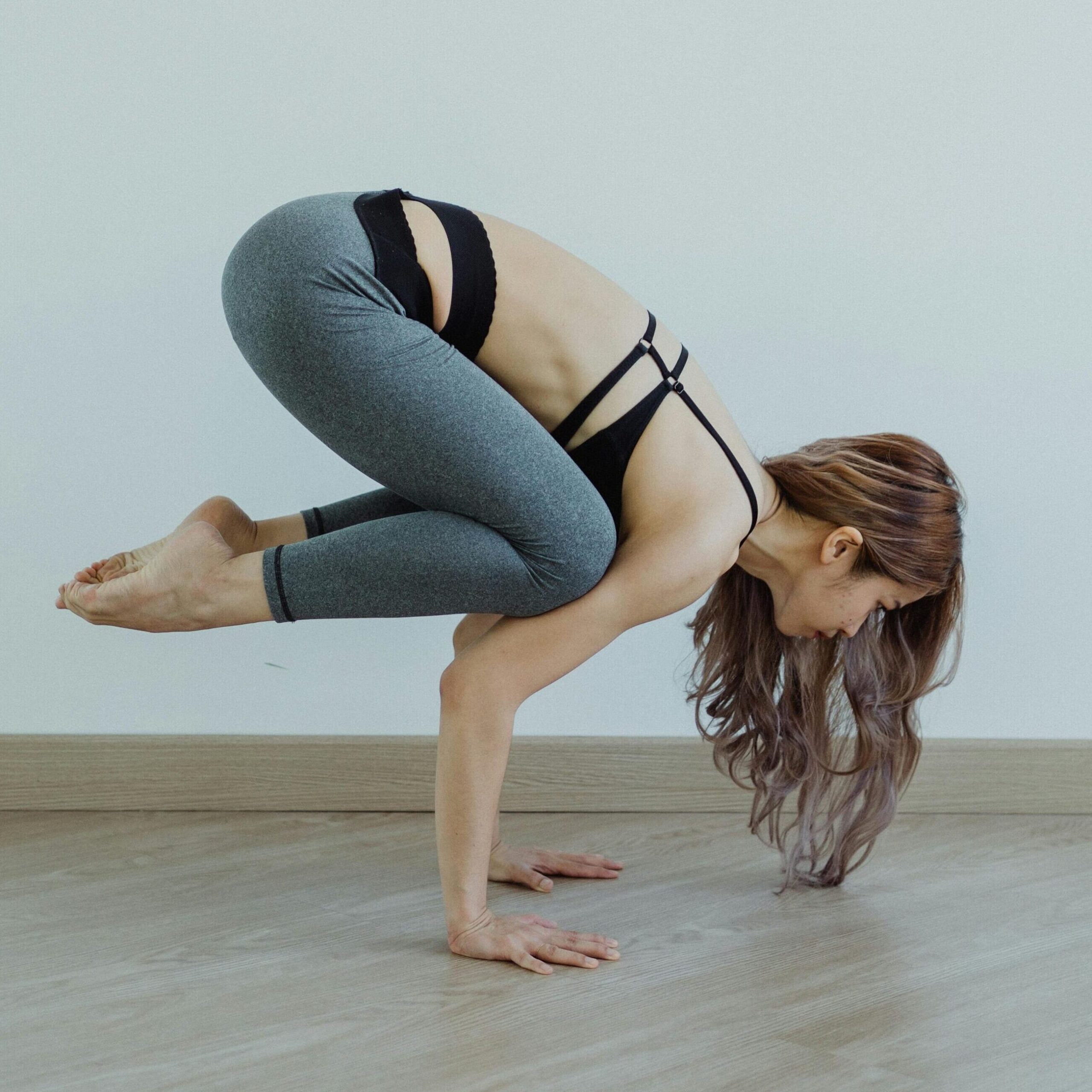
    Yes, that weird body pose you see people do is actually not that easy. You think you could do it if you tried and when you actually try, you have a humbling moment. I was humbled when I tried the crow pose for the first time. 

    The Crow Pose (Also Known To Me As Beginner Pose)

    Gym-goers understand the necessity of discipline to keep training for the desired body growth. It’s easy to just ‘hit the gym several times a week’. With calisthenics, there’s a twist. Mostly, you ‘fail on every single attempt, every single session’, until that one random try where you accidentally hold a position for one second. Unlike regular weight training, you can’t see progress easily or linearly with calisthenics. It’s a ‘trust in the process’ game.

    Precisely because there is no ulterior reward to practicing calisthenics, you have to do calisthenics for its own intrinsic reward. It’s an atelic pursuit with no ‘end’. You do it as a means of self-cultivation. 

    Mastering your own body weight is like a snail lifting its own shell. Not only does it take tremendous effort to move and balance your body in new ways, progress is painstakingly slow. It’s the ultimate undertaking to hone your patience, your discipline and your inner persistence. 

    Talk about building consistency, just try learning a crow pose by practicing it every single day. (I didn’t know I would bruise my triceps.) 

    I Knock On Doors 

    Besides calisthenics, the next best way to train your patience and frustration tolerance (a phrase I learnt from Alex Hormozi) is facing rejection after rejection in sales, similar to failing in calisthenics. 

    Recently I started doing door-to-door sales. Knocking almost 100 doors per day, I see first-hand what 50% open-rates and what 1 to 2% conversion rate actually look like. Ironically, I don’t find it gruelling to face these rejections. 

    Along A Corridor Knocking Another Door (Which Probably Did Not Open)

    Here’s where it gets kind of whacky. Because I aim to learn communication skills and train my patience, persistence and frustration tolerance, knocking on doors is another infinite game to play. There is no limit to how much I can persist because there’s always the next door.

    The amount of experience and depth of cultivation is proportionate to the number of doors knocked. It’s never guaranteed that the door opens. But it is guaranteed that I might face another rejection. 

    Of course, I won’t play it forever. No one should. No one will. We all fade back into the cosmos one day. But while we are here, this infinite game can be our companion so long as we see our growth, cultivation and even adventure in doing it.  

    Like Walking On Water – Surfing 

    It’s more than a cool activity. At least that’s what observers think. It’s surreal to watch, like a tightrope stunt. But hearsay from surfers, and this is hearsay, surfing is even more surreal from the surfer’s perspective. 

    They always feel free, connected with nature and above all mortal worries. That is until they drop into the water. 

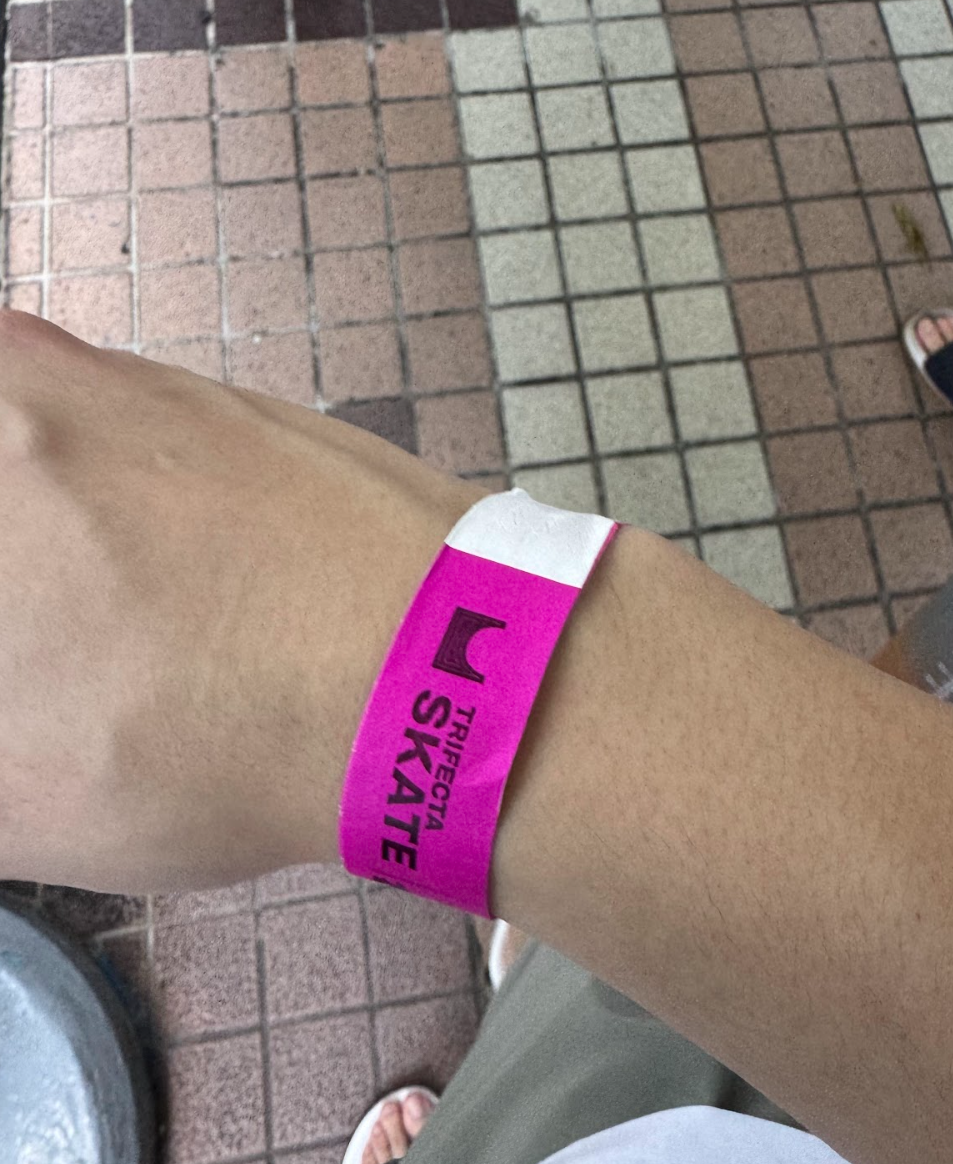
    I tried surfing at TRIFECTA in Orchard recently. Constantly falling is the best way to get over the fear of falling. Failing is the best way to benefit from the infinite game. Unlike most sports, the meaning is to enjoy and be in the moment rather than ‘win’ a match. You don’t surf to win. You already win when you surf.

    TRIFECTA: Observing Other Surfers Before The Lesson
    Entry Tag For My First Surf At TRIFECTA

    Surfing, like walking or drinking tea, is an atelic activity. You don’t surf to commute…unless you work remotely under the waves. Neither do you surf to gain recognition from your boss…which does not make sense. Surfing is an adventurous experience which is non-exhaustible (so long as the laws of Physics persist, and I think they will), even long after you are gone. 

    Every fall from a surf is like another brush of persistence. You keep at it until surfing becomes natural, an endless option open to you to cultivate appreciation and patience. And in the meanwhile, you get to look good doing it. 

    I Ask: “What’s The Point?”

    I always loved that question. It’s a very ‘Jerry Seinfeld’ type of question, layered with confusion and a dash of judgement. What is the purpose of playing all these seemingly endless games in life? Pursuits that sort of go nowhere? 

    It piles loads of perspective and capacity onto your character. Growing up in a very goal and task oriented environment, this question was my mini Occam’s Razor. The answer must be definite and clear. I eliminated everything else and cut through all the BS. But maybe it was too effective for a teenager. 

    I never bothered to explore. Never bothered with serendipity. Not even with life’s possibilities. 

    If you have read Sahil Bloom’s “The Five Types Of Wealth”, then you might remember telic and atelic activities. I had plenty of telic activities. Everything was a means to an end and nothing else mattered. Not even making new friends or trying new things. Atelic activities are things that society places least value on. Things like staring at the sky, or taking a walk. They are things which are done for their own sake, not as a means to an end. 

    Trying things like calisthenics, surfing and other self-pursuit activities taught me that there are things worth doing on their own, regardless of outcome. The satisfaction it brings is innate, and cannot be taken away. It’s self-assuring, and it helps you understand yourself as a person. 

    Plenty of infinite games exist, if you choose to play them. There are activities or habits you can try for their own sake without needing a ‘return on investment’. The real value is self-imposed because it gives you new perspective and persistence training. 

    Say “Now That’s Interesting…”

    Yet another rather ‘Jerry Seinfeld’ question, but a better one. Instead of trying to chase something vague, for the immediate future, chase something real and tangible – something that makes you say “that’s interesting”. 

    Trying surfing was an entirely serendipitous idea, much like the theme of my blog. It was something new to me. Seeing the way people literally walked on water and glided in front of the waves was really cool for a city boy. 

    Trying new things with the only aim being to learn something from the experience led me to commit to calisthenics, a surfing lesson and even practicing sales. It’s a strange mix of experiences, much as life is for so many people, but they are all valuable in piecing together the adventure of our life story.

    Go ahead, read my other posts!


    Hi! I’m Zac, the guy behind this serendipitous, quirky blog. I’m currently on a quest to find out more about myself before Uni begins – who I am and what life has to offer. This blog is my little space where I step out of my comfort zone to share my thoughts and life experiences. I hope you enjoy reading the weekly posts. Share them if you like, or not.

    Teleport home below!


    Find more serendipity below!

  • Why An Intentional Life Is Your Answer To Today’s Chaos

    Why An Intentional Life Is Your Answer To Today’s Chaos

    Quirkbag Collection #39 – 10.04.26

    The Modern Existential Overwhelm 

    Around 392 billion emails are sent daily in 2026 worldwide. That’s more emails sent per day than in the whole of 1995. 

    We live in a world with unprecedented speed. Everything is fast and it must be faster. Slow is seen as the dearth of intelligence and modernity. Slow is an anathema.

    “How can anything be this (insert your favourite frustration here) in 2026?”

    We’re so overwhelmed by the sheer amount of stuff that exists in our lives. The trends and fads we’re fed subconsciously from social media and the toxic comparisons we make to judge our own “success”. We neglect to fully consider the value and meaning in these things we do. We just…do it. 

    Unsurprisingly, the ‘slow life’ movement was born in part as a means to combat the intoxicating effects of our modern pace of life. But more than that, the ‘slow life’ gives us a chance at really aligning our lifestyles to who we are and what we want to do – to lead an intentional life. 

    Designing An Intentional Life 

    After reading an indulgent number of productivity, business and self-help books, I found that an intentional lifestyle is a great step toward finding ‘meaning’ and ‘happiness’. Of course, this does not come naturally. 

    An intentional life requires you to think deeply about what aligns with your core values. Deciding what kind of lifestyle suits you best in this stage of life is probably one of the best steps forward. We all know how easy it is to fall into the abyss of social media, to want what others boast, to have what others don’t. 

    But it feels hollow. It doesn’t feel like you. 

    We often do the things other people do. Most of it comes from the societal pressure to fit in, to be accepted, to make friends. We’re led to believe that if they are looking ‘happy’ doing it, then we would be too. 

    Unfortunately, copying others is not a wise strategy here. 

    Choosing to shift towards a lifestyle which reflects your real priorities and values would bring you closer to feeling more fulfilled. And yes, it requires design and lots of trial and error. 

    Again, this does not come naturally. As Alex Hormozi sharply says, ‘it’s hard to have dreams when you have bills to pay.’ It won’t be achievable overnight. You just need to start simple. 

    Maybe wake up at 8am for one day. Spend more of the morning doing your favourite ritual and it could give you more energy. 

    It could be a new hobby like painting on the weekends. Perhaps night journalling before bed is something to help relax and unwind. 

    Rather than building habits, trying out new things can help you find out what tiny additions help make you feel more aligned with yourself. It’s the intention to experiment and try that matter. 

    Intentional vs Controlling – A Big Difference

    But what if life gets in the way? 

    It is bound to happen. Indeed, just because you intend to do something does not mean your schedule will allow you to. Maybe not this week, but some day next week. 

    It’s doing the task when the opportunity arises. 

    Having an experimental mindset toward the tasks is key because you are not building a habit. Skipping it here and there is fine, as long as you are intentional about doing it again. 

    There is a big difference between controlling – forcing changes in lifestyle choices upon yourself because you want to redesign your life – and intentional choices which are about making decisions with purpose. 

    Being intentional about waking up at 8am is not about a success metric. It’s not ‘did I or did I not?’ but rather ‘how does it feel to do it?’ If you’re not a morning person, at least you know. Or maybe you are a morning person, and you get to be intentional about how you spend your morning instead of rushing for the next commitment.  

    I read the book “Time Anxiety” which offered really practical tips for how to use your time while feeling more grounded. They can complement the intentional choices you make. 

    Being Intentional Makes You Different, So What?

    I realised making choices for myself may imply mismatches with other people’s choices. 

    You might schedule more gym sessions or night runs because you are intentional about your exercise. But it might mean giving up some ‘chill time’ with friends or roommates. And sometimes, people won’t understand it. 

    Being intentional about your own life, and by extension the way you spend your time and money, can make you seem aloof. It’s normal because your priorities or intentional choices in life don’t align with that of others’. 

    The fear associated with being different can be paralysing. The urge to just ‘go with the flow’ can be irresistible. But that’s always the case with change. We simply want the comfort of external acceptance. 

    I spent years in school just doing what I felt best for me, whether that’s eating alone to fit my schedule, or studying alone for maximum productivity. At times I felt completely detached. But eventually, I just came to terms that my plan was different from others and wanting to follow through meant doing it my way, intentionally. Accepting that was a relief because I no longer struggled to achieve both simultaneously.

    Nonetheless, it’s still beneficial to do social activities occasionally. In fact, you can even broaden your range of social interactions if you meet new people through, say, a pottery class. Intentional lifestyle choices need not be isolating, but it surely feels that way initially. 

    We’re used to doing what has been conditioned and ‘acceptable’. Being intentional is unusual (unless you’ve been doing that all your life) and new. That makes it different from what others are doing. But we have to accept that we’ll be different. 

    We’re growing into a version of us which we feel most aligned with. 

    Receiving People’s “Advice” 

    It’s not always a good idea to share your intentional lifestyle choices with everyone. Yes, people are supportive of self-improvement and betterment. But they aren’t always supportive of change, especially if it involves risk or a chance of failure. 

    As an example, if you’ve ever read any content related to the support from friends and family when becoming an entrepreneur, you’ll know that they don’t always give the best advice. They mean the best, but they aren’t entrepreneurs. 

    Hearing people’s reasons why your new intentional lifestyle choices are ‘not ideal’ or ‘bad ideas’ can be discouraging. But you’re choosing your intentional life, not theirs. One quote I remember hearing is that ‘everyone can have an opinion, but not everyone has a say.’ Jim Rohn similarly made the point that we should “stand guard” at the doors of our mind, lest any undesirable influences get in. 

    It’s important to choose who influences your choices and why. There could be good reasons to change your mind. Of course, your intentional choice can be small: a new hobby, a night-cycle, regular runs at East Coast Park. But it can be huge too, like quitting a job for freelancing, entrepreneurship or moving countries. 

    The bigger the intentional change, the more likely you’ll get pushback from people. Understandably, you have to consider the impact on your current life, and those who might rely on you. People’s advice is sometimes just their longer way of telling you ‘be careful’. 

    The Resistance Will Strike

    One of the bigger external obstacles to living a truly intentional life is that the world does not embrace your lifestyle choice. If daily cups of Earl Grey at 10am in a cottage with a view of nature is your intentional lifestyle goal, it might be hard to hold a full-time corporate office job concurrently. 

    Resistance occurs because your new and modified intentional life requires adding new tasks and subtracting old ones. But having a full-time job with uncompromising requirements can mean a whole lot of rigidity in your lifestyle. There might not be enough flexibility in your schedule to fit new hobbies or routines or tasks. It might be too difficult to negotiate work demands with the boss. Whatever the reason, just like playing Tetris, some things simply won’t fit neatly. 

    Then what? 

    Well…this is where we tell ourselves “I’ll try it later”, “maybe next time when things are less busy” and “that’s for the lull season”. And then it’ll never happen. These justifications become habits.  

    The Next Step Is Also The First Step

    The world is not incentivised to accommodate your change in lifestyle. It’s a machine that keeps chugging along. You have to find a way to serve your own intentional life. Because until you do, your life will be dictated by the demands of your previous commitments and be gripped by old unconscious routines that no longer serve you.

    That said, this is not a sign that you should quit your day-job and move to a sub-urban cottage for tea at 10am (unless that’s actually your ideal intentional life). I mean, with all the romanticised van-life and cottage-life these days, maybe they are on to something. 

    Instead, you could try tea sessions over the weekends, or a tea break at work on days without meetings, or take a slow morning for one day and see how it feels. 

    Before any huge swings in your lifestyle, it might be beneficial to consider the small steps to take toward a more intentional life. Like Tetris, play the small blocks first, then make space for the big ones. 

    Eventually, you nudge yourself towards an intentional life. From tea-breaks to slow mornings, your trade-offs might slowly start looking like a career change. Suddenly, moving across the world to experience the Californian sun or Italian wine is not so scary or crazy anymore. 

    But it starts somewhere. It starts with one tiny first step in your daily life. And the longer you wait to start, the longer it’ll be before you discover the right direction or intention for your life. 

    Key Ingredients: Time And Trust

    Taking the first step toward change will feel weird and scary, even if it’s the smallest task you add to a routine. Whether it’s stretching in the morning or moisturising your hands at night, it’s important to try not to let that discomfort or – as I like to say, “inertia” – override your choice to do the task. 

    There’s definitely some adjustments to be embraced. The awkward transition period is inevitable. No doubt it is partly due to the deeply ingrained old routines and lifestyles, especially if we have not changed the ones we grew up with. 

    It takes an average of 66 days (of doing the thing consistently) to build a new habit. That’s about 2 months. So use 2 months to experiment a new habit or lifestyle choice to see if that aligns with your intentional life. And hey, it’s always easier to quit doing something after a while than keep going, especially if it proved to be tedious or draining. 

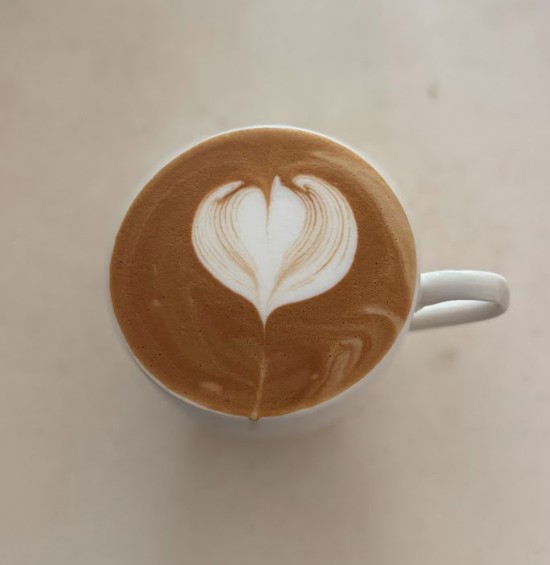
    A Cup of Coffee with A Flower Pattern Latte Art
    Latte Art Was An Intentional Hobby I Started While Having My Morning Coffees

    It’s good advice to start small when implementing change toward an intentional lifestyle. Afterall, you might not survive a complete overhaul overnight. 

    Leading an intentional life is the first step towards taking back some control of your life’s direction. There’s nothing wrong with following the flow once in a while. But to really seek something deeply meaningful and aligned, making more intentional lifestyle choices is the way to start, especially in the excessively rapid pace of modern society.

    There’s no better time to start than now.

    Thanks For Reading. Click The Arrows For More!


    Hi! I’m Zac, the guy behind this serendipitous, quirky blog. I’m currently on a quest to find out more about myself before Uni begins – who I am and what life has to offer. This blog is my little space where I step out of my comfort zone to share my thoughts and life experiences. I hope you enjoy reading the weekly posts. Share them if you like, or not.

    Teleport home below!


    Find more serendipity below!

  • Letter To My 18-Year-Old Self In JC

    Letter To My 18-Year-Old Self In JC

    Quirkbag Collection #33 – 27.02.26

    The 2025 A-Level results are released today. Literally every single JC student can feel the anxiety overflowing from the school hall. I remember exactly how it felt when I collected my own results 2 years ago, so nervous that I chose to arrive late intentionally to avoid the crowd and the unnerving probes from classmates. 

    I stood outside the hall while the crowd dissipated, entering only when there was no queue left. There was no mental capacity for conversation as I could only think about the results in my hand once I had collected it. I had this palpable anxiety and fear that rivalled my inner composure. 

    But that’s all history now, and you can easily find my academic background on LinkedIn. 

    A Reflection Inspired By Pete Sampras

    It felt an apt time to reflect on my own JC journey now that there is some distance between me and my old self. And yes, it does seem true that growing older and finishing NS have granted some clarity. 

    I read the letter Pete Sampras wrote to his younger self and felt encouraged to be kinder to my past self. So what better way to reflect than through a letter to my old self; a younger Zac who had more naivety, endurance and stress than the current one. 

    The Letter

    Hey dude, 

    I’m you, but older. 

    In 2023 your life is going to pivot greatly, but the impact is felt afterwards.

    As you celebrate your 18th birthday, when the skies are still clear and your mind less cluttered by school, you should take more time to enjoy that day. It’s a day you won’t get back. 

    You will enjoy Mediterranean cuisine for lunch, but the exact food and taste you won’t remember very clearly in the coming years. But it was the experience you remember and hold dear, just like many others. 

    A classmate will wish you well, but that friendship will end abruptly in several months. You will not know why, and you’ll keep wondering until you enlist in the army. Eventually, you’ll move on; so will they (at least that’s what I think). 

    This will teach you to hold your closest friends tightly and choose carefully the ones you wish to keep investing in. Your singular focus on individual excellence, consistency and commitment to yourself will be isolating. You will have meals alone, walk alone, study alone, but that’s because you know what you need to do.

    Deep down, you know what it takes. Don’t let people confuse you. 

    More and More Of The Same – Mundane

    From April to June, your life will be incredibly mundane and repetitive. The days blur into one. But even you can foresee it now. 

    You will conclude your time in the school’s Air Rifle/Pistol Shooting Club with an unremarkable and arguably tragic performance in the final competition in which you will ever partake. The night before, you and 2 other team mates will each give a parting speech. 

    It’s important you don’t hide what you feel and tell them the truth, because the next day, you will not make the cut to the Shooting Finals and as you struggle to accept it, the parting speeches remind you of the journey you’ve been on. 

    Eventually, you’ll learn to accept it. Trust me, even though it’s a very bitter pill to take. 

    Farewell Scribbles on the Whiteboard Before We Left

    Your volunteering project will end in April, with a rather well-received Easter Egg Hunt which you will plan and organise. In May, more juniors than you expected will apply to take over this project from you, from whom you will select 5 that you will be proud of. They all want the same thing – to run the project.

    It’s critical that you stick to your intuition for which junior suits the project best when making your choice of successors, because that’s as good as you’ll do. That’s as good as your senior did when he chose you. The rest will take care of itself. 

    It will not be the last time you cross paths with your senior, though you’ll never see him again until Nov 2024. 

    Studying And More…Studying

    In June, you will have a first taste of what grinding for the A Level exams feels like. You will make a revision plan for your 5 subjects that seems wholly impossible to complete, and your instinct is correct. You don’t end up finishing the plan. 

    Instead, you adapt it based on your progress and areas for improvements. It ends fairly well. But it won’t be important because you won’t remember the results. 

    In August, you will study for the prelims of 5 subjects without many breaks. When you feel out of gas, you must remember to hang in there. It’s only the prelims.  

    After the prelims, you will serendipitously reconnect with an old friend and find yourself enjoying lunch with him after revision classes. It’s a rare chance for you to feel at ease again as you genuinely bond over the shared struggles of the exams, the difficulty of the papers, the unrelenting stress and the mutual answers to “so what are you going to do later when you go home?”

    Like mirror images, your answers are usually mutual – study, albeit for a different topic. 

    As October comes, you will be the most stressed and mentally torn you have ever been. And you will not feel ready to take on the pressure. It’s the most mentally gruelling and exhausting experience you will have, where every single day is a fight for productivity and revision. You will never have felt more alone. 

    There will be so many mornings spent sitting at the same table outside the offices studying for General Paper (GP) while waiting for revision classes, sometimes in the company of another classmate. It will be extremely slow and boring. You won’t even feel like you are progressing.

    Nonetheless, never quit, remind yourself often. 

    The End Draws Closer

    Before the end, you will be asked to attend your graduation ceremony. You will be very tempted to skip it because you find it a waste of time. You would rather spend it at home studying. 

    That would be a mistake. 

    Promise me that you will still go for it, even to just sit and walk across the stage for your 20 seconds of fame. It is closure for you, and you deserve to walk that stage after everything that you went through. 

    Enjoy that last moment before you leave, holding that bouquet of flowers in the warm afternoon sun. You will do well to take that photo with your family, even if you feel reluctant at the moment thinking about the upcoming exams. You have now graduated. 

    Graduating From School;
    Sweeter Than Bitter, At Long Last

    Once A-Levels begin, time will fly by faster than you think. The first week is the worst. You will be stunned and shocked. But you roll with it. You just have to remember to take it one paper at a time. The weeks begin to pass faster and it gets far easier towards the end because all your toughest papers are at the start. 

    When it does end, please indulge in that moment a little more. You will remember taking one last walk along the overhead corridor above the canteen toward the gate, as you tell yourself that at long last, it is over and you never have to go through it again. 

    At home, you finally relish in disposing of all the newly irrelevant papers, notes and practices. You’re free from school. 

    This Is Your Life Now

    At the end of it all, your future is changed because you will have chosen to devote an enormous amount of time and life into studying. You will keep asking yourself whether all that sacrifice was worth it.

    Sometimes I’ll say “yes”, and other times, “no”. But you will do well. 

    Your life is now yours again, briefly, and you will benefit from cherishing the time spent with your family. There is no next exam to shift your focus to anymore. This is literally your life now. 

    I only wish that you found more joy and enjoyment in your JC journey, because it was one that very few get to go through. Oh and, say thank you to your closest friend who went through it all with you, day by day, because he did not have it any easier.

    He’ll continue to be your best friend. 

    He still is. 

    Yours truly, 

    Zac


    No number of words will ever come close to describing the brutal and tumultuous studying that some JC students do. There are very few people who can relate and empathise with this unique kind of struggle and pain. And sometimes we forget that we’re only 18. 

    The hard work can go unrecognised.

    It’s true that the world does not reward effort. Universities don’t do charity under the disguise of someone’s “effort”. But we should never forget about “effort”, especially the relentless kind by those around us. 

    Thanks For Reading. Click The Arrows For More!


    Hi! I’m Zac, the guy behind this slightly off-beat, quirky blog. I’m currently on a quest to find out more about myself, who I am and what life has to offer before Uni starts. This blog is my little secret space where I step out of my comfort zone to share my thoughts and life experiences. I hope you enjoy reading. I do weekly posts. Share them if you like, or not.

    Teleport home below!


    Read more serendipity below

Check back every SUNDAY!

X