Tag: life lesson

  • Comparison Is Too Much

    Comparison Is Too Much

    Quirkbag Collection #50 – 12.07.26

    Are we really ourselves or just what people make us to be? A product of modern consumerism and media, with a tad of envy from comparison. 

    There seems to be so much more comparison now that we chase this alternate version of ourselves just to “keep up with the times”. Worse still, comparison drives us to create this version of ourselves which we may not even want. 

    If you do not juggle 3 projects at work, sleeping 7 hours, walking 10K steps, meditating, spending weekends with friends and family all while working on self-improvement, you are somehow “less”. Or at least it feels that way when you see someone doing just that. And so we do more…just to say we did more…

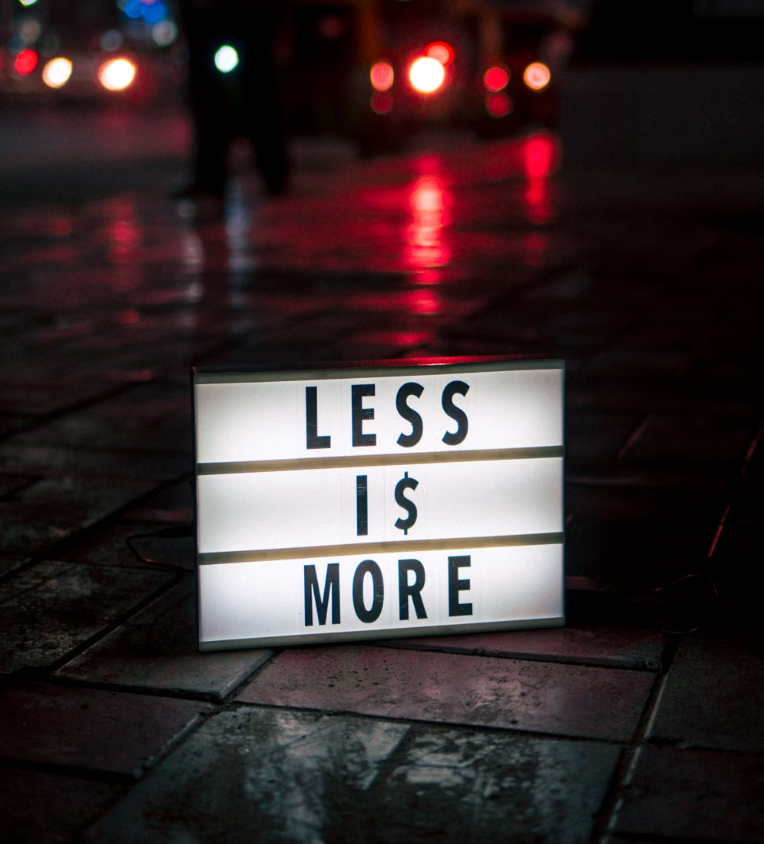
    But why? Is less not more? 

    Modern Comparison Culture 

    There used to be a time when comparison was simply finding the farmer who harvested more carrots. Then came several industrial revolutions and today we’re comparing influence through an arbitrary digital number on a screen on social media. God forbid that number is zero, or non-existent, and you’ll get mocked for it. 

    We’re constantly compared to others whether in absolute or relative terms that we forget who we really are. Whether it is school admissions, project recruitments, job interviews, people love to compare us to the next person. But they compare the glossy, shiny part that we create to show others – the cool stuff. 

    Where did the normal, not-so-cool but human part of us go? 

    Somewhere along the line, we started chasing this phantom version of ourselves that represents what society and the world thinks we should be. Yet it is only reasonable that we adopted this shift because that’s how we get by now. 

    We have to be more something than the next guy. 

    To do more is to have more impact. To do more is to be better. Or is it? 

    Escaping Comparison Means Deviation

    Much like having clarity on your life’s purpose, there is great comfort and peace in knowing who we are and who we want to be. The new crease is that it may come at the price of being different. Society has a fickle stance on those who are different. 

    It’s incredible how we judge the extent of ‘different’ today. If you’re different because you become an entrepreneur who builds a modern rooftop farm growing carrots in Singapore, society slaps a ‘well done’ on your back. But if you’re choosing to grow carrots along the countryside instead of a cushy but somewhat boring corporate job in the city, people raise their eyebrows.   

    You almost have to be the “right kind” of different. 

    The false belief that there’s a link between doing more and being more is a subtle but poisonous one. To be the ‘role model’ or ‘success standard’, modern society links volume with ability, ability with identity. The succinct new word for it is ‘brand’. That’s how young people are being judged today. 

    The question society implicitly asks is “What’s your personal ‘brand’?” 

    Yet, it feels like the real question is “How much more and better are you doing than the next guy?”

    The answer had better be more than growing carrots. 

    What About A Personal Brand?

    Now of course, there’s more to us and our lives than a ‘brand’. We know that because this concept did not used to exist. It’s not practical to always show or build this brand in everything we do. We’re flawed humans trying to be a polished pearl, and we judge one another based on who gets the closest. It’s borderline sad to think how we have brought it to an extreme. 

    Worse still, we’re not even always doing it for the right reasons. 

    Do we really need so many “followers” online? 

    Our lives did not used to include living vicariously through others apart from the occasional rumour or story. Today, it’s mildly tragic that we invented ‘screen time’ and actively use it to determine how much of our lives we’re actually living. 

    To escape this self-made comparison trap, where the more we do the more we compare with others, we have to choose to do less to be more. Afterall, no one can do everything. 

    But perhaps we’re confusing this public version of ourselves with who we really are. We’re so caught up with building this supposedly important public image and ‘brand’ that we forget our private self. And before we know it, we no longer know who we are at our core and who we want to be. 

    All we remember is to compare with others and see if we’re doing enough to remain “validated” by others. Gone is the clarity we need to find our own purpose and identity. 

    More Is Not More; Less Is Still More

    With modern digitalisation being increasingly pervasive, there’s a premium for privacy (or as I like to call it – analog) and solitude these days. And perhaps these are the very things we need most to remember who we truly are instead of what we try to make ourselves to be. 

    Doing more for the sake of it is a surefire way to create burnout, pressure, more comparison and meaningless work. Doing less is also guaranteed to cause feelings of inferiority, more comparison and a sense of falling behind. What then? 

    Most comparisons are made to gain self-assurance; to feel “normal within the group”. 

    But more is not more. Less is still more, just as any minimalist would say. But only if you pick the right few things for yourselves. Therein lies the real test of whether you know who you are, and who you want to be. 

    So, are you doing more or are you being more?

    Click the arrows for other posts!


    Hi! I’m Zac, the guy behind this serendipitous, quirky blog. I’m currently on a quest to find out more about myself before Uni begins – who I am and what life has to offer. This blog is my little space where I step out of my comfort zone to share my thoughts and life experiences. I hope you enjoy reading the weekly posts. Share them if you like, or not.

    Teleport home below!


    Connect with me:


    Enjoy More Serendipity Below!

  • Are You Stuck In The Confidence Trap?

    Are You Stuck In The Confidence Trap?

    Quirkbag Collection #49 – 21.06.26

    Confidence is attractive. But it is also a trap. Like most people, I wish to have more confidence. It is one of those rare traits that exude charisma and trustworthiness. It’s a characteristic that resembles a pillar of strength, a sign of possible leadership. 

    But more than ever, studying confidence as a concept has left us waiting for it to happen. It’s as though examining confidence in modern society has led to a further lack of it. Sadly, confidence does not just appear. Waiting certainly does not create it. 

    Why Don’t We Have Confidence?

    We’re too afraid. With social media’s extensive coverage and how we have become more cynical, I think more of us are afraid to be vulnerable. We just want to be “right”, we want to feel “validated”, but most of us don’t want to truly stand for something ourselves, not when it might mean being alone. 

    We don’t have the confidence to be who we are in front of others, let alone the public, because we know there is a more than likely chance of criticism. Instead, we would rather the comfort of the herd than the confidence in solitude. 

    In other words, we care too much about how others perceive us that we would put up a facade for others. The wiser ones choose not to even portray themselves – they just live privately. 

    But confidence can still exist privately, right? 

    Perhaps. But do we have real confidence in our beliefs? Too much and you might be stubborn and conceited. Too little and you can be a pushover. So where does the line get drawn?

    Well, when in doubt, look to the philosophers right?

     Aristotle had a quote: 

    “It is the mark of an educated mind to be able to entertain a thought without accepting it.” 

    It seems a good enough guide that our confidence is towed by the ability to consider and play with other ideas without needing to change our stance. Conceited and close-minded people would never strike you as confident – you’ve probably met them. They are usually defensive. Being confident then comes from your deeper understanding of why something is true or relevant. 

    What Is True Confidence? Do I Have It?

    People follow and respect confidence. We all would choose it if given that choice. Mainstream self-help preaches the “fix your mindset”, “do daily affirmations” and the “fake it till you make it” stuff. 

    But what does it take? Can we really fake it until we make it? 

    I don’t think so. 

    Firstly, no one really wants a leader with “fake confidence”. Authenticity beats appearance. I think most people want a genuine person that will become truly confident rather than one who pretends. Real confidence inspires. Fake confidence is off-putting and irksome. Real confidence is assurance. Fake confidence is ignorance. 

    You can easily tell real from fake based on the tone and behaviour of a person. Real confidence is powerful on its own – there is a sense of humility and kindness behind it. The fake one is fragile – there is always a need to keep up the appearance, to ensure the image is maintained. Most likely, someone’s ego is tied to their fake confidence. 

    When you go about your day, run this mental exercise, ask: “Where am I going, to do what?” If you can answer with certainty, you are answering with confidence. And that is the first step to knowing how true confidence feels like. I think it’s just a matter of scaling from there to other skills, knowledge, presentations and more. 

    There is a peace of mind attached to quiet confidence – almost to the extent of nonchalance – which helps a person navigate situations. With experience, the confidence comes as second nature because the actions to be taken are clear. You are able to guide others based on your experience. Knowing what to do is a solid first step. 

    Where Does Confidence Come From?

    Confidence comes after trying and failing. After a ridiculous number of attempts, you know you have the abilities and skills to overcome hardship. But at the start, we have to do it scared, do it alone, do it wrongly. You don’t need confidence to start anything. The scariest part is doing all the things you have never done and failing all of them.

    With enough experience, your actions and responses become second nature. It feels smooth and instinctive. 

    In sales, the only thing that cannot be accelerated is experience. Putting in the repetitions is the biggest factor for consistent success. Top performers always knew what to say, how to say it and when to walk away. But not me. And yes, a long time ago, they were novices like me too. Over time, their experience has given them pattern recognition skills and refined their techniques. 

    Confidence can be spread temporarily. Being around confident people can subtly boost your own confidence. When you’re in a winning team, you feel strong and invincible even when you may not be the main contributor. When you’re around the people whom you trust, you have confidence in their abilities. 

    While others can imbue confidence in you, that feeling tends to fade quickly. Without your firm self-belief, confidence is ephemeral. Some confidence than none, but true confidence comes with time, from the internalised lessons of experience. 

    That is when confidence is yours to have.

    Click the arrows for other posts!


    Hi! I’m Zac, the guy behind this serendipitous, quirky blog. I’m currently on a quest to find out more about myself before Uni begins – who I am and what life has to offer. This blog is my little space where I step out of my comfort zone to share my thoughts and life experiences. I hope you enjoy reading the weekly posts. Share them if you like, or not.

    Teleport home below!


    Enjoy More Serendipity Below!

  • Why Your Life Has No Texture

    Why Your Life Has No Texture

    Quirkbag Collection #48 – 14.06.26

    Our lives used to be interesting. We used to enjoy the dull and exciting moments all the same, because it made life feel different. Taking the train did not feel like a chore, it felt like an experience. Walking felt like a natural part of the day, now it’s almost an anathema. God forbid the weather be extra humid and hot.  

    If you feel like life has fallen into a routine, that your life has a certain silent emptiness despite having all that you used to want, your texture of life has smoothened. The texture of life refers to how interesting or memorable life is or has been. When days seem to blend into one, when nothing special stands out in mind, that is a life with no texture. When you can’t remember the last time something felt truly interesting or exciting, that’s a smooth texture. 

    But why? 

    What could make life lose texture?

    Embracing Ephemerality 

    The texture of life is built through bursts of experiences of varying intensity. The greater the intensity or emotion of the task/experience, the stronger the memory and texture it has. Whether it’s a few months spent learning something new, or starting a new job, or going through a different ‘phase’ in life, meeting someone new, all of it counts. I used to think life has but one fixed rhythm and texture. That we are meant to graduate from school and work the same job for 40 years till retirement. Alas, there is almost no life texture in such a future without any career growth. 

    Our days are ephemeral, whether you think of them as good days or bad days. We don’t remember the days. We only remember the unique experiences – the firsts, the lasts, the unusual, the painful. These create the texture of our lives. Without them, we seem to fall to our level of comfort and routine, slowly putting our brain on auto-pilot. We drift through life without remembering what or why we did things. 

    That’s when time starts to fade. It passes so quickly that we don’t feel it until it’s over, much like Adam Sandler in “Click”. When we think back, we ask “Where did all the time go?” You lost it to autopilot, to the overly optimised life, to the extreme convenience and lack of serendipity. 

    Learning About The 2% 

    So why? Why can’t we live like we did 20 years ago? 

    Our brain is wired to release dopamine when we do something successfully. Modern lifestyle hijacks this system with instant gratification through social media and more. We’re so used to this ‘boring’ life because we don’t remember what life used to be like 20 years ago; when the resistance and inconvenience of today’s world were actually the norm.  

    Our highly optimised and convenient life has become a frustration because there is no longer a contrast. Finding resistance and sitting with the discomfort of difficulty is the point. That makes the easy part easy, the fun part fun and the quiet moments loud. Our brains are meant for thinking and solving. 

    Discomfort and difficulty make the ordinary special, the boring interesting, the usual exciting and the habits a relief. That’s the power of facing some resistance. It pushes your mind off autopilot and into the present. 

    A survey shows 2% of people would choose the stairs when the lift/escalator is easily available. Extending the statistical metaphor, it introduces the idea of intentionally choosing friction and inconvenience to break your brain’s default neural pathways for choosing the easy way out. 

    Honestly, I experienced this phenomenon even before knowing it existed. In the army, the only time I felt life slow down was over the weekends. Everything seemed more fun, more soothing, more meaningful, more vibrant – even a cup of tea was most satisfying. The constant tedium and non-stop discomfort in the army contrasted the slower, easier and calmer lifestyle outside. That was the point. Even the most mundane day felt interesting. 

    The Japanese Tea Ceremony

    The Japanese have a culture of holding tea ceremonies to celebrate the present moment in each other’s company. Focusing on simplicity and mindfulness, the practice hinges on the principle of “ichigo ichie” – one time, one meeting – a reminder to enjoy the present moment. 

    Every tea ceremony is different, even if every cup of tea is made of the same tea leaves, by the same person, in the same manner, at the same time each day, in the same place. It is believed that no cup of tea is the same because there is only one cup of tea at the moment – the one you are holding.

    It sounds almost philosophical (well, it kind of is), with tea being a metaphor for everything else in life. There is only one present moment at any point in time, and our job is to live the moment so that we create wonderful textures for our memories and lives. 

    Rather than living on auto-pilot waiting for the next thing, sometimes intentionally going out of your comfort zone and doing the less optimised, more inconvenient things is what you need to reset your mind. 

    It’s Okay To Change Your Life 

    For a long time, I struggled to accept changes to my evening routine. I followed the same schedule from 7.30pm to 11pm on weekdays when I was younger because that was my comfortable routine. When I started JC and entered the army, change was forced. There was no choice but to reinvent my routine. And from it, a newer, refined version of yourself emerges as you take on newer tasks, challenges and routines.

    Letting go of the old routines was hard because it felt like cutting away part of my identity. I did not want to lose that part of myself which I liked. But this is when texture grows and adds to our lives. It’s okay to change yourself for a new phase of life – to create new textures in life. Without change, nothing new happens.

    Sometimes the changes will be hard. When you start a new job, when you train for a milestone, when you experience bumpy relationships, when you feel lost, the list goes on. But everything adds to the narrative of your life story and the texture of your life.

    Every version of our old self is like a friend that we create. Some day when we look back, I hope we think of our lives as chapters of adventures with different versions of ourselves being proud of who we’ve become.

    To live a rich life filled with various textures is to embrace all the different versions of ourselves – and stay present with who we are now.

    Click the arrows for other posts!


    Hi! I’m Zac, the guy behind this serendipitous, quirky blog. I’m currently on a quest to find out more about myself before Uni begins – who I am and what life has to offer. This blog is my little space where I step out of my comfort zone to share my thoughts and life experiences. I hope you enjoy reading the weekly posts. Share them if you like, or not.

    Teleport home below!


    Enjoy More Serendipity Below!

  • Your Wisdom Through Experience

    Your Wisdom Through Experience

    Quirkbag Collection #47 – 07.06.26

    I still remember the days of being 17, 18 and 20. Thinking back, it feels like a mere moment. Time flies in retrospection. In retrospection, the memories came without the pain that I actually felt in the past. The sweat, heat, ache and fatigue in the wilderness when I was in the army. The meaningless daily grind that has blurred into mush leading up to A Levels. The memories are vague, undetailed and far from the true experience. So where does this leave me?

    Well, with a certain peace that comes with the irreplaceable wisdom of experience. 

    Understanding Finitude

    There is a quote that goes “this too shall pass”. Do not confuse this with a similar line from “The Lord Of The Rings”. 

    There is a subtle confidence and assurance that comes with knowing that all things will pass, regardless of whether it is easy or difficult. And in accepting that we don’t control a lot of events that happen, “this too shall pass” reframes the present obstacle as just another experience in our lives. 

    Sure, it probably feels impossible to be “peaceful” if you’re skydiving and falling freely before the parachute launches. Or if you are riding a rollercoaster upside down at what feels like an insane velocity. But eventually, the chute opens. The ride ends. “This too shall pass”. 

    Now this is not to encourage skydiving or rollercoasters rides. But this is to say that the most thrilling, scary, live-life-on-the-edge experiences force you to be in the moment. To fully feel the depths of the moment, before it passes. And once it has, the residue it leaves is more than just your faint memory and the underlying emotion you associate with it. It includes the broadening of your horizon; the “stronger character”; that intuitive scale in your mind that tells you a certain situation is not that severe in comparison to your experiences.

    With more experience, I keep coming back to this quote. Whenever a problem or a temporary challenge occurs, I think of it as an inconvenience to whatever goal or objective I am working towards. It acts almost as a razor that can frame the problem into its appropriate scale rather than letting emotions blow it out of proportion. 

    A Touch Of Wisdom

    Ryan Holiday’s book “Wisdom Takes Work” reminded me of a few familiar lessons from Stoicism. Most importantly, we must be humble to recognise how small, flawed and finite we are as humans. If wisdom is knowing what’s what, how and when to do something, then most of what we do everyday goes against it. Being far too busy putting out the fires 3 inches from our noses, we’re always just reacting to things. We fail to see things through the macro-perspective. 

    To truly be wise, it takes immense misery, pain and suffering for that is the price to distil the lessons of wisdom. That was the case with the revered Abraham Lincoln. Choosing wisdom in the modern world where instant gratification reigns supreme mandates a strength of will that most of us don’t possess. It takes effort to slow down, to challenge our beliefs without feeling like we are “switching sides”, to contemplate and conclude rather than simply take the default. 

    With wisdom, or at least some fraction of it, we inevitably gain peace and confidence in ourselves. In slowing down and considering how ridiculous our frustrations sometimes are, we can seek solace in knowing our problems are mostly self-inflicted and mostly insignificant.

    The Sun Still Sets No Matter How Beautiful It Looks While Setting; That Too Shall Pass
    What Else Matters In That Moment?

    Just how many things really truly matter at the end of our time? Framing problems within the period of our existence, it’s comedic to constantly sweat the little things. And that understanding contributes part of the peace and confidence in us – that indeed, this too shall pass.

    Suddenly, your problems aren’t as frustrating. 

    The Passing Of Time

    The Chinese proverb says that time dilutes all. How true. It’s probably why I don’t remember the excruciating pain, fatigue and stress from my past experiences. But simultaneously, these experiences enrich our lives. Not just in the moment, but long after the moment has passed, in ways that we don’t fully comprehend (except in therapy). These experiences culminate into our being. They become part of who we are, more than just vague memories. 

    The passing of time washes the intensity of our memories. At the end, it is said that we get a highlight reel of the most unique, life-changing and thrilling times in our lives. If that’s true, then we are far more capable of handling complex, arduous, painful and scary things than we believe.

    Most of our days blur and get forgotten; we remember only several events. Not the faces of the strangers on the train, not the classmates from school, maybe not your childhood best friend and not even every single birthday growing up. 

    That is the passing of time. So with our great capacity to forget, to smooth over the bumpy textures of life, we quietly grow confident in facing new things. We know we have done something of the same scale. Even if we have not, we know that “this too shall pass”. If that does not encourage you to do more life-changing, story-defining things, then very few other things can. 

    How’s that for self-affirmation?

    Your Peace And Confidence 

    For lack of an alternative phrase, the wisdom, and its resultant peace and confidence, from experience is not compressible. That means I can’t gain 2 decades of wisdom in 2 days, even if everything was written to painstaking detail. Maybe I’ll learn fractions of it, but certainly not the full experience of a lifetime.

    The defining characteristic of wisdom and experience is discretion and judgement, both of which cannot be taught through text. Only learnt through experience. The wisdom, confidence and peace are then innate. 

    Experience, however, can be compressed by reducing the intervals between each “encounter”. In choosing to take on 2 decades of experience (of anything) in 1 decade, the intensity and volume of pain and struggle will definitely be higher, but you’ll gain the lessons faster. That said, wisdom cannot be rushed. It will emerge in its own time. 

    With wisdom, confidence and peace, where does that leave you? 

    With a gut feeling that you are going to be okay. 

    Because this too shall pass.

    Click the arrows for other posts!


    Hi! I’m Zac, the guy behind this serendipitous, quirky blog. I’m currently on a quest to find out more about myself before Uni begins – who I am and what life has to offer. This blog is my little space where I step out of my comfort zone to share my thoughts and life experiences. I hope you enjoy reading the weekly posts. Share them if you like, or not.

    Teleport home below!


    Enjoy More Serendipity Below!

  • Learning To Let Go

    Learning To Let Go

    Quirkbag Collection #44 – 17.05.26

    A few months ago, I set myself the goal to let go of things emotionally and mentally. I thought it was a useful skill to start learning early. Learning to let go is one of the hardest skills around because it is completely intangible. It’s far easier said than done. 

    You might have met people who let things slide easily. They have no retention of negative influences and they move on quickly. Great, right? Meanwhile, you are stuck thinking about that casual remark someone said about you 3 months ago. That tiniest thing someone said or did just annoys you. How could you let it go? 

    An Emotional Impression Like An Anchor

    The seeming attack on our identity leaves a deep emotional impression on us. Whether it’s a random joke or a casual remark with zero malicious intent, it still feels personal, doesn’t it? It is an anchor for our mind. We can’t stop thinking about it. The speaker meant no harm but we felt hurt anyways. It’s why the memory lingers in our mind. 

    People love to tell us to “just let it go” – or my personal favourite line: “just walk away”. But it’s not as simple as that. Anyone who has tried to calm someone down by saying “just calm down” probably aggravated the person more. 

    “Calm Down” Does Not Create The Calming Effect

    The emotional impression leaves us hanging because our self-worth and self-esteem also come into play. Yes, those things make us feel bad about ourselves and add to our frustration. A random event or remark might make you question your own self-worth, thereby hurting your self-esteem. If something makes you feel inferior, you feel small, annoyed, frustrated that you are not enough. If something offends you, you feel hurt, defensive and self-righteous. 

    “I am just not good enough for that.”

    “Of course I am not blah blah!” 

    “Wow, he doesn’t like me at all. I must have done something wrong.”

    The memory of what upset you would keep replaying in your mind. Over, and over, and over. Before you eat, before you sleep, when you are on the train, when you walk home. 

    You just can’t let go. 

    2 Keys For Letting Go 

    The first key to letting go is understanding the context of our emotions. We feel a certain way because we think our identity is attacked. We think deep down that it says something about us that is true. It’s usually something we don’t like or don’t want to associate ourselves with. Our ego is bruised because the comment pointed to the “ugly” bit of our personality. Now, it is “too close to home”. But it’s not because someone is really out to get us. 

    We can choose to change that flawed part of us or simply ignore it. In ignoring it, we inevitably accept that we are that thing/remark/joke. And that’s okay because owning that part of yourself makes you less susceptible to feeling hurt again. It helps you let go of other people’s opinions of you, because now, you know that’s part of who you are. 

    The other key to letting go is clarity of mind. Clarity shifts your perspective from subjective to something objective. It’s not necessarily about you. Reframe what you feel as something that is involuntary – an emotion you observe and then let subside. The emotion can be your reaction, but knowing it reflects the other person’s experience, feelings, behaviour and intention prevents you from thinking you are attacked. 

    Sometimes, they might just be angry, or upset, or having a bad day. It might be anything else in the world unrelated to you. The clarity gives you peace of mind that you are safe, and that it is irrelevant to you. You then make it easier to let go of the trivial matter yourself. 

    Rejection Builds Clarity

    When I knock on doors after doors any given day as a salesperson, around 50% don’t open. Of those that open, only about 10% are willing to have a conversation. That means 90% are resistant, defensive, negative or even agitated. My one-to-one interaction with people means the response I get comes purely from the things I say or do. It is a direct reflection of my presence. Of me. 

    Or is it? 

    If we experimented with another salesman knocking the same door, would they have faced the same reaction from behind the door? Maybe. What they think of “me” (the salesman knocking the door) is probably not the same as what they think of “me” (the person writing this blog). But I am still the same person. Just as you are wherever you go. 

    Someone’s mood, day, recent experiences and their perception of “salesman” in general dictates their reactions. It’s directed towards what you represent rather than who you are in reality. It’s the same for donation drives, for roadshows and more. No one knows you. 

    The rejection, insult, remark, or thing is only an instantaneous action directed at their imaginary mental version of you. It’s not modified to fit the real personal individual – you. 

    It Does Not Always Reflect Things About You

    But does one reaction from someone define who we are? Or do we choose to define who we are? 

    But What If It Still Hurts?

    That’s being human. Letting go is not as easy as that “Frozen” song. I would like to say that it gets better, but I can’t yet. Like most people, letting go is still my goal. Just like that scene with Tom Cruise, it’s pretty difficult. 

    Here’s 2 ways to think about our responses. The first is “death by the second arrow”. The first arrow is the things we cannot control in life. The second arrow is how negative we feel and react to it. We die from the second arrow. We have to let it hurt but stop creating additional pain for ourselves. Letting go of the subsequent emotional reactions is blocking the second arrow. 

    The other way is the empty boat analogy I learnt online. When a man’s boat crashes into another boat in a river filled with fog, he is enraged and reacts aggressively. As the fog around their boats clears, he sees more clearly and finds the other boat to be empty. Now, who would be angry at an empty boat adrift? Thinking about some things as empty boats helps to alleviate the emotional triggers and regulate our reactions. 

    We will always struggle to let go because we are human. To achieve the epitome of letting go is having some mythical combination of stoicism and zen-like disposition. While that’s not realistic for most of us, I believe having some fraction of it still goes a long way.

    Letting go is a skill for life, one that gives permission to move on unburdened.

    Go ahead, read my other posts!


    Hi! I’m Zac, the guy behind this serendipitous, quirky blog. I’m currently on a quest to find out more about myself before Uni begins – who I am and what life has to offer. This blog is my little space where I step out of my comfort zone to share my thoughts and life experiences. I hope you enjoy reading the weekly posts. Share them if you like, or not.

    Teleport home below!


    Find more serendipity below!

  • The Forgotten But Valuable Trait Of Meticulousness Today

    The Forgotten But Valuable Trait Of Meticulousness Today

    Quirkbag Collection #37 – 27.03.26

    We exist in an excessively rapid modern society, where knowledge work is so obsessed about speedy results. Because if Artificial Intelligence (AI) can do it and you can’t, then you aren’t needed right? But there’s an underrated skill that enhances your human presence at work. That’s the skill of being meticulous.

    Speed kills meticulousness. Machines can’t be meticulous (yet) unless you force it with prompts. Why else do you think students who copy-paste AI responses get in trouble? 

    Speed in tasks manifests like the pinball in a machine, always knocking and crashing between sides of the wall. Sometimes employers like speed for trial and error, but likely not always.

    Prioritising speed often comes with low quality output. Meticulousness requires your deliberation, your pause to consider the nuances and maybe derive a better alternative. You can deliver better human results by being meticulous than by being fast. 

    What Is Meticulousness? 

    You can easily find the dictionary definition. But more than just a description of a person, meticulousness is the difference between a scrappily completed task and a well completed one. And sometimes that directly impacts your impression on others, superiors or not. 

    Meticulousness is a skill you can build, a habit you can cultivate and a mindset you can adopt. It’s just something you apply to elevate the work you do. You could start with additional thorough vetting of your work; ponder and refine the tiny details of a report; or perhaps take time to be precise and clear in the presentation as a form of meticulousness.

    Most importantly, meticulousness is a choice. You can choose to be meticulous by putting in extra effort or energy to check, improve, test and simplify your work. Or you can just churn low-quality passable results.

    How To Be Meticulous? 

    Pay attention to the work you do. You know that phrase ‘going through the motion’? It’s a description of apathetic compliance. To become more meticulous, try doing the opposite. A good guiding phrase would be to put your heart into it and to do it to the best it possibly can. It’s almost like you are creating art. 

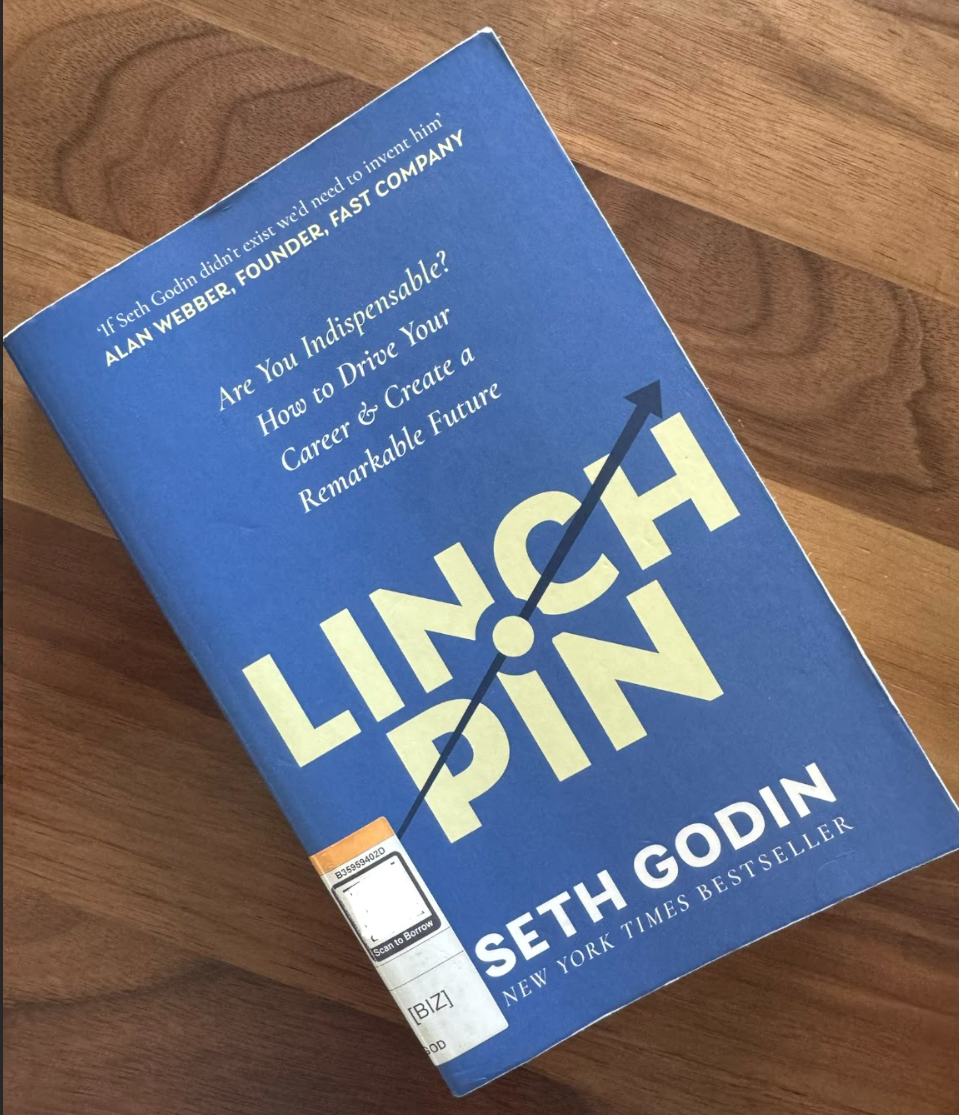
    Tip: Read Seth Godin’s book ‘Linchpin’ which discusses this concept of creating your art by putting your human touch into your work. 

    Borrowed “Linchpin” From The Library A While Ago

    If you have worked in F&B business outlets, it’s incredibly easy to see how standards and quality can falter due to lack of meticulousness. If anything, the reputation and brand of the business depend on the level of meticulousness the staff has to maintain the quality standards. 

    When I work at Ya Kun, there’s plenty of things to do before closing up, and sometimes, forgetting to do them means burdening others with extra tasks. Here, meticulousness makes the difference between being responsible and careless or shoddy. Being meticulous also forces the quality of toast served to be the best it can be, rather than chase speed at the demise of quality. 

    Ultimate meticulousness comes from genuine passion and care for the impact the outcome creates on others. That’s the kind of meticulousness that has been elevated to a dedication to the craft.

    I doubt you’ll get a fantastic cup of coffee if the barista paid zero attention to brew it. Same for food at any given stall. Same for any set of presentations, or any task you do. It takes intentional effort to do something well, effort that seeks to take care of even the smallest details to raise the overall quality. 

    Watch Where The Line Blurs With Meticulousness

    Being intentional, quality-driven and detail-oriented is not the process of chasing perfection. There’s a clear distinction between perfectionism and meticulousness. Perfectionism is an ideal, the vanishing point which cannot be reached. It’s a concept. 

    Meticulousness has an imperfect beauty to it. You can sense meticulousness, albeit its existence on a spectrum. It’s an homage to our human flaws because being meticulous in any task implies your desire to deliver high quality output and maintain high standards. On the contrary, being careless, haphazard and shoddy reflects apathy and indifference toward the task and outcome, which then highlights your character flaws. 

    While perfectionism is indeed the enemy in most cases, it’s not necessarily a bad springboard to develop meticulousness. Provided that you remember the goal is to be meticulous, rather than perfect, perfectionism can help you spot areas to improve, details to tweak and pushes you toward higher quality work or output. 

    Striving To Become (More) Meticulous 

    It’s incredibly hard to be meticulous under pressure, especially if everything needs to be fast. 

    Quality drops easily when there is a rush to complete tasks, especially if there are many of them. That could explain the off-standard coffee you get sometimes. 

    You’re likely to overlook details or neglect something. But meticulousness is key to excellence, even if you aren’t the smartest, finest or best at any given task. Cultivating or adopting meticulousness as a habit would benefit you over a lifetime. While you can’t be meticulous at every single task every single time, training the skill can breed proficiency at reducing errors and giving higher-quality output more often.

    Maybe it’s the dreary job, the stale office, the boring dynamics or the toxic culture that drives out the desire to be meticulous. But in an environment where most people aren’t meticulous, being meticulous makes you different. It makes you more valuable.

    So if you want to be more meticulous, pay more attention to the work you actually do, all the tiny details. Think about any mistakes or areas for improvement. You can elevate your work quality by doing it with all your heart. Meticulousness takes energy, effort, patience and is best nurtured out of care; genuine care for the outcome. The result is felt by those who see the work or output.

    It’s tedious and draining. And that’s why people don’t do it much anymore. 

    But you can.

    Thanks For Reading. Click The Arrows For More!


    Hi! I’m Zac, the guy behind this serendipitous, quirky blog. I’m currently on a quest to find out more about myself before Uni begins – who I am and what life has to offer. This blog is my little space where I step out of my comfort zone to share my thoughts and life experiences. I hope you enjoy reading the weekly posts. Share them if you like, or not.

    Teleport home below!


    Read more serendipity below!

Check back every SUNDAY!

X