Quirkbag Collection #64 – 18.10.26
One of the best gifts I ever gave was a little magnet with the quote “We should always explore the things that we are a little afraid of.” When I saw that magnet, it was one of those “aha” moments when you just know it is the right item.
Till this day, I cannot imagine how different my friend’s life would be had he not been inspired by that line. In fact, sometimes he uses it on me – and well-used it was.
We like to think we are brave and unafraid, but in reality, most of us are too afraid to admit we are indeed afraid. Fear has that gripping effect that seizes control over our reactions. Even if we think we are not afraid, we might very well still be.
Indeed, we stand to benefit if we all faced up to some of the things we are a little afraid of.
Fear Is A Shapeshifter
No one is unafraid. Not even those who seem fearless. Fear is just elusive.
Humans are all wired to experience fear and the trigger is the only thing that changed. We used to be afraid of life-threatening stimuli like lions or social isolation only. We still are, but now, we are also afraid when someone does not reply to a text message on time.
Fear has grown to manifest itself in plenty of ways – some of them deviously well-disguised such that we barely notice its existence. Rest assured, many of our habits and responses stem from some deep-rooted fear that we fail to recognise – so it’s not just you.
We think we are anxious when we meet someone new – and yes, some of it is anxiety – but really, more than we care to admit, we are a little scared that we are not liked. To be unapologetically yourself regardless of social situations takes a shrewd mix of confidence and optimism.
Perhaps we all want to be charming, but we know not all of us are. Fear becomes the natural response, a fundamental human instinct when the new “tribe” seems to reject us. Acting out of fear triggers the familiar slew of inner self-doubt.
Overthinkers will recall the mental debate involving giving others the benefit of the doubt and questioning your every action or response during the interactions. This plays over and over in our minds. “Why do they not seem to like me?”
We are all afraid of something at some point, even if we deny it. Public speaking, trying something new, going to a new cafe, ordering at the cafe, talking to strangers, spiders or that very thing you are procrastinating.
Fear is the excuse which you can most easily justify and most deeply believe.
Fear Deprives Us More Than Defends Us
If we are running away from a tiger, fear is a good thing. But beyond life-threatening situations, fear keeps us…us. We will never see who we can be and the life we can have without stepping out of this fear.
Fear deprives us of opportunities and possibilities because we refrain from such “risks”. That said, there is value in choosing to settle at some point when we know we have enough. But that’s a line finer than salt, and it is not one that is easily drawn.
I suspect I live with a lot of fear, more than anyone would care to admit. Most of it is not even rational – we just feel it. And something no one teaches us is how to deal with fear, or better yet, act in spite of it. So we just hold it in our minds and hearts, waiting for it to dissipate.
Ernest Hemingway calls courage grace under pressure, not the absence of fear. If I had to believe an expert on “applied” courage, Hemingway is as good a choice as any.
Fear is not something we can eliminate, not as long as we are human. But we could all gain from a perspective shift when it comes to fear. We need not be graceful, but we can be courageous to try anyways.
I Was Afraid To Start a Community
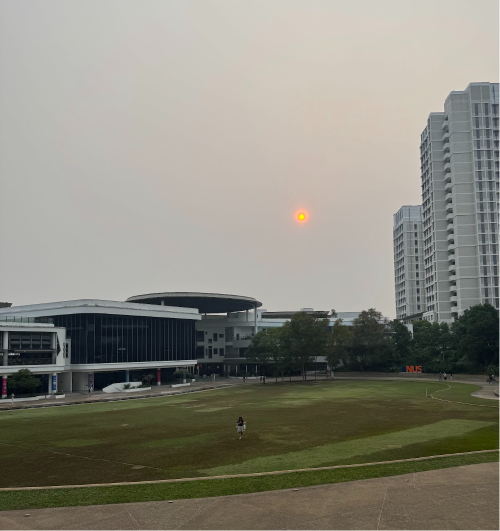
Staying in NUS LightHouse, something that caught my attention was how residents took initiative to form interest communities. The obvious ones were sports, media, baking, cooking and dancing. But there were some unique ones too like gardening and cat-care.
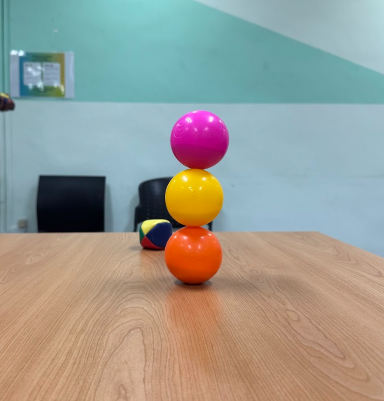
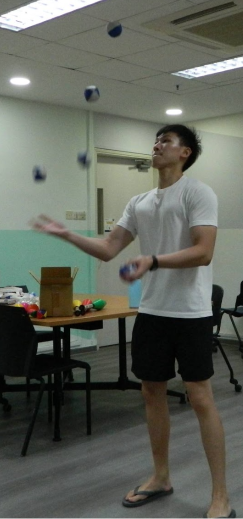
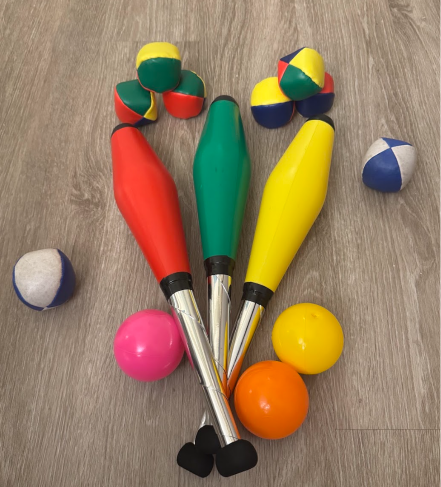
And then a sneaky idea popped up. What if I started a juggling community and taught other residents how to juggle and perform tricks? The first instinct was “wah, better not”.
But if you’ve ever had one of these “ingenious” ideas, you would know how hard it is to ignore it and hope it goes away. They basically don’t. With plenty of fear, anxiety and uncertainty, I initiated a juggling community and hoped for the best.
Who knows if it was going to be a flop? Or maybe a spectacular success? Trying something new scared me because this time, everything was public. Some part of me had the irrational fear that everything was going to go wrong and it would be far more difficult than I expected.
Like most irrational fears, that is not usually the case. So much of the fear lives in our mind and holds us hostage because the reality differs from our imagination. We get stuck in our own heads, thinking about the worst case scenarios and how others will judge us poorly.
We wish to maintain the way others perceive us, and so we let that stop us from doing something different. If there was a chance of losing some superficial external validation and “recognition”, we think we are no longer accepted or embraced or liked – and that feels incredibly intimidating and cold.
“Better not risk it.”
Fortunately, it relieves me to say that this community is growing and was not a spark of fire that extinguished upon creation.
Living With Fear, Not In Fear
The good news about modern fear is that it reflects a psychological reaction more than a physical threat. With psychological reactions, we can always zoom out and identify what really makes us tick in fear.
Thinking about why we are afraid is stake-free. The “fear-setting” exercise in “The Four-Hour Work Week” allows us to write down exactly what we feel afraid of when confronting a certain goal in life. But ironically, most of us already know why – we don’t want to fail, and we don’t want to change things too much.
Procrastination is like driving towards a cliff edge, waiting to make a U-turn. There comes a point when it becomes too late. But we delay that choice.
I try to remember that the irrational fear I have now will always be here. If I choose to avoid it now, I will likely end up never facing it. Waiting for fear to subside is a fool’s errand, so we might as well do it now. Chances are that you are afraid to do something precisely because it is worth doing.
We cannot live without fear. We also cannot live in fear. So, we have to live with fear.
Even with some discomfort in our gut, we should think twice before shying away from something new and unknown. Afterall:
“We should always explore the thing that we are a little afraid of.”
– Andrea Ghez
Click the arrows for other posts!
Hi! I’m Zac, the guy behind this serendipitous, quirky blog. I’m currently on a quest to find out more about myself – who I am and what life has to offer. This blog is my little space where I step out of my comfort zone to share my thoughts and life experiences. I hope you enjoy reading the weekly posts. Share them if you like, or not.
Teleport home below!
Connect with me:
Enjoy More Serendipity Below!