Author: zacyeohs@gmail.com

  • Why New Year’s Resolutions Fail: It’s Obvious

    Why New Year’s Resolutions Fail: It’s Obvious

    Quirkbag Collection #25 – 02.01.26

    It’s 2026! Happy New Year to all those reading this, though I suspect most of you reading would be from the future (2030 anyone?). The new year is yet another famed occasion for following tradition. Countdowns, parties, booze, New Year’s Resolutions. It’s a Santa wish list for the New Year. If you have been around long enough though, failing to follow through with New Year’s Resolutions is probably nothing new to you. Surely, you’d think after 2000 odd years that humanity (with lightbulbs and iPhones) can figure out why New Year’s resolutions don’t work. 

    Let’s hear it from a cranky 20 year old – me. 

    New Year’s Resolutions: A New Hope

    New Year’s resolutions imply a new hope for people (anyone call for a Jedi?). A new year is a fresh start and a clean slate. Who doesn’t love to start new things? It’s fun and easy. That’s why it’s so common for endless lists of goals to be made before January. Everything feels possible when it’s fictional. 

    But when it comes to finishing those things, we are forced to confront our shortcomings. There comes the boring, tedious, dreary “work”. We no longer want that commitment. 

    “I can’t take another meal of this diet that tastes like cardboard” probably sounds familiar. 

    Or “this gym is simply too far away and too crowded” – the beginning of the end of yet another burst of fitness enthusiasm. 

    It’s no longer fun and thrilling. And so, one moment of weakness leads to another, and before March is here, the resolutions aren’t all that resolute anymore. The new hope that popped out around the new year quickly fades when the year is…not so new anymore. Now, your goals become work and your determination to achieve those goals is tested. 

    So what happened to those once invincible resolutions 2 months ago?

    New Year’s Resolutions: Reality Strikes Back

    The reality is that those resolutions probably weren’t that invincible to begin with. Here’s the uncomfortable truth: the dreary, tedious work was always inherent in your goal, it was just hidden by the short-lived excitement and hope around the new year. 

    Think about this New Year resolution: “I want to go on a diet this year and lose 5kg.”

    Sounds good. It’s pretty common. But how? 

    New Year resolutions fail because it is easy to fall off the bandwagon. Rather than committing to the full year of dieting consistently with meal plans, for example, the thought process started with having a diet (the food magically falls onto the plate and those sneaky late night cravings mysteriously disappear) and ended with losing 5kg months later. 

    In other words, reality does not play ball with your imagination. Spoiler alert: it NEVER will. There will be times when fear, stress and temptation seize control of your “resolution” and it is in those moments when you get to decide how invincible and resolute those New Year resolutions are. 

    A new year resolution based on imagination without a plan rooted in reality is going to be like the Titanic – wrecked. It may feel like that plan could not be wrecked when enthusiasm is brimming around the New Year. Disclaimer: pinning hopes onto a New Year’s resolution without a solid plan is a surefire way to disappointment (unless you’re ridiculously lucky or disciplined). 

    Finding Resolutions to New Year’s Resolutions

    Just because the number of the year increases by one and the Earth begins a new orbit around the Sun does not, in any way (and it pains me to say), give New Year’s resolutions any more achievable than it would at any other time of the year. 

    The Earth does not grant magical powers annually. But you can grant yourself all the magic you need. All there is to a feasible and likely-to-succeed resolution is a proper plan. So, for those of you that are sick of failing to stick with New Year’s resolutions: prepare to take some notes from the experts. 

    The easiest way to achieve a New Year’s resolution is to break it down into small actions, preferably habits that can compound. These small actions repeated over time consistently form a system which then acts as an expressway to your goal.

    Credits: Ali Abdaal – YouTube

    Before you fall into the trap of thinking that there is a one size-fits-all option, there is not. If you have been living under some rock, the most common tool advertised is setting a SMART Goal. That means you set a goal that is Specific, Measurable, Achievable, Realistic and Timely. For beginners (or even more experienced ones), this framework keeps a clear outcome in mind. But more importantly, it keeps you on track and prevents you from making the deadliest mistake – being distracted

    A proper plan consists of steps and actions that can be taken consistently, over a period of time, that when executed will at the end bring you the desired outcome. It will be tough

    The trick to this is designing methods to prevent yourself from “falling off the bandwagon”. If you are the kind who likes precision and failsafe measures, contingencies and alternatives are useful. 

    New Year’s Resolution: Cutting Junk Food

    If you intend to cut “junk food”, the basic routine goes – define junk food (list the names of the fast-food/junk food if you wish), steer clear of them, plan out your meals. But, you may then consider going the extra mile of writing and sourcing specific alternatives if all else fails. This could be meal-prep or eating healthy snacks. 

    Perhaps the greatest risk to the resolution is being hungry and not knowing what to go for; and in the uncertainty, junk food feels like a comfortable last resort. And before you know it, you sit in a pool of guilt knowing you failed to stick with the plan. Worst of all, you give up the whole thing after one slip-up. When the next year comes around, history repeats itself. 

    Not all is lost after one slip-up for a New Year’s resolution, especially if your goal is to “cut” rather than “eliminate”. If you take the effort to plan out when you allow for a “cheat meal” and when it’s time for healthy alternatives, you give yourself a real fighting chance at following the programme. 

    It’ll look different for everyone, but “everyone” is not your concern. Your concern is you. It might start with eating junk food 3 times a month, or 2 times a week. So long as the goal is a lower frequency than the current one, you are making progress. 

    You then have to accept that it will take time to achieve that resolution. If you should find yourself impatient to achieve that goal, think of it as motivation to keep going. 

    New Year’s Resolution: My Tips 

    Here are some of my tips, from my experience of building more consistent practices like writing this blog. 

    1. Your resolution is yours – own it. It is a promise you made to yourself and you ought to keep it as you would with anyone else. It should not be seen as “an interruption”. 
    2. Ignore judgement – focus only on what you want to achieve and not what others think of you while you are trying to achieve it; they usually can’t help you with resolutions. 
    3. Do it for an intrinsic reason – you have to want to do it for yourself and the benefits it brings for you. It is far easier to stick with it when you believe in why you are doing it.

    To sum this up with brevity and levity, my biggest tip is this: New Year’s resolutions are just a hoax because if you really want to achieve something new, it does not need to wait till January. And if do fail to meet some arbitrary marker of success this year, take comfort in knowing you are not alone.

    Guess what? There’s another January next year!

    It’s January, click the arrows!


    Teleport home below!


    Experience more serendipity below!

  • When You’re Thinking About The Past

    When You’re Thinking About The Past

    Quirkbag Collection #24 – 26.12.25

    I recently spoke to an 18-year old at work, during which my brain only had one thought: “You’re 20, that’s older than 18! You’re OLD!” As you might know by now, I am that person who thinks too much about his life and the people in it. (Sometimes, even the people not in it.) Thinking about the past is a common human trait, but also a rather unique human ability as memory functions differently in other animals.

    That said, indulging too much in walks down memory lane does no one any good. In fact, rumination leads to depression (I am not a psychologist, but some food for thoughtbout). 

    Often, I look back at my past schooling years and wonder what I have really done with my life. Personally, nostalgia does not fit the bill here, but wistfulness comes close. 

    The ‘Past’ At 20 Years Old

    There is not much ‘past’ to think about at 20. Yes, many would concur. But because I am 20, every memory and experience feels stretched, feeling longer than it really is. 

    According to Oliver Burkeman’s book, ‘Four Thousand Weeks: Time Management For Mortals’, all humans only get around 4000 weeks of time in their lifetime. 

    At 20, I have lived around 1080 weeks. That’s a quarter of my lifetime, most of which I hardly remember as a child. And of those I remember, fortunately, most are positive and silly memories.  

    When thinking about the past in terms of years, the immediate image that comes to my mind is always school-associated. Each year’s number is always tied to my stage of schooling. In 2020, I was in Secondary 3, aged 15 (ironically, it was one of my best years despite the pandemic; needless to say, I am not much into socialising) and I was introduced to Netflix. In 2015, I was Primary 4, aged 10. I mostly remember struggling in math class (a trend over the last decade) and being introduced to math tuition. 

    This is not surprising as I believe what you focus and spend most time and energy on growing up is probably what dominates your memory when thinking back to that time. 

    A strange observation of my own memory is that what felt like 3 weeks to a month in perception when I was 13, now feels like only 3 days, 8 years later. In reality, that 3 weeks to a month was 16 days. This is particularly so for vacations. 

    So, time compresses itself in memory. Only those parts that stand out stay while others are forgotten. By this logic, I might forget more things in my life than I remember when I expire. 

    Thinking About The Past, In The Future

    I assume when old people look back on their yesteryears, their memories play like a highlight reel of their lives. The reel includes both the good and the bad, with the only criterion to be ‘played’ being that it must be an extraordinary memory.

    It could be the first time you had a crush, or when your teacher scolded you, or when you made your first million dollars, or when you saw your own child for the first time. 

    Conversely, I doubt the first thing they remember is making that 105th pot of morning coffee in their old coffee pot, on the 4th of February, with a gloomy sky. 

    However, I believe they might remember making a pot of coffee on a specific morning. It could be the first day after college exams, when they wake up feeling fresh and free again, unchained from the burden of academia to be present enough that they notice the ambient noises and enjoy the simplicity of just being in the morning.  

    The ‘Past’ At 80 Years Old 

    60 years down the road, no one knows what might happen. But looking back at the past would probably still be trendy, just as we look back 60 years ago. 

    At 80, there is plenty of ‘past’, so much that I hope I chuckle with content when I think about my ‘past’. My memories at 80 might very well reflect a smaller life than I lived. What I remember may only be a small fraction of everything I lived. 

    At 80, I worry that I’ll forget what it’s like to….

    Run fast enough that I feel the wind in my hair and face; 

    Climb out of bed without feeling weak in my joints;

    Look near and far without glasses; 

    Imagine a future with endless potential; 

    Lift relatively heavy objects safely;

    Jump

    The things we take for granted in youth, we probably end up wishing it were granted to us. 

    So I suppose when we see young people in the future (those who are not born yet), we feel a pinch from Father Time, a sober nudge that our time is not infinite. 

    Knowing that we have used up much of our time, it becomes easy to say: “What I wouldn’t give to have my time back.” At the end of our one singular lifetime, it’s definitively clear how short it was. And it’s clear in part because our highlight reel of memories are not replayed in individual seconds, but in the number of extraordinary moments we had.  

    We could give up everything we have in this lifetime for another fresh start, but that means living this life again without knowing everything you currently do. And that brings you back to where you originally started. 

    We can think about the past all the time. But living on either side of time (in youth or age) is an experience you can only have once. 

    Think Less About The Past Until It Has Passed

    A quote that I once heard from an older character in a movie goes along the lines of ‘we have more yesterdays than tomorrows’. A sombre reminder, this has always been lurking deep in my mind, almost always urging me to feel like every second needs to be valued and well spent. But any human not yet close to his expiration date knows it’s practically impossible to live like that. 

    Burkeman’s book explains our struggle to face our mortality, which leads us to find ways to avoid confronting it. Thinking about the past, reminiscing too frequently about ‘better times’ or ‘those days’ seem aptly like another manifestation of that struggle. That and because it always feels better and more comfortable in hindsight, even the uglier experiences. 

    In other words, nostalgia is indeed memory minus pain

    Thinking about the past is then a form of escapism if it is an uncontrolled indulgence. But it certainly does not mean we should stop. 

    Perhaps it is apt to think of your past experiences as a single extraordinary moment or story in your memory collection, and all these compile into a book that is your life story. The more epic the experience, the greater the thrill; the more the experience, the longer the journey and life.

    Try thinking about the past less, until it has passed, and experience other things. Your future self might just enjoy ‘memory dividends’ next time when looking back at today. 

    Some Christmas Market Decorations At Gardens By The Bay

    Thinking About The Past Is A One-Way Street

    Some common sense tells us we cannot undo or ‘correct’ our past mistakes. We can relive it as we think about the past, but it’s cast in stone. I try to remind myself that mistakes are not always bad. 

    Mistakes you made wholeheartedly and for all the right reasons become adventures of your youth. 

    Mistakes you made out of fear, that created an emptiness, become regrets. 

    Then it seems mistakes are inevitable. 

    No matter how much we want to, we don’t get to choose our time and there are no do-overs. Thinking about the past is a one-way street. And you can only do it once you have lived the past. 

    And that past is right now. 

    So, if there is anything to conclude about time and my life, it’s that it’ll pass. And so it does for us all. We reminisce about the good, rustic, rough-edged days of the past, so we should build a better future, so as to continue thinking about the past with pride and wistfulness.

    I guess Shawshank Redemption got it right: ‘get busy living or get busy dying’.

    To get busy reading more, click the arrows!.


    Teleport home below!


    Experience more serendipity below!
  • The Life Template: “Is This The Rest Of My Life?”

    The Life Template: “Is This The Rest Of My Life?”

    Quirkbag Collection #23 – 19.12.25

    If you look at your life hard enough, it fits into a typical template. Sometimes, it’s a depressing one, and you can’t help but wonder: is this the rest of my life? Depending on the environment in which you grew up, it differs for every person. Mine is: Primary School, Secondary School, Junior College, National Service, University, Work, Retire, Die.

    Sound familiar? Oversimplified, sure. Accurate, almost eerily so.

    I think too much like a grumpy old man for a 20 year old. I frequently ruminate about the purpose and trajectory of my life – and if I’m feeling really introspective – those of others’ lives too. As a habit, I picture their lives, jobs, personalities 10 years down the road and assign them to a particular ‘template’ of a person that I’d see on the street today – a corporate worker, a sales assistant, an insurance agent… 

    Though, if you’re struggling with finding that mythical ‘purpose’ or ‘meaning’ in life, check out this interview

    Introducing The Life Template

    For some of us, our lives are ‘laid out’ paths. It’s like a life template for new humans (us, obviously) that gets passed down from parents and schools. They segment our lives so that the only goal is to progress from one stage to the next in a very telic-driven process, for the rest of our lives until we “finish” life. It becomes scarily easy to drift through life’s stages.

    Be it law school, med school, Harvard, Oxford or any other conventionally perceived ‘success’ routes are examples of the life templates. Having only these goalposts as a teenager without understanding life’s possibilities can do more harm than good. (Although, conventional wisdom also states that parents and schools work toward the betterment of children, in theory if not in effect.) 

    Indeed, a sharp, clear goal with unwavering faith that ‘you must make it’ or ‘you have worked your life for it’ can push you over almost any obstacle. But a narrow tunnel vision for a 17 year-old whose whole self-worth and self-esteem ride on whether that goal turns into reality proves greatly risky. Failure to hit those goals can end terribly. Afterall, the life template does not usually include contingencies.  

    So what of the advice that we should only focus on ONE thing? If that ONE thing happens to be studying or following a certain life template without understanding why, it’s probably a case of misapplication. The advice serves to eliminate noise and not isolate your ability to explore life. And hence, upon setting your sights on something deemed worthy of pursuit despite the opportunity costs, in which you believe with deep conviction, the time is ripe for purely focusing on that ONE thing. 

    That said, the education system and social circumstances can make that realisation and understanding hard to obtain. 

    The Fastest 80 000 Hours

    ‘Work’ takes up the bulk of our lives, with an average calculated figure of 80 000 hours. Ironically, it’s the part that gets skipped over the fastest and most of it ends in a blur for most adults. As I fast forward through this ‘template’ of life, I see the well-trodden future which revolves around an office-bound job that sucks the life out of me. (I have not yet heard an office-bound worker passionately share his joy for the job.)

    At the end of it all, the blur of ‘work’ would be the fastest 80 000 hours of your life. 

    For those who secretly crave more than a working life spent behind a desk and in meeting rooms, surely the question you ask after seeing your potential future would be: is this the rest of my life? 

    Is there an invisible force that simply pushes people further down into their life templates? 

    Did we relinquish control over our lives? Without even knowing?

    Call me young and stupid, but I stubbornly refuse to believe that this is all there is for us – a subpar life template. And so, it begs the question: Is this the rest of my life? 

    Having to spend 80 000 hours doing ONE thing that you hate and calling it a ‘career’ is a tough choice, but one you are totally free to make. But perhaps you are fooled by the life template. You can, in fact, do other things in 80 000 hours beyond the miserable job, if you so decide. 

    Going Beyond The Education System

    Perhaps this is where my education system has failed me. I was not taught imagination. I discovered it after graduation. Conventional advice to ‘explore your interests’ and ‘pursue your interests’ are as useful as the bird chirping downstairs. The real intention, however, holds some value. 

    It is less about ‘interests’ than it is about your ability to go beyond the education system to learn about yourself and this world. And in supposedly ‘exploring your interests’, well-intentioned relatives and educators hope you experience some Eureka moment for your life’s trajectory. 

    Consider a fictional dude: Tom, 19, is on track to being a corporate mid-level manager, 35, overseeing ‘internal operations developmental projects’ in his stable, but boring and dry job. That might be his entire work life. 

    Is this a bad outcome? Maybe that’s a poor question. 

    A better question might be: Is that a life he deems worthy of pursuing? 

    Of course, everyone is entitled to ‘live their own lives’. But, that line does little to explain the average worker’s misery about the job. And while no rule mandates enjoyment at work, I would prefer 80 000 hours of average positive emotions over negative ones.

    Whether a job to you is for money or for fulfillment, you are the only one that decides if it is worthy of your pursuit. Plenty of individual reasons exist to justify holding the jobs we do. Tom might choose his lifelong office job for the money and stability because he prefers the comfort. But the rest of us (not-Tom real humans) must not fall into the trap of believing that Tom’s life is meant for us.

    We must think beyond the education system. 

    Find Your Own Life

    As a student, I have been encouraged by the system to think more deeply. And perhaps I have manually brought that to overdrive. Thinking deeply can easily lead to overthinking and a sense of overwhelm without a tether to keep you grounded. 

    Deep thinking has its perks. You begin to piece together the puzzle that is your life and this world; to find your own life beyond ‘school’ or ‘friends’ or ‘sports’ and see who you really are.

    Oh, and you’ll never find it easier to have a conversation with yourself confronting your life choices. 

    Conventional advice is not wrong. Neither is pineapple on pizza, or having cake for breakfast. It all depends on what you have decided to believe, and sometimes, that belief was ingrained in you from young. In that case, it might not even be your belief; it is your environment’s. 

    – Orson Scott Card, Speaker For The Dead

    Your future life doesn’t have to be exactly like what you were told in the past.  

    The ‘good job’ and the life you will have can be entirely separate from the picture school paints. But school does not teach you that. And that’s my realisation as I turned 19 after graduation from Junior College. It has since sparked my curiosity to think about my life template. 

    The education system taught me to think about my work, but rarely emphasized the bigger picture. To you, who may be like my younger self: DON’T settle for the life template because you have not explored life, or because that’s what you’ve been told. Go and find your own life.

    There is more, at least I hope there continues to be, to the future life than a measly life template. 

    If you liked this, click the arrows for more.


    Teleport home below!


    Experience more serendipity below!
  • Revealing My Secret To Overcoming Great Challenges

    Revealing My Secret To Overcoming Great Challenges

    Quirkbag Collection #22 – 12.12.25

    At any stage in life, you will be in crisis. That’s a psychological fact, by the way. There is no one day in the future when “everything will be peachy”, as any aged individual would have you know. But always facing ordeals and challenges over your lifetime is a good reason to start figuring out the ways of overcoming great challenges.

    And no, I doubt anyone can give you a snappy answer on “how to live your life”. That said, I’ll take a stab at one part of it; here is my open secret to overcoming great challenges. 

    Making The Big Thing The ONLY Thing

    There’s no uphill battle like doing something new and big for the first time – learning to drive a manual car (like me), getting a new job, or singing in a concert, and – if you’re like me – taking the final school exam every single year. In these seasons of your life, at 15 or 25, nothing else in your world matters more than just completing that thing.

    “Just let me bloody finish this!” is my common thought.

    As a student, I only thought about exams (for about 10 years). Now, all I think about is passing my driver’s test and gaining different real-world experiences. 

    My point is: overcoming great challenges that exist now, whether it’s a goal or a circumstance, should be the only thing you focus on. We love to “multi-task”, but we suck at that. That’s also a psychological fact. So stop trying to be Superman and start being Clark Kent (the underwear goes inside the pants). Embrace that you only have so much time to do a few important things. Then start to do them.  

    Narrowing your focus directs your precious energy, time and efforts towards achieving or overcoming that challenge you are facing. It becomes…a priority. The list of priority is basically your to-do list arranged by importance, but you can still only do 1 thing actively at a time. That NEVER changes. 

    Good old “practice” applies to (and improves) almost everything; but doing everything at once negates its effectiveness. Practice won’t make perfect, but rigour brings you close. And that’s the secret to overcoming great challenges. Rigour: an underrated word that substitutes “grinding” or “hard work”, but with a minor difference. This difference, I find, packs a hell of a lot more than a punch.

    The Difference Between Rigour and Practice

    At 16, my physics teacher used to say “When you have time, practice some physics questions. If not how are you going improve?” He also said something like “If 10 questions are not enough, then do 20.” The class loved him. 

    Needless to say, as the impressionable and (rather) naive student wanting to do well, I did the 20 questions…and then some. But it was the “and then some” that made all the difference. The difference between rigour and practice is intensity. If practice is an evening jog, rigour is an all-out sprint…daily. Practice is playing for sport, rigour is competing at the Olympics. Practice is a willingness to accept, perhaps reluctantly, mediocrity but rigour is the outright refusal of it. 

    I only discovered this open secret to overcoming great challenges long after my exams and graduation from JC when I connected the dots inspired by a video from Alex Hormozi (yes, he is a running theme around here in this season of my life). 

    Rigour automatically sets you apart. There are not many people who hone their craft or skill intentionally with rigour. If you want to be a great podcaster, making 21 episodes would put you in the top 1% of all podcasters. When practice is done constantly, repeatedly and consciously, it evolves into rigour.

    Pretty time-consuming, no?

    If you catch my drift, you’d probably understand why the big thing in your life should be the only thing you focus on – it’s the only way you can apply rigour. In overcoming great challenges, you have to spend a great deal of time, effort and energy on it.

     I hate to admit it to myself, but there are no shortcuts sometimes. 

    Do I Have Rigour? 

    My favourite litmus test for having rigour is simply measuring the input of time and energy. Now, the result-oriented among us would jump at me and say “you should see how much output you create and how much work you do.” They completely miss the point. 

    Rigour is about the time and energy you spend engaging and dealing with the pesky problem. It’s about making it the centre of your focus. Treating it like a burger to be assembled at a fast-food chain is not the way to go. Think along the lines of…finding the best way to assemble the best burger. 

    Here is what I do to apply rigour to accelerate my progress in some endeavour or overcome great challenges. I start by first dedicating an hour a day to doing the thing. If possible, make it an hour of deep work. Once it proves to be manageable, I add another hour a day. Should you find yourself dreaming of the particular problem or challenge, you know you are on the right track (I do not advise aiming for this). 

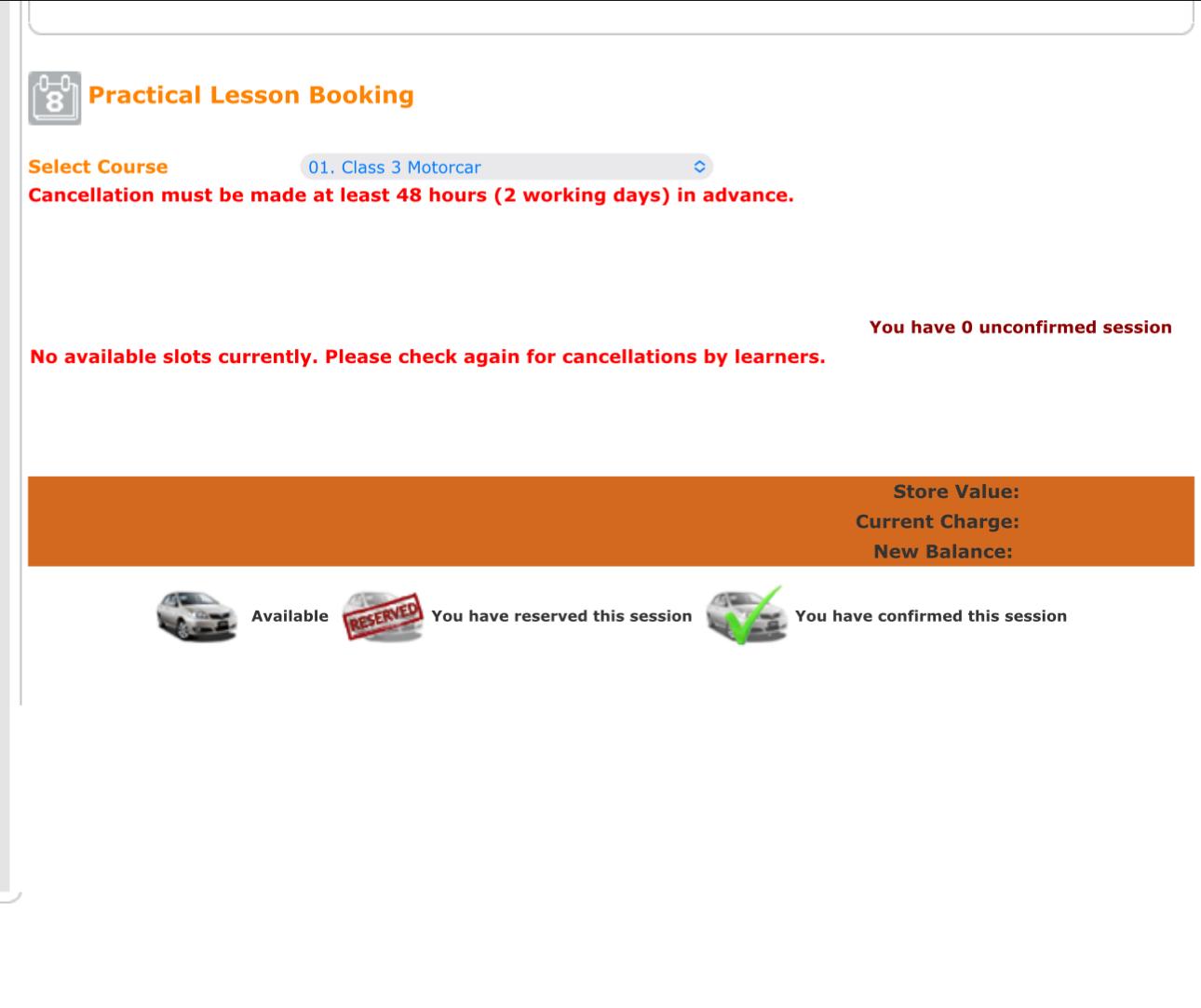
    In learning to drive a manual car in a driving school with a ridiculously crowded enrolment, I am forced into competition for available lessons. Passing the test becomes overcoming a great challenge, as if it was not tough enough. Conventional “practice” goes out the window here without practical lessons.

    But the rigour is limitless. No one stops me from taking notes, reviewing lesson takeaways, watching videos, doing mental visualisations and talking to others about it (and let’s not forget the undue worrying that comes by default).  

    The Absolute Lack Of Lessons Available On An Average Day

    Sometimes, I find my rigour seems unwarranted for something as trivial as learning to drive. It could be a relaxing process (how I wish it were so). But to save on cost and maximise learning, rigour is the answer. Indeed, sometimes circumstances limit our choices.

    Like The Year, Life Has Seasons

    Your great challenge in this season of life would differ from the one in 10 years. Undoubtedly, the next season of my life – university – comes with a new set of paralysing and debilitating challenges (but they say uni is a great time in life). You’ll never know what the next season or challenge is, but that hardly stops you from learning how to deal with it. 

    Knowing it will rain does not prevent it from raining, but you might consider bringing an umbrella. That said, the free-spirits advocate for “dancing in the rain” – a cinematically glorified act I have yet to try. 

    The seasons and problems will change (just think Taylor Swift’s “Eras”) as time marches on. Knowing that rigour is a tool you can use in overcoming great challenges provides some peace of mind, like a semi-safety net. But perhaps what it truly symbolises is your belief in your ability to figure things out, with the aid of rigour, no matter what. 

    Note to future self: everything will be okay in hindsight. 

    If you liked this, click the arrows for more.


    Teleport home below!


    Experience more serendipity below!

  • Lost In Life: “What Should I Do?”

    Lost In Life: “What Should I Do?”

    Quirkbag Collection #21 – 05.12.25

    I am now in a strange period of time before starting university. I have 9 free months in totality – almost a gap year – before school starts. From now, there’s 8 months left. 8 months is a lifetime back in JC or high school. Days felt so long back then. Yet as of late, I find myself thinking: ‘What should I do?’

    Nowadays, I am confronted by some of the bigger questions in life, the ones that school only mentions in passing before hustling you to the classroom for more lessons to pass your exams. 

    Do these sound familiar?

    ‘I don’t know what I really want to do.’

    ‘How will I make money in future?’ 

    ‘What should I do in this period of free time? I need to spend my time well now.’

    ‘What if I end up like those people hating their jobs?’ 

    ENOUGH! You’re asking the right questions, like I am, but asking them all at once is a successful way to be overwhelmed. The next thing you know, you’ll be crippled in bed by anxiety. 

    The To-Not List

    If you have things on your mind that you’d like to do, but have not come around to doing them (for all sorts of valid reasons you think you have), try NOT making a To-Do list. Yes, that’s right. Instead, make something like a To-Not list. 

    There is a suggestion attributed to Warren Buffett that you make a list of 25 things you would like to do, and circle the top 5. Place those 5 in another list, and instead of just focusing on those 5, you want to IGNORE entirely anything related to the 20 remaining things. 

    You might have come across this idea if you read some productivity/self-help book or watched some YouTube video. I learnt about this through “The 5 Types of Wealth” by Sahil Bloom, a book I recommend reading if you have the time to ponder about the bigger life questions. This book cuts through much of the modern BS we are accustomed to living in to unravel what truly matters to us. To you.  

    I struggled very much when deciding what to do for this period of time. I desperately wanted to ‘maximise’ this time. If you’re someone who constantly tries to optimise for productivity and performance, you’ll spend much time trying to squeeze in so many things you ‘want to do’ in this time. So much that it only satisfies your mind.

    In reality, at the end of the day, you inevitably think ‘I didn’t do as much as I thought I would’. And the cycle goes on. 

    An Idea To Try Random Things

    So, how do you overcome the “What should I do” obstacle? Well, I first discovered what this period of time is. Well, you can’t solve a problem you can’t define, right?

    Ali Abdaal introduced it to me as ‘liminal space’. And so began my marvelous idea of trying random things in exploration. 

    Since I did not really anything in mind to do, I decided that regardless of what I did, so long as they are new and different things, I’d always gain something from the experience. Even if it was just the experience itself. Sometimes, the experience and stories are worth the effort.

    You might think, “yeah, but I need to make money.” But unless the concern is so desperately urgent for today, consider how you actually have a lifetime to “earn money”; but you don’t have a lifetime of liminal space.

    You, and I, will never get this era of life back. Most of the “later” and “someday” never come. And that scares me. Sometimes this is how the ideas become regrets, and the only chance to prevent that is now. 

    Failure Is The Bill For Learning

    There is no ‘life’ subject in school. You don’t learn how to live a life, because you can do it in so many ways. But growing up Asian, ‘successful life’, ‘good life’, and ‘the-only-acceptable-proper life’ always meant graduating university, getting a job, working at that job for decades and hopefully retiring to ‘enjoy the golden years’.

    Experiences and abstract notions like joy and happiness were conveniently omitted (for sound reasons, I am certain). After all, how can anyone define your happiness, right?

    You learn as you go, as I am now, through random experiences and actions. Sometimes I just want to stop doing everything and do absolutely nothing. And that’s perfectly fine. You just have to tolerate your brain pestering you endlessly with ‘be productive’ and ‘need to work’ like me.

    It’s a cruel mind game. You can’t win.

    In fact, you always lose. 

    An Excuse To Hide From Life

    It’s incredibly comfortable to do only familiar things for a long time. (Maybe that’s how some people work decades at the same job.) But if you are like me, 20, able to do and try anything, this is as much time freedom and empowerment you’ll ever get before the “life overhead” gets to you. 

    This is where your story truly begins, where your adventure takes off. Like every hero in the movie, you face a choice: do the hard, crazy and heroic thing or pretend like nothing happened, shy away and wind up living life like Bill Murray in Groundhog Day (another classic by the way). 

    Short of throwing caution out the window, just consider doing that one thing you’ve been curious about, or afraid to try. Because if failure is going to hurt you, the time it hurts least will be now, when you have nothing to lose. AT ALL. 

    Now, doing anything and failing the first time will suck, believe me because I tried. But you get to choose between giving up and trying again like that hero in the movie.

    But this is your movie. 

    So if you need a push, as Ali Abdaal says, ‘Do it for the plot.’ 

    Just Trying For Fun

    Liminal space is liberating. For me, I have never had this much time and freedom to try and learn and explore. Yes, it is fortunate. If this has not been enough to convince you to try something adventurous (and this could be going to the cinema alone, or riding a bicycle all day across town…), if it has not convinced you to do something incredible for yourself, to stack experiences, then maybe nothing will. 

    My first Jet-Ski ride, because there’s never a “good time” for this. And I am never regretting just trying this for fun.

    It was badass.

    A razor that I heard from Alex Hormozi: “Shame? Shame is your downside? …. You’re gonna die. And so are they.

    So that scary thing at the back of your mind? Try it. Keep that experience. And live to fight another day.

    Some day you’ll either forget it ever happened or you’ll share the memories as you tell your stories. Either way, you lose nothing and gain everything. 

    “What should I do?”

    Why not start with that thing you’ve always wanted to try? You might never stop.

    If you liked this, click the arrows for more thoughts!


    To return home, just teleport!


    See more serendipitous thoughts below!
  • Quest for Coffee (13) | How To Pour Latte Art: My Breakthrough

    Quest for Coffee (13) | How To Pour Latte Art: My Breakthrough

    It’s been a while since I got my hands on the espresso machine and coffee beans. But fear not, my coffee adventure continues no matter how bumpy the road. Pouring latte art has not gotten easier before my hiatus.

    But, I might have gotten better somehow. My breakthrough in latte art this week breathes progress in my mastery of latte art. 

    I know you want to see the picture right now, but it’s always good to have a little patience…most times. Particularly, this time. 

    You ever catch those “coffee photographers” in the cafe with their IPhones, snapping pictures of their latte which they have bought at least 10 times before? (Admittedly I have taken many such photos, but…with good reason! How else would I set a benchmark for myself?) 

    Something about that white foamy flower or heart continues to charm the coffee lovers. Or should I say latte art lovers. 

    If you have visited local cafes before, they do not serve terrible coffee with ugly white patches. Quite the contrary, I have not been served a cup of coffee in a cafe that is not topped off with a delicate heart or flower. It’s practically the norm to have some fancy milk painting on your coffee. 

    And that’s where the expectations have been set.

    We SHOULD see some attractive design on top of our coffee. Latte art SHOULD be a part of the coffee. It’s the “bare minimum” that we SHOULD get a heart. We expect some artistic flair from our baristas. But maybe these cafes have cued our misplaced expectations of coffee. 

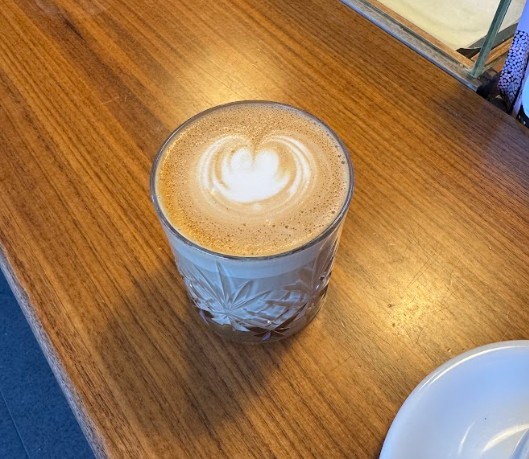
    A Latte From A Cafe In Sweden; Fancy.
    Do you always expect this?

    What if there is no latte art? Would this make your coffee that much worse? 

    Afterall, we are not paying for some milk painting in a tiny cup. We’re getting coffee. And coffee, is exactly what you get. 

    If I asked you right now what fancy latte art means to you, you might say “it looks nice”. More “sophisticated” coffee lovers would say “it adds to the coffee experience”. To be clear, this coffee experience would have nothing to do with taste. 

    If you drank coffee blindfolded, would you be able to differentiate the one with a design and one without? Surely not. The coffees are the same. 

    I can proclaim: I have now been served cups of coffee without latte art in cafes. 

    They do exist. And yes, that was the sound of the expectations being crushed. 

    My Latte Served Art-less, In Denmark
    Artistic ones might say random swirls are just as much art

    This was a Norweigian cafe experience. It was surprising and mildly disappointing, as any coffee lover pampered with the latte art expectations would feel. It does feel strange to not see something drawn on the surface, like it’s incomplete in itself as a “mere” cup of coffee. Yet it’s not. It is complete. 

    The cups of art-less coffees are as much coffees as any other. So that means, latte art is really a “cherry-on-top”. You might not get any design, but you might also get a giant, layered swan or a highly realistic rose. It’s a bonus that became the basic requirement.  

    This is encouragement, without a doubt. It is evidence that a cup of coffee without some milk painting by a talented barista is just as valid a cup of coffee. Coffees can exist without fancy patterns of milk foam!  

    It also means, I am that much closer to mastering latte art in the “real world”. 

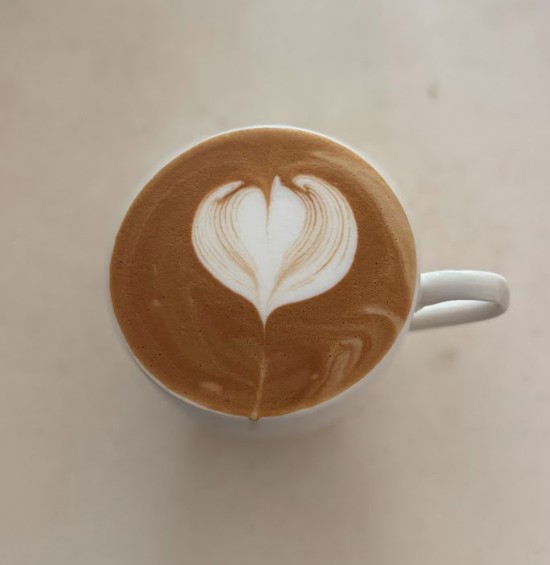
    Now, the breakthrough, as promised, is easy on the eyes and proof that even with the hiatus, skills can still be improved by the brain and executed through muscle memory. 

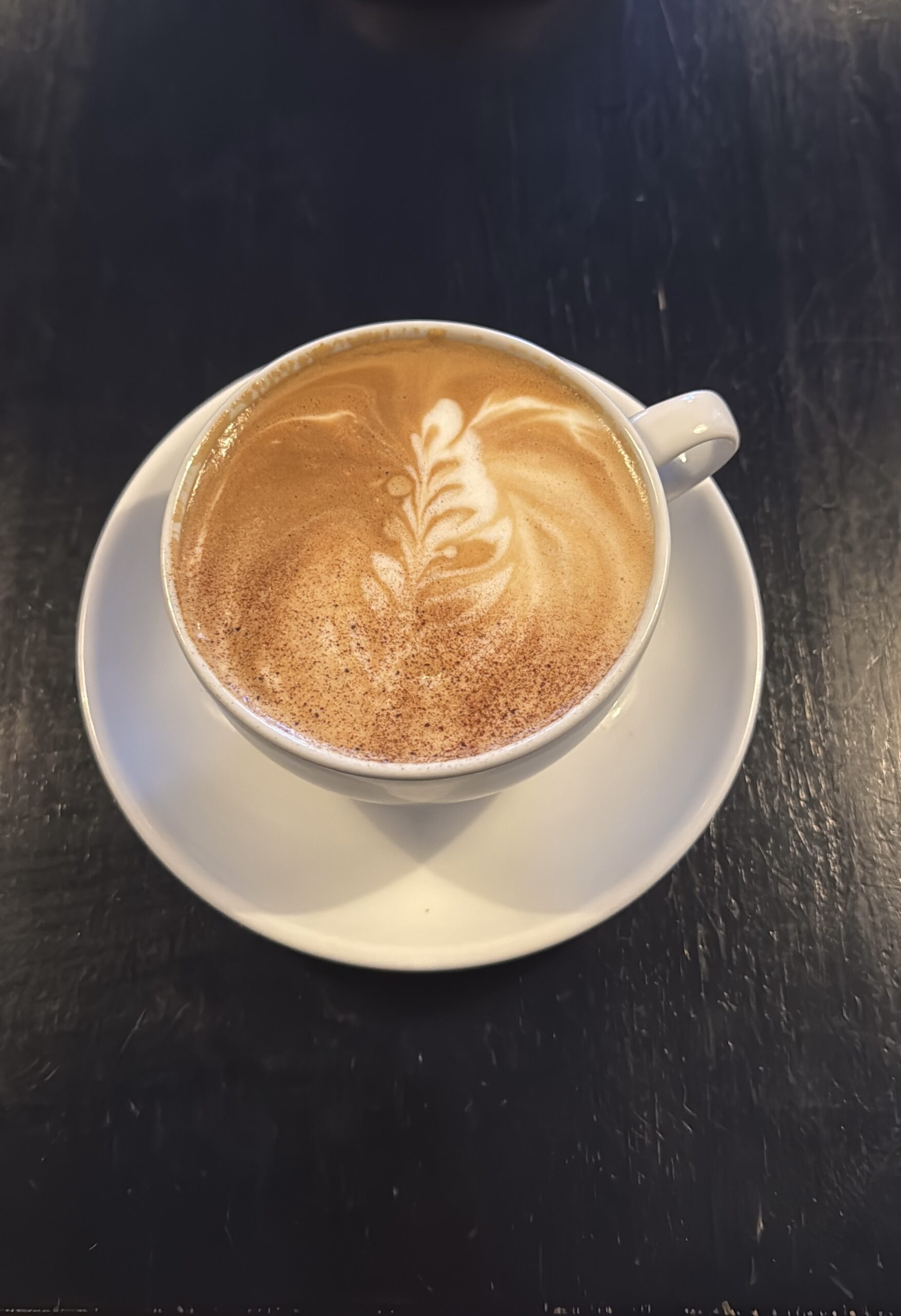
    My Own Latte Art Heart, Born 26 Nov 2025
    Just look at that “tail”

    The “tail” of the heart really amazed me. It has been one of the portions I could not pull off well. This was my first smooth “tail”. 

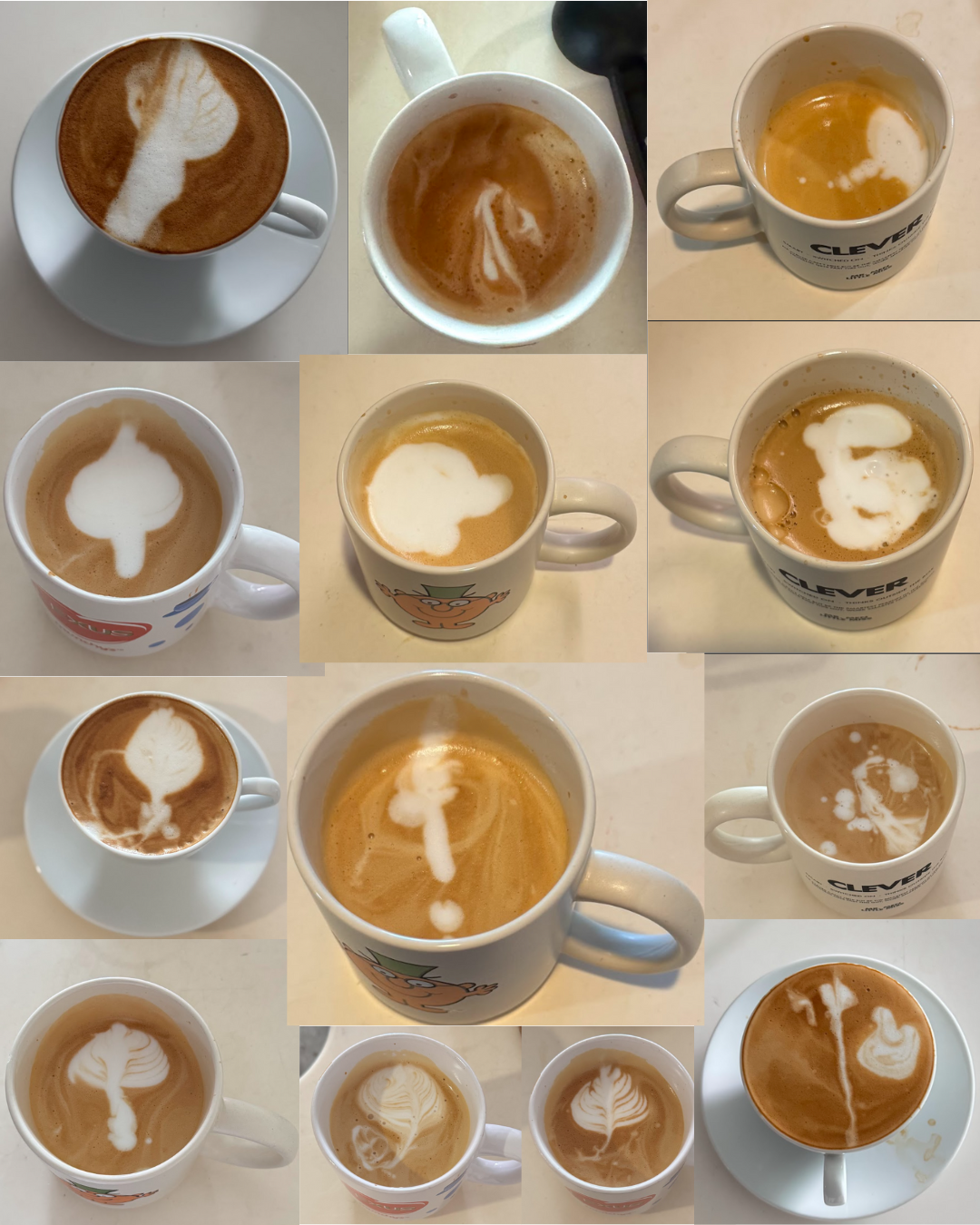
    For the past months, I learned by muddling through all my mistakes and trying to replicate whatever made the best milk patterns. It’s practically re-inventing the wheel. The finesse and control needed to form the thin white layers or lines, particularly with the bottom “tail” of any design, can only be learned by my “muddling”. There is simply no shortcut. 

    But now, knowing you can do it once, with more practice, you can do it again. That’s my hope and motivation, because I know it is very possible. 

    It CAN be done. 

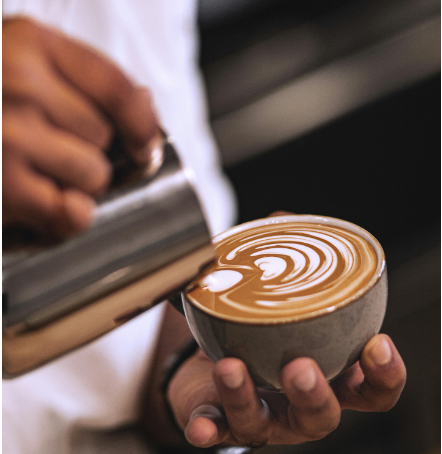
    Here are some cool milk paintings (not done by me, yet…), for the eyes:

    Another Latte Served In Norway
    This reminds me of magnetic field lines, or an apple
    Rare Swan Sighting In A Restaurant At The Airport

    Next time you see a barista pulling off some fancy milk painting, remember not to take it for granted. You didn’t order a Van Gogh-in-milk.


    Click below for previous updates in my Quest for Coffee!

  • Customer Service Can Be Better

    Customer Service Can Be Better

    Quirkbag Collection #20 – 21.11.25

    It’s 3 degrees celsius in Denmark, and I walked into a gelato shop. Insane, yes. 

    There was the nicest middle-aged store owner who not only served wonderful gelato, he practically became our tour guide! 

    He was proud that tourists around the world visit Denmark, but humble to know that authenticity matters. Thoughtfully listing places we should visit and avoid for the best tourist experience, he charmed us with his genuine passion to create a better experience. 

    A cup of gelato set beside a small vase of flowers with a flamingo graffiti in the background wall
    Gelato from Denmark, with an amazing store owner.

    I mean, talk about serendipity, who could have planned this? Talking to a friendly local ice-cream store owner by chance just sounds like a Hallmark Christmas movie scene. 

    And this is the kind of feeling that we all need more frequently. We crave that warmth and hospitality, especially with customer service. We want that “they are so nice to us” experience even if it’s just an afternoon coffee. 

    The kindness and patience seem almost bizarre now in this “instant-economy” where we want everything right now in this moment (…or else!). We barely stop for conversation. Do you even care about the quality of the interaction when you buy that daily coffee?

    Or do you just “hustle-along” as quick as possible? 

    Singaporeans are not known for patience. But don’t you think we could all use additional kindness and patience? 

    Retail Customer Service

    “The customer is king”, they say. 

    Well, I don’t feel like a “king”, and I’ll venture a bet to say you don’t either. Retail customer service has hit a sort of slump. We no longer get the same next-door neighbour friendliness. We also don’t feel the same warmth anymore.

    It’s eerily transactional. 

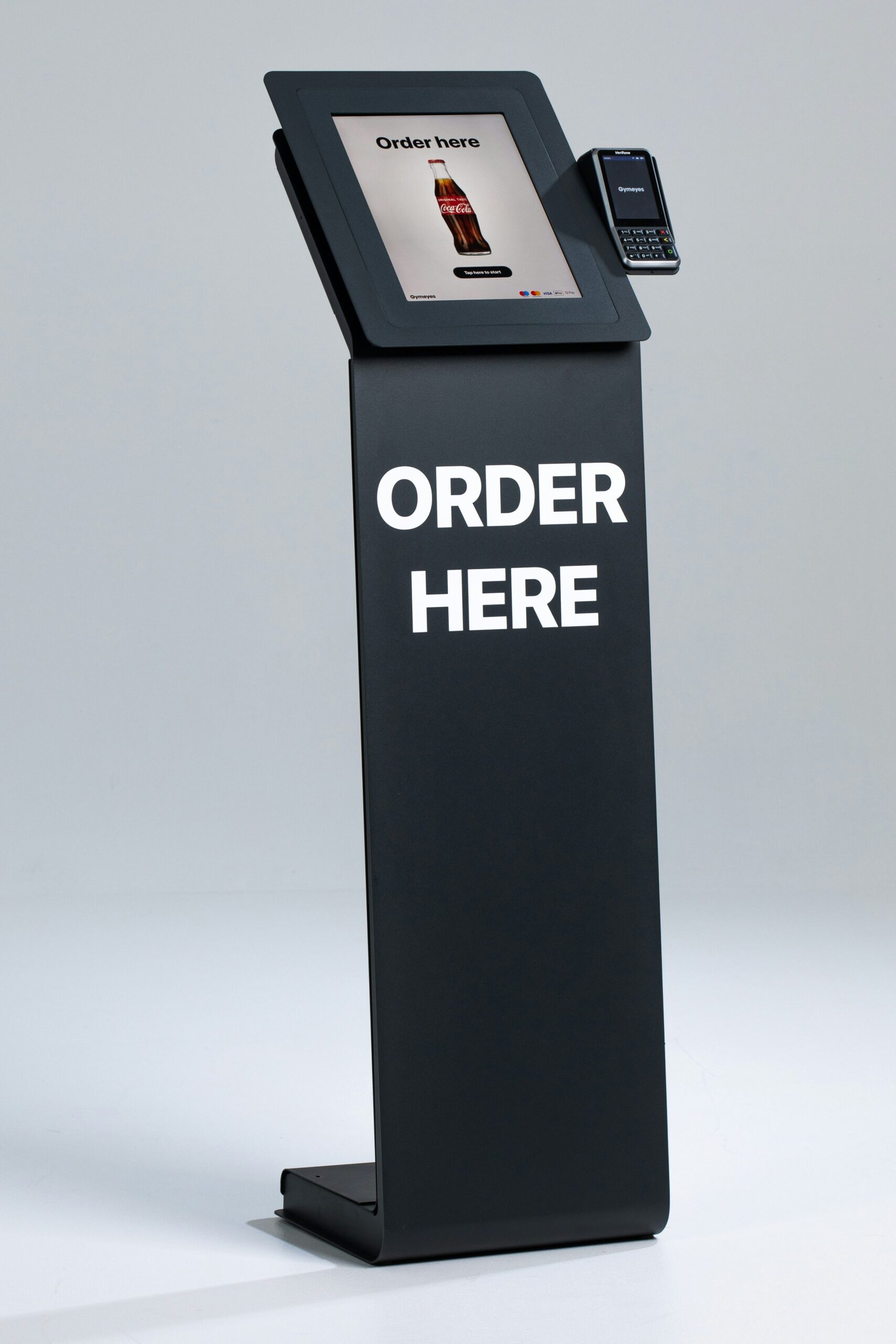
    Especially after COVID, the need for retail customer service has declined sharply with the ingenious methods of scanning QR codes or ordering at digital kiosks. It’s meant to be efficient right? You get to order faster, they get to cook faster, you get the food faster, we’re all out the door before we know it. 

    An ordering kiosk placed in the middle of a room
    Look familiar? Just another machine to order food.

    But that wasn’t McDonalds’. Not even fast-food. And we’re sacrificing customer service and good old-fashioned service for “speed”, all while paying for an increasing service charge. 

    Surely it doesn’t take some luxurious fine-dining establishment for warmth and friendliness. (It takes a gelato shop, dude.) It does sound like the usual Singaporean’s complaints, but it’s also brutal reality

    There’s nothing against speed and automation today, but there’s everything for a better customer experience. And that’s inevitably going to need kindness and patience. Both as customers and service providers, we could all use some kindness and patience to boost our experience. 

    Oh and, whatever happened to that wide smile? You know the one you sometimes see on waiters’ faces when they serve you? I rarely see that now. 

    In fact, I see more frumpy and frowned faces. 

    “Hi hi” She Said, In Swedish

    Needless to say, I was caught off guard every time a waiter, cashier or employee greeted “Hi hi” when I walked in. Yes, “Hi hi”, she said, in Swedish. 

    With a smile. 

    It’s almost like they actually welcomed me? That’s customer service in Sweden (and Denmark and Norway). Practically every cafe, restaurant, shop or store (that was NOT fast food) did this. They then also made sure to check in on the dining experience mid-meal. 

    It felt unusual, and I didn’t understand why they were so nice. But no one ever complained about too much kindness. 

    So what’s the big deal then? The only difference (to me), but it’s a big one, between Scandinavian customer service and the Singaporean one is attention. 

    From a customer perspective, the key to improving customer service is, quite simply, attention to the customer. Slightly narcissistic, I realised, if you read that again.

    But it’s pretty hard to mess up as a waiter if you actually paid attention to the customer (barring exceptions, there are always a few) and genuinely helped to create a meaningful experience for them.

    As a customer, it’s easy to tell when customer service providers truly took the effort to make sure you feel heard and satisfied. Vice versa, it’s even easier to tell that they merely go through the motions. 

    But where then do we go wrong?

    Customer Service In General

    Customer service in general goes both ways, like a conversation. If the kindness or hospitality falls upon some customer having a bad day, it becomes exhausting for service providers. Anyone picking up customer support phone-calls would likely know. 

    It’s really tiring to stay upbeat when it seems no one appreciates the effort, and it wears you out slowly. Then the effort easily fades. 

    Cue the mediocre and lacklustre customer service!

    Don’t worry, Scandinavian service is not on a pedestal (although it’s quite high up). It’s also not a disparagement to Singapore. In fact, Singapore’s known to be a friendly place, especially for tourists. But we come with our own local quirks. 

    But in the nooks and crannies of my lovely city, whether it’s upcoming stores or old shops, we could all look to higher standards of customer service and remember that there’s only benefits to being kind as an individual, customer service or not, for everyone. 

    There’s always room for tradition and uniqueness when it comes to service locally. But surely that must not be an excuse for declining standards or a lack of warmth. 

    Take it from my favourite “essayist”: 

    You can provide great customer service today, regardless if you are a waiter, cashier or otherwise. 

    Indeed, your customer service could be better, with just a dash of kindness and added attention.

    If you liked this, click the arrows for more thoughts!


    To return home, click teleport!


    See more serendipitous thoughts below!
  • More Than A Holiday In Phuket

    More Than A Holiday In Phuket

    Quirkbag Collection #19 – 31.10.25

    More Than A Holiday In Phuket 

    I went to Phuket with two friends. In fact, I only returned yesterday. It’s been about two weeks since the grand finale of my military service (see here). This trip to Phuket was a celebration. It was an adventure I had with them. It was cartharsis and relief.

    But it also meant freedom and responsibility over our own time and activities. It felt like more than a holiday in Phuket. 

    Cue the plane ride. 

    A Surprise For Us

    The number of Thai nationals and Singaporeans visiting and returning from Phuket barely made up half of the plane’s capacity. The majority of the remainder were Europeans (with some Russians and Australians). That’s some 100+ Westerners on a plane with about 250 people.

    Fancy that. 

    It was so diverse, yet so homogeneous at the same time. 

    Even in Phuket, practically every other person we saw on the street was a foreigner. Most commonly, it’s someone speaking a foreign European language. (And being that Singaporean overseas, I had to play the guessing game of what language.) We were constantly reminded that this was a tourist vacation spot every few minutes. 

    I had expected for far less tourists considering the time of the year. Tourism comes in waves but I guess there is always water by the shore. If you were to visit Phuket, I’d suggest avoiding the monsoon season (it rained ⅔ of the trip), especially if you are a beach potato like me. 

    Still, better bring your sunblock along. Don’t let the Phuket cloudy day fool you.  

    The Most Touristy Thing

    Of course, any tourist would visit the usual sites, eat the well-rated food (with good reasons) and try the most common activities. Indeed, there are must-dos. And I did them. But there are also pretty mediocre tourist activities to avoid. 

    Let’s start with the obvious touristy things. You can fill in the blanks yourself here. 

    • Wat Chalong
    • Patong Beach Walking Street
    • Old Phuket Town (Flooded with European and few Asian tourists)

    A giant temple, in all its glory.

    A very crowded street, with a very busy road.

    One of the best decisions I made during this trip was choosing to ride a jet ski at ridiculous speeds. Gliding across the water at 70km/h with no brakes, the voice of fear and urge to stop only grows in tandem with the thrill in your blood.

    But it was an exhilarating 25 minutes. 

    My hands were shaking at the end after gripping the handles tightly against the waves. But I wouldn’t trade that experience back.  

    The most Tom Cruise moment I had

    An Unforgettable Experience 

    The best experiences, an unforgettable experience, come with a mix of fear, anxiety, satisfaction and thrill. But only if you overcome that mental hurdle and hesitation to make the unconventional or uncomfortable choice. It’s not easy. It’s your current self pulling you back into your comfort zone. But I am glad I took a step out. 

    There was a Muay Thai boxing match in a local stadium. It’s an obvious tourist attraction. Now, being me, an overcrowded boxing match is not my thing. I passed on this initially because I was quick to stay in my comfort zone. But I did go eventually. 


    On hindsight, I doubt it was ever a regrettable choice. In fact, I had every reason to see it (for your sake, I shall not be listing every reason). I had never seen a live boxing match before. It’s not a global stage, nor is it a national or regional one. It’s a local tourist stadium.

    Being in Phuket, with friends, with freedom of choice and a conveniently scheduled match displaying the local martial art was a sign. It was a subtle one. But there wasn’t a more authentic and unique experience to consider. 

    This was the “test”. That small crossroads that forces you to choose who you want to be more of.

    Would I choose to explore something new for the experience and story, or return to the usual type of activities I am all too familiar with when overseas?   

    I kept thinking about it. And it felt like a sign. So I decided to go. I have no regrets. 

    These moments are the ones where you pick to either continue living like your old self, or pick to create someone you want to be. Your ideal-self does not self-actualise. You create the person by becoming the person. It doesn’t happen overnight, and definitely not with a single choice. But it does happen over time, compounded by each and every choice. 

    The Closing of A Chapter

    The trip ended with a walk in the rain to the airport. But the end of this trip meant the end of a chapter in my life. This was more than a holiday in Phuket.

    It’s farewell to an old life, and to the people that I saw every day in that life. It’s an ode to the freedom I always looked forward to, but also a taste of the responsibility and empowerment that comes with it.

    We easily blame circumstances and a lack of freedom for not being who we want to be when it is really our own subconscious choices to stick with our old selves. There is an unspoken fear of change when the change involves our identity or personal lifestyle choices. 

    I love this frame from Alex Hormozi (his content truly consumes me more than I consume it):

    It’s our choice to make when we have the free time to do the things we want to try but are too afraid to. It’s our choice to let another opportunity pass by. There aren’t any do-overs or re-rolls when it comes to time.

    Sunset over the horizon across the pool
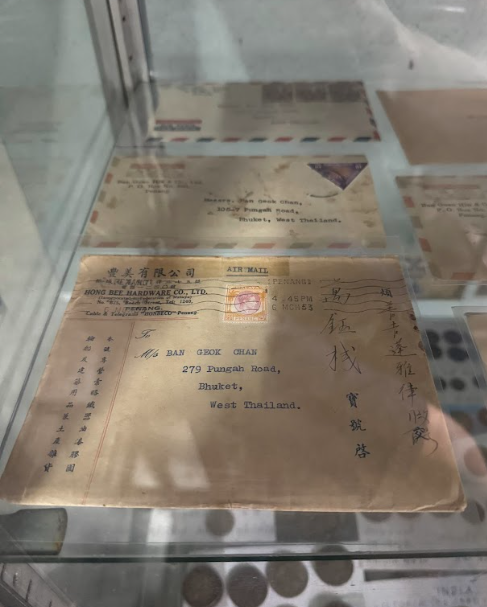
    Vintage letters displayed in a vintage photo shop house

    Make the bold choice, try even if you fail, because if you live to tell the tale years later, even if it’s only to yourself, it would have been worth the moment of fear, anxiety or shame. 

    If not now, when? 

    Read more posts by clicking the arrows!


    To return home, click teleport!


    See more random moments captured in my life! 

  • Driving A Manual Car For The First Time

    Driving A Manual Car For The First Time

    Quirkbag Collection #18 – 24.10.25

    It’s drizzling. The carpark is gradually filled with random Singaporeans of varying ages all with the same purpose. They are here for a driving practical lesson. I was anxious. I was thinking about how this anxiety felt.

    “How hard can this be?”

    Driving a manual transmission car for the first time is hard. Duhhh. But here’s how you can make it easier for yourself. 

    Why Can’t You Just Drive Off?

    Driving a manual car means fiddling with a clutch and the gearbox. For my first lesson, this animated instructor said that ‘the clutch and the gearbox are brothers’ and they must work together.

    Yes, I got the point.

    But the big problem I faced, like many learners, is called ‘stalling’. This is when your car engine just gives up on you because of your absolute lack of skill. It’s telling you that you failed to control the clutch properly. 

    I stalled many times. In fact, I stalled more in my second lesson than my first. What a learning curve.

    Now I know you’d think ‘I’m different’. 

    You think ‘I won’t have that problem’. Let’s find out when you sit and step on the pedals. ‘Stalling’ is practically a rite of passage when learning. 

    So why can’t you just drive off easily when you drive a manual car for the first time? Well, now you know. It takes more than a strong leg and a fast gearshift when driving a manual car for the first time. 

    ‘Stalling’ Teaches You Something? 

    To fix this problem, the instructor told me to ‘love the clutch’. It meant to slowly and smoothly let the clutch pedal up instead of releasing my feet quickly, as is the usual instinct for beginners. 

    If you’re struggling with it, check out this British driving guy’s video below. Credit to my friend who shared this channel with me. 

    Credits: youtube.com/@ConquerDriving

    See more of his tutorials and guides here. His instructions and explanations can help make your learning curve gentler and far less confusing. And who doesn’t appreciate a British accent? 

    Finding the biting point first is universally correct. That’s the way the car works. So releasing the clutch slowly, while counter-intuitive, is the way to drive off. So I told myself to release it SLOWLY. 

    And your guess is correct….I did not. 

    Somehow that is not an immediate correction. Your body and mind will not cooperate as one in the first or second lesson. I proudly told myself to release the clutch slowly, and proceeded to stall many more times despite it. 

    You will keep ‘stalling’ over and over as a pattern until your leg masters the control and sensitivity of the pedal.

    But that’s normal. It’s called learning. 

    ‘Stalling’ taught me that practice is probably more useful than knowledge when driving a manual car for the first time. 

    Driving Is Fun…Right?

    Yes. Driving is fun when it is new, safe and interesting. (God forbid you drive like you’re playing Mario Kart. There aren’t any prizes here.) 

    Driving is one of those rites of passage that Singaporeans go through for some reason. It’s only getting more costly, but it is nonetheless popular.  

    As a passenger of a car practically flying at 100km/h on the highway, to drive at a ‘measly’ 10km/h in the training circuit feels awfully mundane. 

    Or that’s what I would have thought. 

    When you are driving a manual car for the first time, flustered with hands and legs all over the place and your mind unable to multi-task, 10km/h feels pretty damn fast. Driving is fun not because you get to drive like Lewis Hamilton, but because you get to think you can drive like him in a real car. 

    Learning to drive manual transmission cars forces you to learn the pace and pattern of the car. To ‘listen to the car’ as my instructor told me.

    True enough, let the car’s performance guide your steering and speed can help you grasp how to control it. It’s a practice of judgement. 

    Driving is fun when you learn to control the clutch.

    It’s fun when you learn to steer well and stop smoothly, like that chauffeur you had who was actually your sibling or parent. But it’s also fun when you pass the final Traffic Police test to get your license.

    I’ll leave that to a later date when I cross that bridge. 

    Have a Break

    Like a KitKat, have a break once in a while. It’s good advice when it comes to driving. But it also applies to life and work. I would also love a break from having such tough luck getting more driving practical lessons. Seriously, anyone taking practical lessons for driving would concur.

    Driving is such a rite of passage that I won’t be surprised if the proverbial passage is now clogged with people. 

    Nonetheless, I shall continue to learn driving, and like what Ed Sheeran sings, I’ll simply ‘pedal down and drive’. 

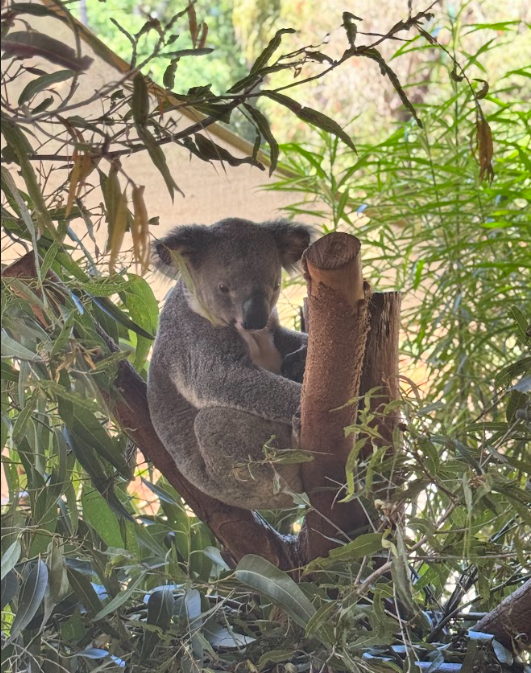
    Anyway, I recently took a trip down south to Australia. Let me tempt you with Kangaroos and Koalas here. You know you want to see them.


    Click the arrows for other posts!


    To return home, click below!

    Click below for my thoughts at your whim and fancy! 

  • My Milestone Trip To Australia

    My Milestone Trip To Australia

    Quirkbag Collection #17 – 17.10.25

    I’ve been to Australia 3 times in my life. Once as a baby, of which I have no recollection.

    Oops.

    The next was when I was a kid, which I remember sand-surfing and dolphin feeding. But this, my milestone trip to Australia, is the freshest impression I have of the land down south. 

    Now for context, this wasn’t a vacation. It was a predominantly work-related trip, during which one day was reserved for some classic Australian-type experience. The trip marks the end of my service to the military and this chapter of life. It has been a lifetime jammed into 22 months. A milestone in both my life and this chapter, it earned a mention in my adventurous blog. 

    But if you’re wondering…yes, there are kangaroos. And koalas. 

    The Plane Ride… to Australia

    Most people actively dislike plane rides. I absolutely enjoy the ride in the air. I had an empty 6h block of time when I could enjoy being present in the sky, travelling at 500km/h. And in-flight entertainment is always welcomed, even if the choices are ever so familiar. 

    Now I did catch ‘You’ve Got Mail’ for the first time on my departure. It wasn’t what I expected, but really, it’s a fun watch. (I slightly prefer ‘Sleepless In Seattle’…)  

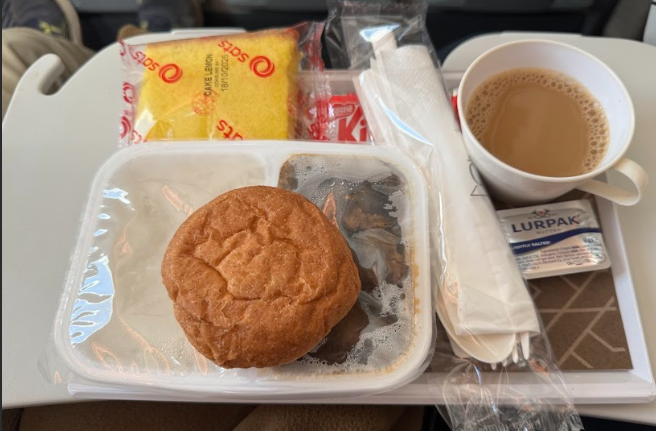
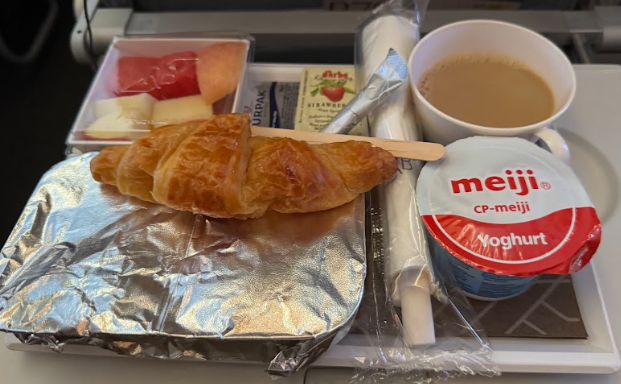
    Most people also actively dislike airplane food. I think it’s a surprise to hear the menu when that once-elegant but currently scratched and janky mini-cart comes down the aisle. (It still pushes so smoothly though.) Usually, I’d go for something familiar-sounding, like ‘stewed beef‘ or a ‘western breakfast’. Anyone who has seen airplane food knows that there are fruits, bread, the main meal, and then the mystery item. That’s my favourite part. 

    The departure meal: 

    Airplane Breakfast
    Inside the Meal

    The Boring Work

    For the sake of my sanity and readership, I shall not be describing the boring work. I shall task you to imagine 17 days of complete work. Your imagination of the work is as accurate as I’ll ever describe it. Yes, work and work. 

    Was there any significant moment in the blur of 17 days?

    No…but yes. There was an occasional sunset (probably 2) that caught my eye as the sky faded into an enchanting blend of orange, pink and blue. 

    An honourable mention: breakfast in a canteen came with a choice of black coffee, milo and milk tea daily. Spoilt for choices here. 

    The Australian Adventure

    Now, the one day of ‘vacation’ would seem incredibly wasted without seeing some of those well-loved native animals. So here we go with the furry mammals: 

    Kangaroo I Met
    Koala I Met

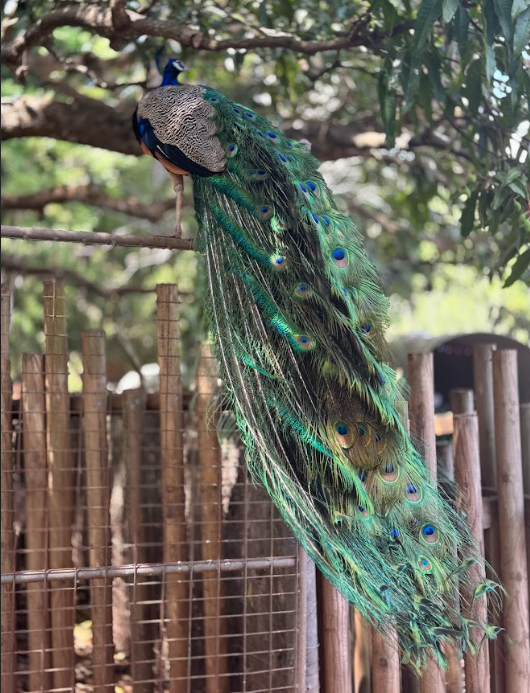
    The Australian Adventure continues with the many wildlife creatures in the zoo. I also touched a snake, held a skink, and saw many peacocks, goats and ducks. Plenty of wildlife for a day. 

    Blue Tongue Skink
    Peacock at Rest
    A Curious Goat
    A Sneaky Snake

    I still cannot believe how many peacocks there are. They seem like rare pokemons to me. And yes, those peacocks really live up to expectations with their feathers. 

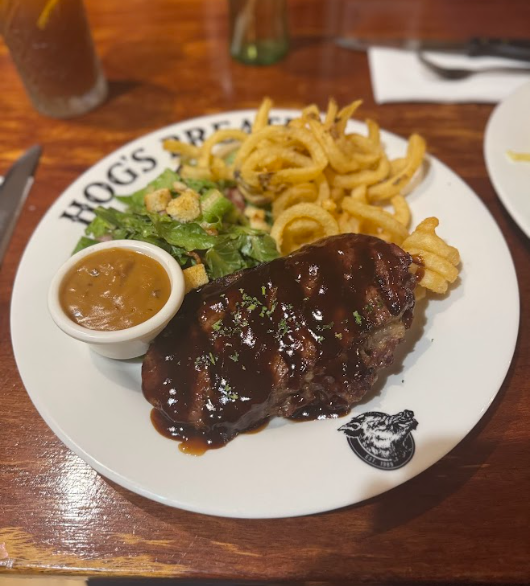
    It would be criminal not to try a steak in Australia, and I am certainly not wasting this opportunity to have a steak.  

    Some Australian Beef

    Thick steaks are just otherworldly compared to the local normal skinny steaks. And that mushroom sauce tasted of quality mushroom soup; it was pinnacle mushroom sauce. 

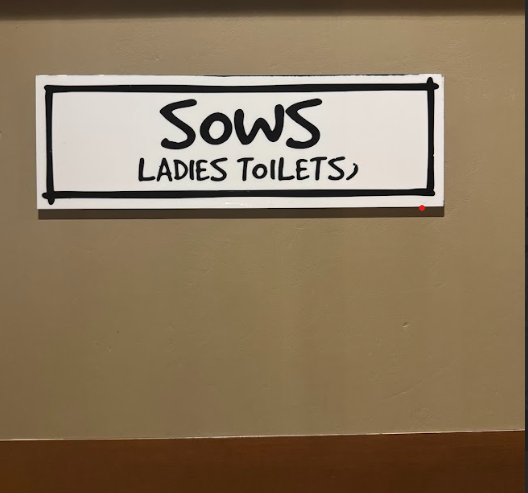
    No Confusion About Toilet Directions Here

    I do appreciate some good Australian farm humour there. 

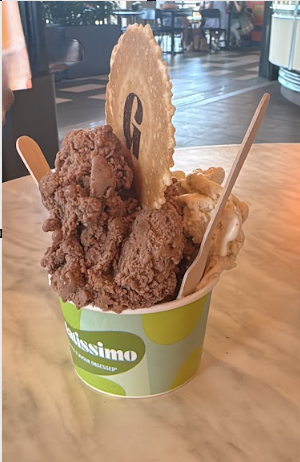
    The smoothest gelato I have tried is undoubtedly this: 

    Smoothest Gelato At Gelatissimo

    It’s dangerously smooth because you’ll want another…after the fourth one. 

    Home Sweet Home

    October 15, 2025. 

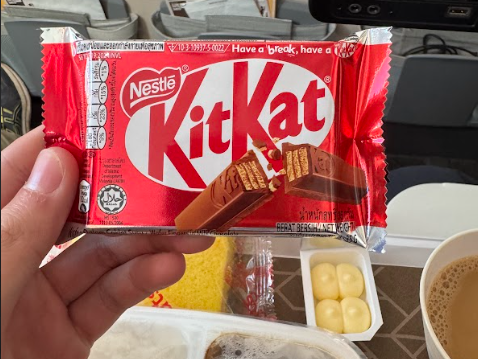
    Now, I must reveal the mystery element in my airplane meal on the return trip from Australia. 

    Yes. It’s a kitkat. Not just the usual small one, but the generous bigger one! Fancy that. 

    It’s also fitting as it seems to tell me ‘have a break’ as if it knows I am returning from a milestone trip. 

    For those that actively dislike plane rides, where else can you find a view like this? 

    The Sunset From Above

    At some 60000 ft in the air, everything else really seems to fade away. And it’s you, your thoughts and the beautiful endless horizon you can only glimpse at from below. 

    It’s serene. 

    Being away from home for weeks can feel lonely once in a while. But some moments I’ve had on this trip with others showed me how absence can make the heart grow fonder. It adds a layer of depth to the gratitude and appreciation I have. The experience lasts a lifetime, and with it, this chapter comes to an end.

    They say a window opens when a door closes. 

    Another chapter would begin in due time (and I’ll probably add it into this blog as part of the adventure). 

    Until then, it’s home sweet home. 

    Home Sweet Home

    And go take more plane rides whenever possible.


    Want more? Click the arrows below!


    To return home!


    More serendipitous thoughts below!  

Adventurous updates every Friday!
X